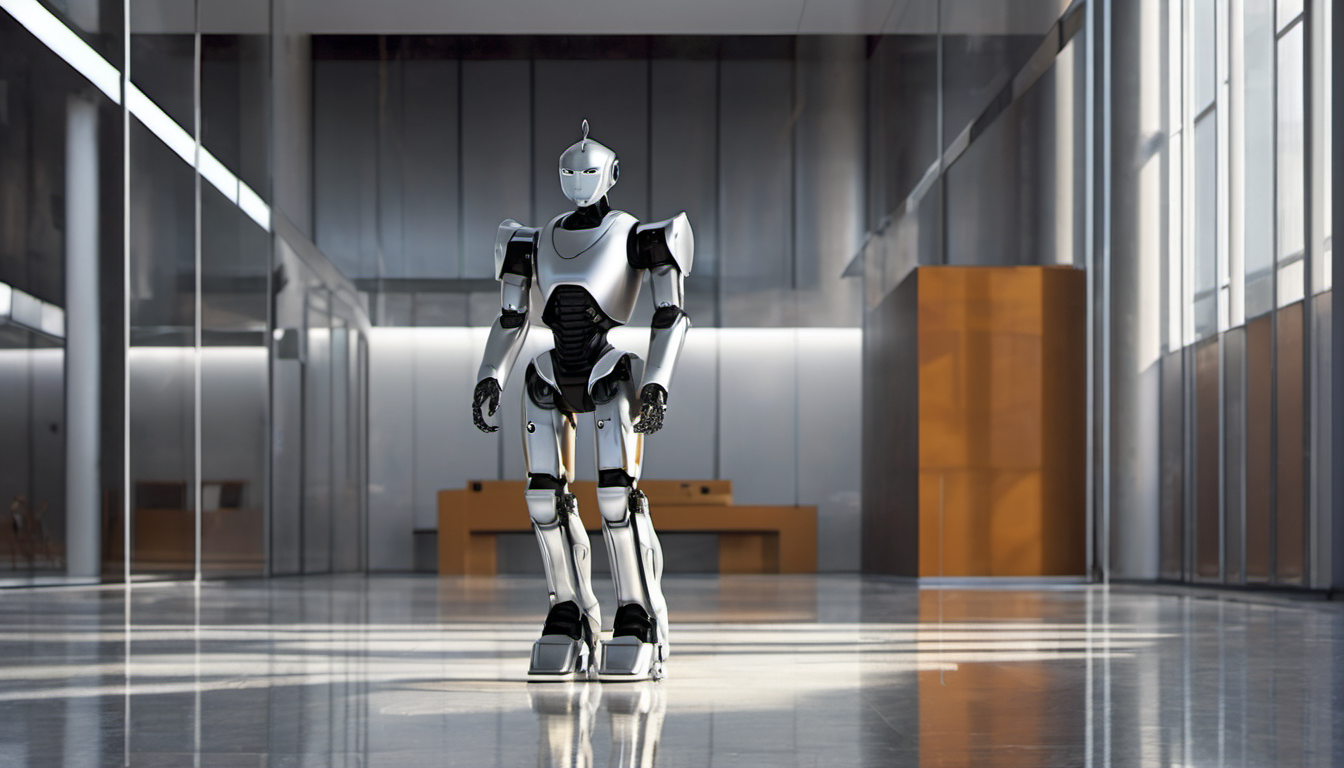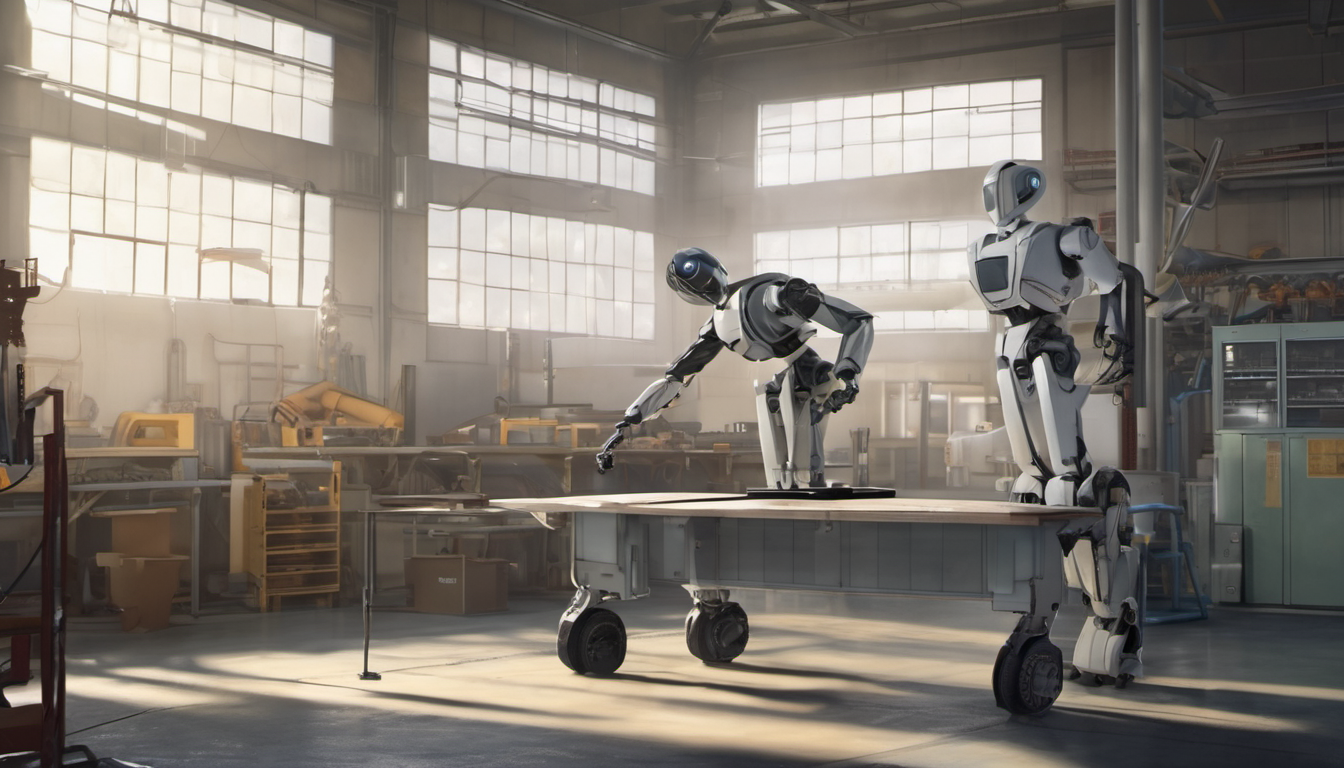
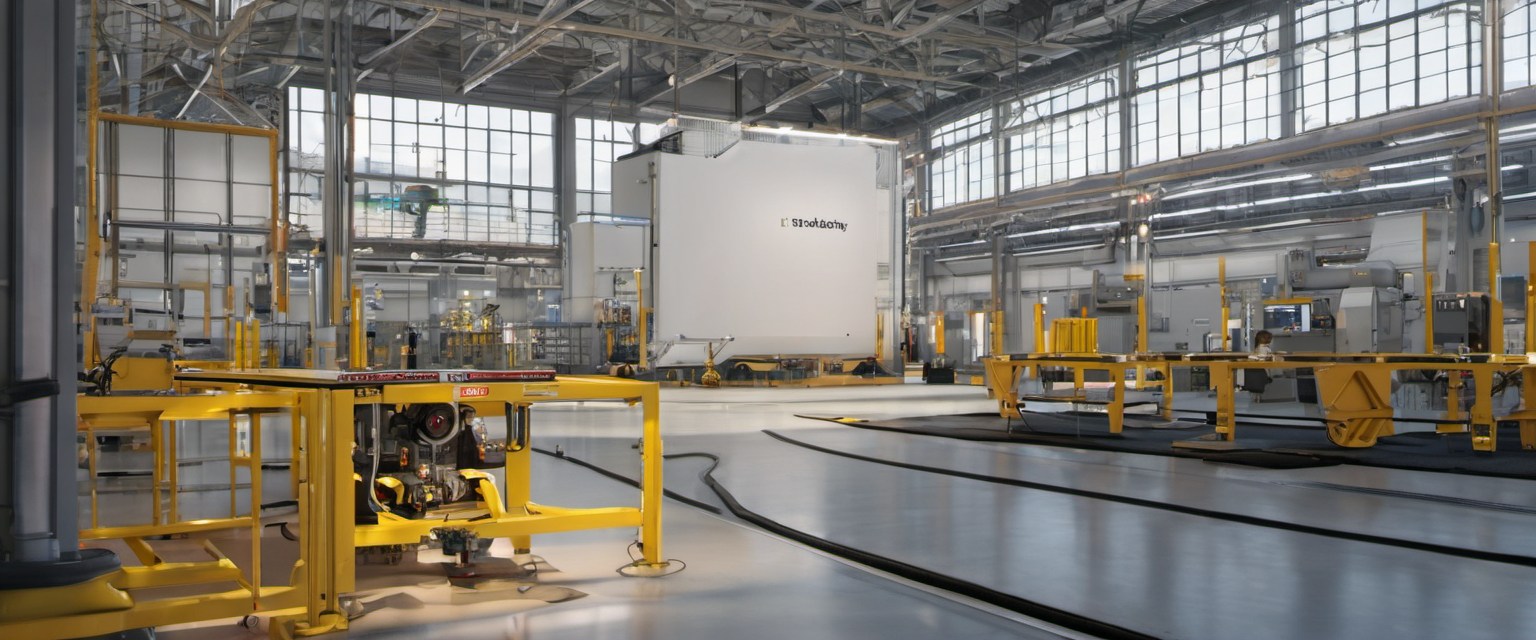
On Thursday, April 30, 2026, Bloomberg led the morning robotics news with a single sentence the industry has been waiting two years to read: the OpenAI-backed humanoid maker 1X has opened a U.S. factory and plans to make 10,000 home robots this year.
The factory is in Hayward, California — twenty minutes south of Oakland, on the eastern shore of San Francisco Bay. The facility is 58,000 square feet, fully vertically integrated, and described in the company’s own press release as “America’s first vertically integrated humanoid robot factory.” Year-one capacity 10,000 units. Target 100,000+ annually by end of 2027.
It is a very different factory from the one Figure showed off the same week, and the difference is the whole story.
What 1X is actually building
Per the Humanoids Daily walk-through, the Interesting Engineering writeup, and the The Next Web feature:
- Footprint: 58,000 sq ft single-building facility, Hayward, CA. Currently 200+ employees on site, scaling.
- In-house components: motors, batteries, mechanical structures, transmission systems, soft goods (the textile shells the consumer-targeted NEO ships in), sensors. The vertically-integrated bit is real, not marketing — almost no humanoid OEM today builds its own actuators and its own batteries and its own textile shells under one roof.
- Compute: NVIDIA Jetson Thor as the on-board brain. Training stack on NVIDIA Isaac.
- Year-one capacity: 10,000 NEO units.
- End-2027 target: 100,000+ units annually.
- Three colors: Tan, Gray, Dark Brown.
- Pricing: $20,000 Early Access purchase with priority 2026 delivery; or $499/month subscription.
- Demand signal: the entire first-year allocation sold out within five days of preorders opening in October 2025.
Founder & CEO Bernt Børnich’s quote on opening day: “This is more than just a factory opening. It’s proof that the future of humanoid robotics is being built right here in the U.S.” Standard CEO line. The actual proof is the takt time and the supplier mix.
How this compares to the rest of the field
The humanoid industry already has factories. None of them look like this one.
- Figure (Sunnyvale). 240 robots in April, one off the line every 90 minutes, three months of monthly doubling. Industrial customer mix (BMW Spartanburg, undisclosed warehouse operator). Heavy reliance on outsourced actuators. Targeting 100,000 over four years rather than three.
- Boston Dynamics × Hyundai (Songdo, RMAC). Atlas committed to Hyundai RMAC and Google DeepMind for 2026; targeted 30,000 units/year long-term per Hyundai’s robotics-strategy disclosure.
- Unitree (Hangzhou). Lowest unit cost. ~5,500 humanoids shipped in 2025 (G1 + R1). Factory + consumer mix. Targeting 10,000–20,000 in 2026 per TrendForce.
- AGIBOT (Shanghai). 10K production line milestone in April. Industrial.
- Apptronik (Austin). Just hired Daniel Chu CPO from Waymo. Total deployed fleet still in low double digits.
- 1X (Hayward, today): consumer first. NEO is a home robot. Not a warehouse robot, not a line-side cobot. The buyer is an individual at a U.S. residential address.
That last bullet is the real news. Until April 30, every humanoid factory at meaningful volume was building for industrial customers — automakers, logistics, electronics assembly. 1X is the first volume line aimed at consumer addresses. The implications are different all the way down.
Why the consumer angle matters more than it sounds
A humanoid robot in a BMW plant has a specific work envelope, a designated cell, a roll-out plan written by a manufacturing engineering team that owns the responsibility. A humanoid robot in a 1,400-square-foot Bay Area apartment has none of those things. It has a non-technical owner, a moving and partly-pet-occupied physical environment, and an unbounded task graph.
That is much harder. It is also much higher-margin if it works, because there is no enterprise-IT procurement gate slowing the install down to 6–14 weeks. A NEO ships, the customer unboxes, the customer uses the NEO Companion app on their phone, and the unit is “deployed” the same afternoon.
The Bornich-on-Threads talking point for the past month has been: consumer humanoid is the only path to data scale. Industrial humanoid generates training data at the rate of one factory shift per robot per day. Consumer humanoid generates training data at the rate of one household per robot per day, in a much wider distribution of physical environments. If 10,000 NEOs ship into U.S. homes in 2026, 1X’s training corpus by Q1 2027 is plausibly larger than every industrial-humanoid OEM’s combined.
That is the bet. It is not a sure bet. The asterisks are loud.
The asterisks
One — NEO is a teleoperated robot today. Per the same Humanoids Daily piece, early NEO deployments include a 1X human teleoperator-on-call mode for non-trivial tasks. It is the same dirty open secret that Amazon’s Just Walk Out had and that nobody wants to put in a marketing deck. A consumer might not care that a person in Oslo is occasionally driving the robot to fold their laundry, until they do.
Two — the NEO of October 2025’s preorder allocation is the NEO Beta. First customer shipments in 2026 are not yet the production NEO. The tipranks comparison piece is somewhat starry-eyed; the real near-term shipping unit has limitations Adcock’s Figure 03 does not.
Three — Tesla, Apptronik, and Sanctuary all have larger overall consumer-product distribution channels. 1X is winning the first-mover consumer humanoid race. They are not yet winning the retail-channel race. If Tesla flips the switch on consumer Optimus through the existing Tesla store network in Q4 2026, the volume picture changes overnight.
Four — the price point is uncomfortable. $20K outright or $499/month is not “consumer mass-market” pricing. It is “early-adopter, two-Teslas-and-a-Sonos-system household” pricing. The 10,000-unit year-one capacity is plausibly satisfied entirely by households that look like that. The 100,000 target for 2027 has to either find a wider buyer or cut the price by 50%, neither of which is obvious yet.
What LostJobs is watching
- Whether 1X publishes deployment data in May 2026 the way Adcock has been publishing production data on Threads. The shipped-vs-installed ratio is the consumer-humanoid leading indicator.
- The first viral failure video. A consumer humanoid in 10,000 American homes generates one “NEO knocked over my toddler’s birthday cake” TikTok per week as the floor. How 1X handles the first one tells us whether their PR & support function is operationally ready for what hardware-in-homes actually looks like.
- Whether the 1X teleoperation rate goes down month-over-month. The leading indicator that NEO is becoming an autonomous robot rather than a remote-presence appliance is the trailing 30-day teleop-minutes-per-unit number. 1X has not committed to publishing it. They should, and we’ll be loud about it if they don’t.
- Whether Figure or Apptronik launches a counter-product into the home. Figure has the volume. Apptronik has the new-CPO-from-Waymo. Neither has a publicly-known consumer SKU. If one or both reveals a home humanoid in Q3, the consumer race becomes a three-horse race instead of a one-horse race.
- Whether the OpenAI-1X relationship deepens. OpenAI’s investment in 1X dates to 2023. A consumer humanoid running on Jetson Thor with an NEO Companion app on the iPhone is one OpenAI/Apple integration away from being something new. Watch for any hint of an SDK or an OpenAI-branded skill on NEO. That hint, if it lands, is a bigger story than the factory.
The dry coda
The U.S. humanoid story for 2026 was supposed to be Figure shipping into BMW. It still mostly is. But on April 30, 2026, a different, smaller, weirder, more consumer-y story walked into the picture: a 200-person factory in Hayward that builds its own motors, batteries, and textile shells, run by a Norwegian-American team backed by OpenAI, with the first-year output already sold out in five days, and a goal of putting 100,000 humanoid robots in 100,000 American homes by the end of next year.
If that goal is hit, the whole conversation about whether humanoids are real shifts category. Industrial-humanoid-as-real is now established. Consumer-humanoid-as-real is, as of yesterday afternoon, on the calendar.
We’re going to find out together.