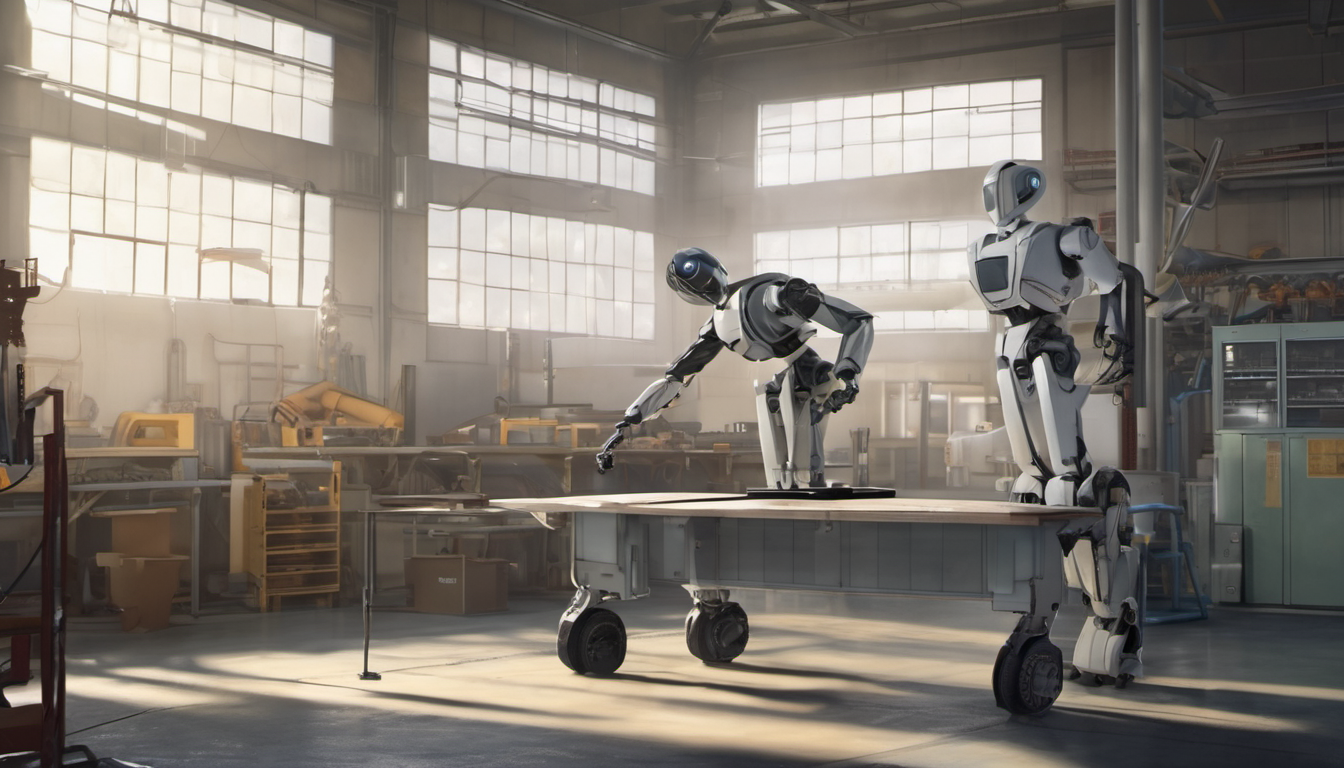
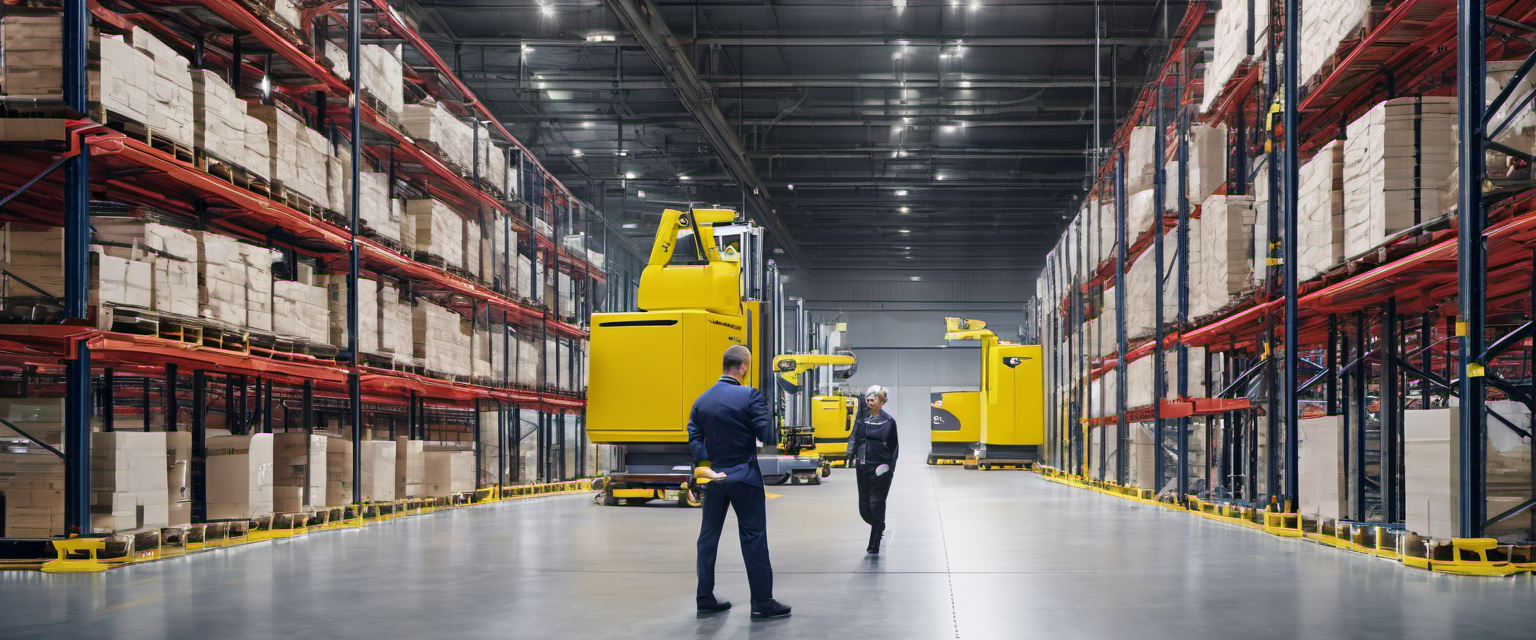
On Wednesday April 22, at Hannover Messe 2026, Accenture, SAP, and Vodafone Procure & Connect jointly announced that a humanoid robot has been doing visual inspections inside a live Vodafone warehouse in Duisburg, Germany. The robot receives inspection assignments through SAP Extended Warehouse Management, autonomously walks the facility, and reports back. The three companies framed the pilot at SAP Hall 15, Booth F08, as a safety and efficiency demonstration. The Accenture spokesperson’s on-the-record line — ritually repeated in the businesswire release — is that the pilot will “lower overtime costs and the dependency on temporary labor.” That quote is the story.
What the robot actually does
Per the press materials, the humanoid robot — whose manufacturer the three companies have declined to name, which is a tell in itself — performs the following tasks in the Duisburg facility:
- Visual inspection of stored pallets for damaged or misplaced inventory.
- Pallet-stacking and weight-distribution assessment.
- Detection of unused storage space and aisle obstructions.
- Hazard identification — blocked walkways, misaligned pallets, fallen stock.
- Real-time two-way communication with the SAP Extended Warehouse Management system for task dispatch and completion logging.
The robot is powered by Accenture’s internal “Robot Brain” stack, which lets it interact with human operators via voice, gesture, and text. Underneath, Accenture’s Physical AI Orchestrator trains it against a digital twin of the warehouse built on NVIDIA Omniverse and the NVIDIA Metropolis video-understanding blueprint. SAP Joule — the company’s agentic AI fabric — handles the reasoning layer between SAP’s structured warehouse data and the robot’s policy. The full stack is a who’s-who of 2026 enterprise AI vendors, which is the second tell: this pilot is as much a joint reference-architecture demo as a warehouse experiment.
What the press release actually says
The language that matters is in four quotes. Christian Souche, Advanced Robotics lead at Accenture, gives the labor line: humanoid robots will “reduce worker injuries and other warehouse safety incidents and lower overtime costs.” Dr. Lukasz Ostrowski, head of Embodied AI & Robotics at SAP, gives the SAP line: grounding agent actions in “trusted SAP data” allows automation of “health and safety incident reporting and real time inventory validation.” Reinhard Stefan Plaza Bartsch, global Network Logistics director at Vodafone Procure & Connect, gives the buyer line: the pilot explores “how humanoid robotics can improve efficiency, safety, and operational visibility.” And tucked into the body of the release, the uncredited phrase that is the actual pitch to CFOs: the pilot’s output will “lower overtime costs and the dependency on temporary labor.”
Warehouse overtime and temp labor are the two line items that every 3PL and corporate logistics operation in Europe uses to flex around demand. They are also, in practice, how most warehouse workers earn 15-40% of their take-home pay. “Lower overtime costs” and “reduce dependency on temporary labor” are not synonyms for “reduce headcount” — they are synonyms for “reduce hours and pay per worker.” That is the quieter and more honest version of automation displacement, and it is the one the press release said out loud.
Why this particular stack matters
Hannover Messe 2026 is running April 20-24. Three days in, the humanoid-robotics announcements have already stacked up: NVIDIA and partners showed a full AI-manufacturing portfolio, Zoomlion unveiled its Robot Ops platform, and Microsoft and Accenture’s Avanade joint ventured on an agentic factory system. The Accenture-SAP-Vodafone pilot is the first of the week that names a specific European corporate warehouse, a specific SAP system of record, and a specific labor-cost line item as the target.
For the supply-chain software industry that has built itself around SAP Extended Warehouse Management for twenty years, this pilot is the first public demonstration that the next integration point on top of EWM is not another dashboard but a physical agent that reads EWM, walks the floor, and writes back. That is the architectural story. For the ~2 million European warehouse and logistics workers employed through Amazon, DHL, DPD, UPS, GXO, Kuehne+Nagel, and the mid-tier 3PLs that Vodafone Procure & Connect sits alongside, it is the first pilot in which a recognisable European brand-name customer (Vodafone) has said on-the-record that the business case runs through their overtime envelope and their temp-labor budget.
Why LostJobs cares
The humanoid-warehouse narrative in 2026 has mostly been US-centric so far: Agility Digit at GXO warehouses and Toyota, Figure at BMW Spartanburg, Apptronik at Mercedes. The European version of that story has been more hedged — Siemens Erlangen, the Canton Fair humanoid price drops, the Schaeffler-Hexagon 1,000-unit commitment signed yesterday. The Accenture-SAP-Vodafone pilot is the first one where the customer on the buying side is a European telecom logistics operation, not a car factory, and where the economic pitch is openly about overtime and contingent labor, not headcount. That reframing matters — contingent and overtime hours are exactly the labor that a 2026 EU warehouse worker depends on to get above the legal minimum into a living wage.
Two things worth watching:
- Whether the robot manufacturer stays anonymous. In live-deployment pilots, naming the robot vendor is usually a contractual deliverable once the pilot clears its first performance gate. When Accenture, SAP, and Vodafone jointly publish a named vendor — Figure, Apptronik, 1X, Unitree, Humanoid, AgiBot, Fourier, any of them — that is when the pilot has become a commercial reference and a procurement RFP at every other European 3PL is days behind.
- Whether other SAP EWM customers show up fast. SAP has roughly 12,000 EWM customers globally. Accenture has long-standing SAP integration practices sitting in every major one of them. If, at Hannover Messe 2027, the same Accenture booth is showing five named European logistics customers with the same stack, the pilot becomes the product, and the Vodafone Duisburg facility becomes the demo video that was shot in 2026.
The striking thing about the April 22 announcement is not that humanoid robots are entering European warehouses. That was baked in six months ago. The striking thing is that a joint Accenture/SAP/Vodafone press release in 2026 is comfortable naming “dependency on temporary labor” as a cost center to be reduced, in the same sentence as “protect workers.” Only one of those two goals is actually compatible with the humanoid deployment described. The press release put them next to each other anyway, trusting that readers would not notice which one the CFO signed off on.