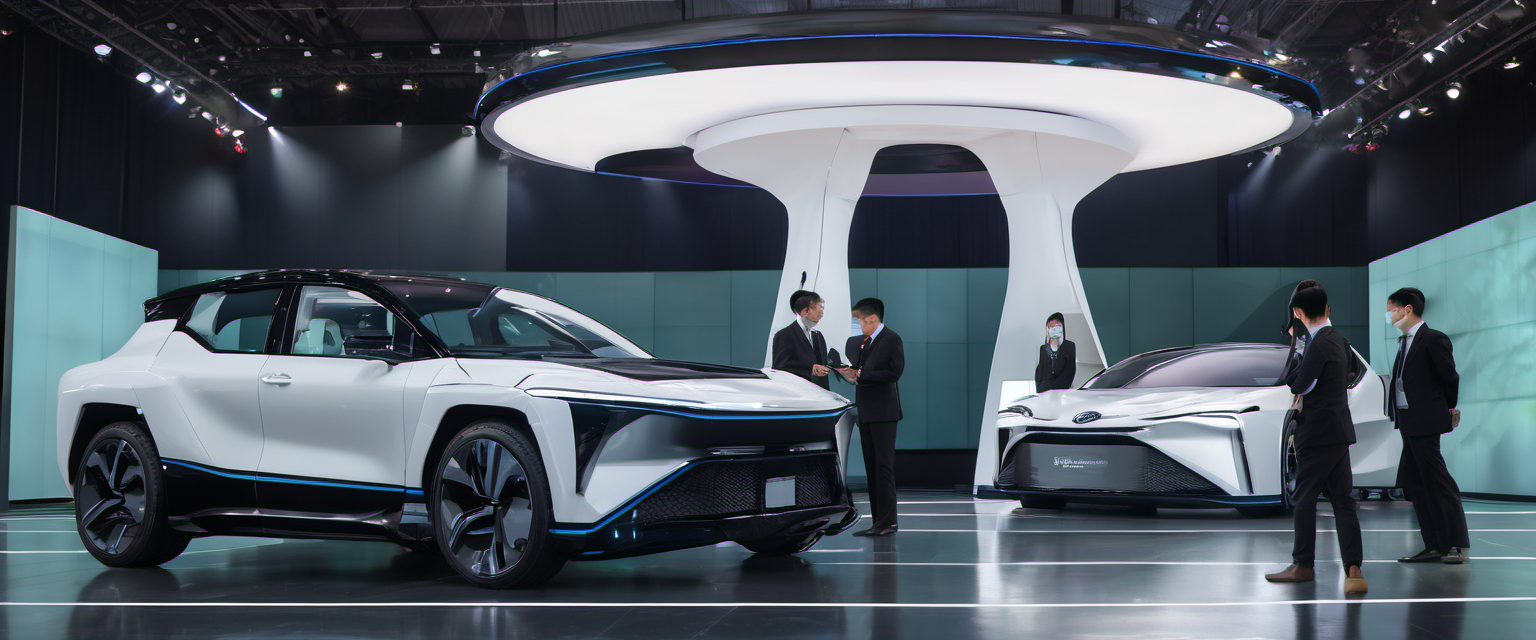
The most consequential robotaxi number of the year was not announced in San Francisco, Phoenix, or Austin. It was announced on April 24 at Auto China 2026 in Beijing, in a sentence that took eight seconds and reset the unit economics of urban transport.
Pony.ai founder and CEO James Peng told the exhibition-floor crowd that the all-in cost of the company’s 2027 fully unmanned robotaxi — encompassing the vehicle, the autonomous-driving kit, and the battery — will drop to under 230,000 yuan, or roughly $31,000.
For context: the starting price of a domestically built Tesla Model 3 in China is 232,300 yuan. The vehicle that Tesla sells to a human driver, with a steering wheel and pedals and the assumption that the buyer will operate it themselves, is now slightly more expensive than the vehicle Pony.ai is selling to a fleet operator with no driver and a 24/7 duty cycle.
That is the moment the labor cost of a taxi collapses into the capex line. Until last week, every robotaxi cost-projection deck started with “we still need to amortize the autonomous-driving kit.” The April 24 number says: not anymore.
What 230,000 yuan actually buys
Pony.ai’s cost stack breaks down roughly as:
- Vehicle platform — the Toyota bZ4X EV chassis, built jointly by Pony.ai, Toyota Motor China, and GAC Toyota, with mass production already running since February 2026.
- Gen-7 autonomous-driving kit — sensors (lidar, radar, cameras), compute (Pony’s domain controller), and software stack. Pony has stated the Gen-7 BOM cost is 70% lower than Gen-6.
- Battery — automotive-grade EV battery from a Chinese supplier (CATL is a known Pony partner from the parallel L4 light-truck announcement the same day).
That is fully redundant, automotive-grade, all-in, ready for fully unmanned commercial deployment. It is the entire stack a fleet operator buys, depreciated over the standard ride-hail vehicle life.
Why Tesla’s Model 3 is the right comparison
Three reasons this is not just a “Chinese robotaxi got cheap” story:
- Same chassis class. The bZ4X is a compact EV crossover; the Model 3 is a compact EV sedan. The buyer in both cases is making essentially the same decision about urban-mobility hardware.
- Same domestic market. The 232,300 yuan Model 3 is the Shanghai-built version. Tesla cannot drop that price without moving its own Q1 2026 margin numbers backward, and Tesla’s robotaxi product is not yet in commercial deployment.
- The Model 3 still requires a driver. Tesla’s FSD remains supervised. A Pony.ai bZ4X is fully unmanned; it does not have a driver because it does not need one. The labor cost of a Tesla-driven taxi is a New York taxi driver. The labor cost of a Pony.ai robotaxi is the small percentage of remote teleoperation that fleet operations will continue to require, amortized across a fleet.
In dollar-per-mile terms, a 230K-yuan vehicle running 16 hours a day with no driver wage and no driver shift change beats the unit economics of any human-driven taxi or rideshare in any major Chinese city by a margin that compounds every quarter of utilization.
Pony.ai’s deployment math
The price disclosure is the second leg of a story whose first leg is the existing fleet:
- Current fleet: over 1,400 robotaxis, serving more than 1 million unique users — nearly triple the user base from a year ago.
- EOY 2026 target: 3,000+ vehicles across 20+ cities globally, with nearly half of those cities outside mainland China.
- Already-driverless commercial service: Guangzhou, Shenzhen, and Beijing, with city-wide unit-economics breakeven already publicly claimed in Q4 2025.
- International: Singapore by-invite rides earlier this month, Zagreb commercial rollout (Europe’s first commercial robotaxi service), Luxembourg HQ, partnerships with Apollo Go competitors in the Middle East.
- Parallel product: the first vehicle-grade, fully-redundant L4 autonomous light truck, co-developed with CATL, addressing the parcel-delivery and last-mile-logistics layer that Amazon, JD.com, and Meituan all run human drivers in.
Combine the price floor with the deployment cadence and Pony.ai is no longer “a Chinese Waymo competitor.” It is a fleet hardware vendor with mass-production capacity at a price point that lets every Tier-1 Chinese city operator credibly RFP a 1,000-unit pilot in the FY27 budget cycle.
Who loses what — by occupational category
The job displacement profile of $31K-per-unit unmanned mobility is more granular than “taxi drivers.” China has roughly 3 million ride-hail drivers and a further ~2 million traditional taxi drivers. The 2027 cost number does not displace all of them in one quarter. It does set a clear sequence:
- Tier-1 city ride-hail (~800K drivers in Beijing/Shanghai/Guangzhou/Shenzhen) — first to compress, because Pony, Apollo Go, and WeRide all run their first commercial fleets in these markets. Visible income compression starts in 2027 H1 if vehicles ship on plan.
- Last-mile parcel delivery (~5M drivers across China) — the L4 truck announcement is the leading edge. CATL’s involvement says this is being engineered for fleet rather than demo.
- Inter-city long-haul trucking — slower, due to highway-mile regulatory gating, but the L4 light truck is the architectural template.
- The Western analog — Uber, Lyft, DoorDash, Instacart, and the long tail of US gig labor. None of those companies own their drivers’ vehicles. The first one whose cost-per-mile undercuts the Pony number, on its own platform, in any US city, at any utilization, has a strategic problem on a different time scale than its activist investors are pricing.
What LostJobs is watching
- Whether Pony.ai files an Amended 6-K with the SEC over the next 30 days quantifying the 2027 BOM target. A US-listed Chinese ADR cannot make a forward cost claim that material to the equity story without disclosure. If Pony files, the number stops being a slide and becomes a commitment.
- Whether Tesla’s Q3 2026 robotaxi update at the Optimus / FSD event Musk teased for late July prices its own service against Pony’s number. Musk’s Q1 call kept the robotaxi commercial date vague. The Pony number forces a comparison.
- The first Chinese ride-hail platform that cuts driver onboarding. Didi has not announced anything — yet. The leading indicator is not a layoff announcement; it is a quiet change in driver-app sign-up bonuses in the four cities Pony already operates in. That signal lives in Chinese ride-hail driver forums, not in press releases.
- The fleet-utilization disclosure in Pony’s Q1 2026 earnings (next 60 days). The commercial story works only if the existing 1,400-unit fleet is hitting >55% revenue-hour utilization in Tier-1. That number, alongside the 230K-yuan target, is the data that any fleet-operator RFP in 2027 will benchmark against.
The dry coda: the most quoted line from Auto China 2026 on Chinese auto Twitter over the weekend was not Peng’s 230,000-yuan number. It was an attendee’s reply: “At that price, the steering wheel costs more than the driver.” Both halves of that sentence are now true at the BOM level. The labor line is still where the rest of the math gets resolved.