
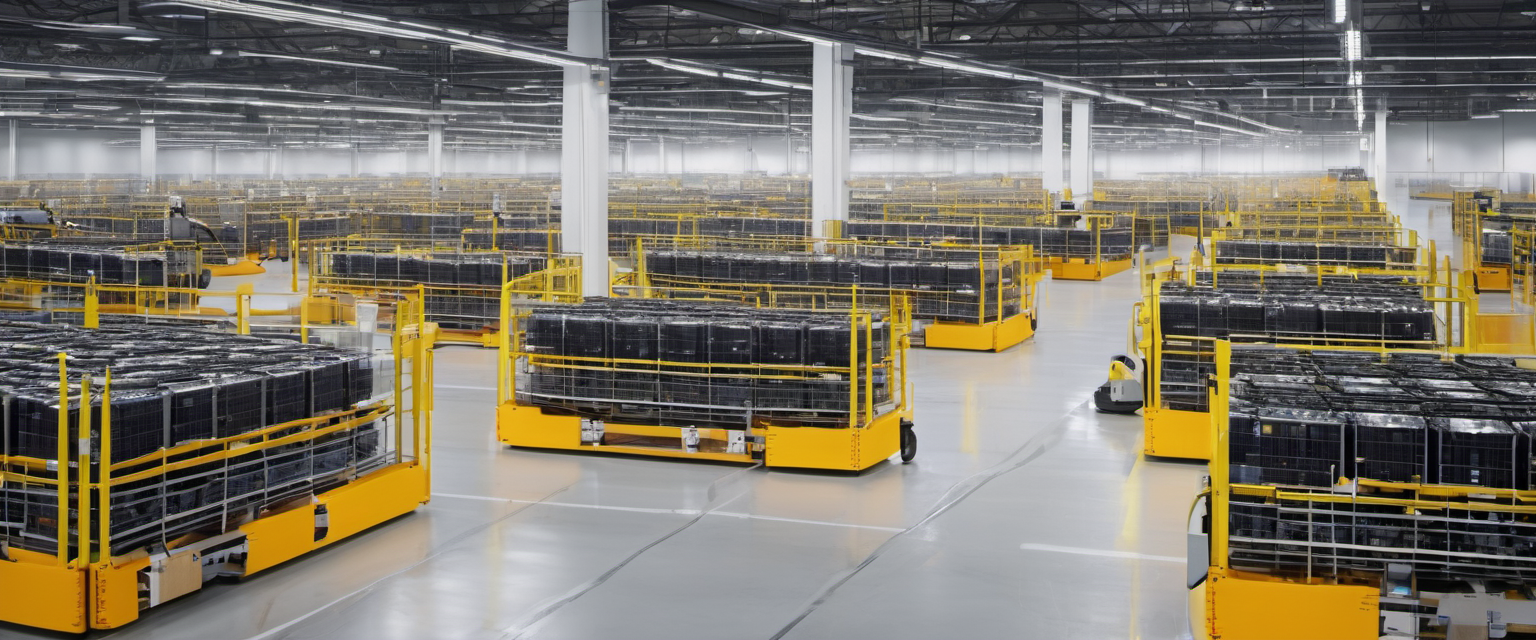
The most consequential warehouse-automation deal of 2026 was announced on April 15 in a Bloomberg leak, confirmed in a Skild AI/Zebra Technologies joint statement on April 17, and turned into a serious industry story on April 20 when the Robotics & Automation News writeup finally walked through what was actually being acquired. The headline is dry: Skild AI acquires Zebra’s robotics automation business, including the Symmetry Fulfillment orchestration platform. The interpretation is wet: the warehouse just got a single brain, and that brain doesn’t care what brand of robot it’s running.
What changed hands
Per the joint statement on the Skild blog and Bloomberg’s coverage:
- Buyer: Skild AI, the Pittsburgh-based foundation-model robotics startup behind the “Skild Brain” — described in their materials as an “omnibodied” AI that can control any robot, across any task, without per-platform retraining.
- What they got: Zebra’s entire robotics automation business, including the Symmetry Fulfillment orchestration platform — itself built on the Fetch Robotics assets Zebra had bought in 2021. Symmetry coordinates AMR fleets, robotic arms, and frontline workers through a single execution layer.
- Price: Undisclosed.
- Stated revenue context: Skild AI grew from $0 to roughly $30 million ARR in a few months in 2025 — noted in passing in the trade press but not in the joint release, which is its own tell.
CEO Deepak Pathak’s framing in the announcement is worth quoting verbatim: “Warehouse automation remains deeply fragmented today, with classical approaches falling short in most real-world scenarios.” That sentence — read with one eyebrow up — is also the mission statement for what happens to the workers next.
The fragmentation Skild is consolidating is also a labor structure
A 2026 fulfillment center is not one robot with humans around it. It is, on a good day, a federation of vendor systems: AutoStore in one wing, a Locus AMR fleet in the next, a Symbotic palletizer at the dock, a Berkshire Grey induction sorter feeding Boston Dynamics Strech depalletizers, a half-dozen Fetch Freights, the now-mandatory humanoid pilot from Figure or Agility wandering the picking aisles. Each of those has its own control software, its own vendor SLA, its own set of human exception-handlers, and — critically — its own constraint on how many of those humans you can replace, because each system knows only its own slice.
The Skild + Zebra pitch is to dissolve all of those slices into a single orchestration layer. From Humanoids Daily’s reading: “humanoids for pick-place, robotic dogs for inspection, robotic arms for packing, AMRs for material movement, and an orchestration layer to control them all.” That last clause — “and an orchestration layer to control them all” — is doing the actual work in this acquisition. The robots already exist. The brain is the asset. And the brain’s value is exactly proportional to how many human exception-handlers it makes redundant per warehouse.
Why warehouse workers should read this even though their job title isn’t in the press release
The Skild release uses the word “frontline workers” twice and “human-robot collaboration” three times. Neither phrase is wrong, but both are cover. The honest version, which the trade press will print in eighteen months when the first Skild-Zebra deployment publishes its productivity numbers, is something like: a fulfillment center that previously needed 1,400 associates to handle 50,000 orders per shift can, with one orchestration brain coordinating the existing robot zoo, run the same shift with 800 to 1,000.
The mechanism is not “robots replace humans on the picking line.” That mechanism is already saturated; the existing robots already do the picking they can do, and the residual humans are doing the parts the robots can’t — reach-into-bin exceptions, damaged-package triage, inventory reconciliation, peak-hour induction. The mechanism the orchestration layer enables is “the supervisor is no longer human.” A warehouse with 1,400 associates today employs roughly 100 of them as floor leads, zone managers, exception coordinators, throughput optimizers, and routing dispatchers. Those are the jobs the Skild Brain replaces, because those are the jobs the Skild Brain literally is. The associates who remain stay associates; the layer above them quietly evaporates. This is the same compression that hit the call-center supervisor layer in 2023 and the warehouse middle-manager layer is next.
The receipts on this pattern already exist in the underlying Fetch numbers. The Robot Report notes that Fetch Robotics’ AMR deployments at GXO and Walmart sites in 2024-2025 already cut floor-supervisor headcount by roughly 30% per facility — and that was Fetch on its own, without an omnibodied brain on top. Multiply that effect by Skild’s “any robot, any task” generalization, then apply it across the existing US warehouse-supervisor population of about 250,000 jobs, and you have a labor displacement story that nobody’s tracking because nobody is laid off in any single press release. They are simply not rehired when they leave.
Why LostJobs cares
Most of the 2026 humanoid-robot coverage has been about the robots themselves — Tesla on a Boylston Street sidewalk, Tiangong on a Beijing assembly line, Figure 03 hitting a $39B valuation off a BMW pilot. Those stories underplay the actual labor-market mechanism, which is not “the humanoid does the worker’s job.” The mechanism is “the orchestration layer makes one human supervisor able to oversee a federation of mixed-vendor robots that previously needed five.” Skild + Zebra is the first deal that puts both halves of that compression — the omnibodied brain plus the orchestration platform — under one corporate roof.
The deal is also a tell about industry structure. Zebra is a $4 billion-revenue Nasdaq-listed company that decided its robotics arm was worth less to it than the cash equivalent of selling it to a five-year-old AI startup. Skild is a five-year-old AI startup that decided the fastest path to industrial deployment was buying a 7,000-customer Symmetry installed base instead of selling into it one customer at a time. Both reads are correct. Both reads point to the same conclusion: the AI orchestration layer is now a more valuable industrial asset than the robots it orchestrates or the customers it ships to. The control plane has eaten the deployment plane. The labor implications of that follow on roughly an 18-month lag.
What to watch next
- The first joint Skild-Zebra reference deployment. Likely Q3 2026, almost certainly at an existing Symmetry customer (GXO, DHL, and Walmart are the obvious candidates). Watch for the productivity claim; “X% labor reduction” is the number to circle.
- The Symbotic / Berkshire Grey response. Both have their own orchestration plays. A counter-acquisition or a “we already have an orchestration brain, here’s our omnibodied roadmap” announcement inside 90 days is the realistic scenario.
- The Fetch alumni network. Roughly 200 Fetch Robotics engineers ended up at Zebra in the 2021 acquisition; another wave moved on to Locus, Symbotic, and Boston Dynamics. Skild absorbing the Fetch IP this many years later means the Fetch story is finally resolved, and the engineers who built that platform now have a third employer logo on the same résumé line.
The 2010s automation story was about robots learning to pick. The 2026 story is about who tells the robots which thing to pick next, because that is now where the labor displacement actually lives. Skild just bought the answer.