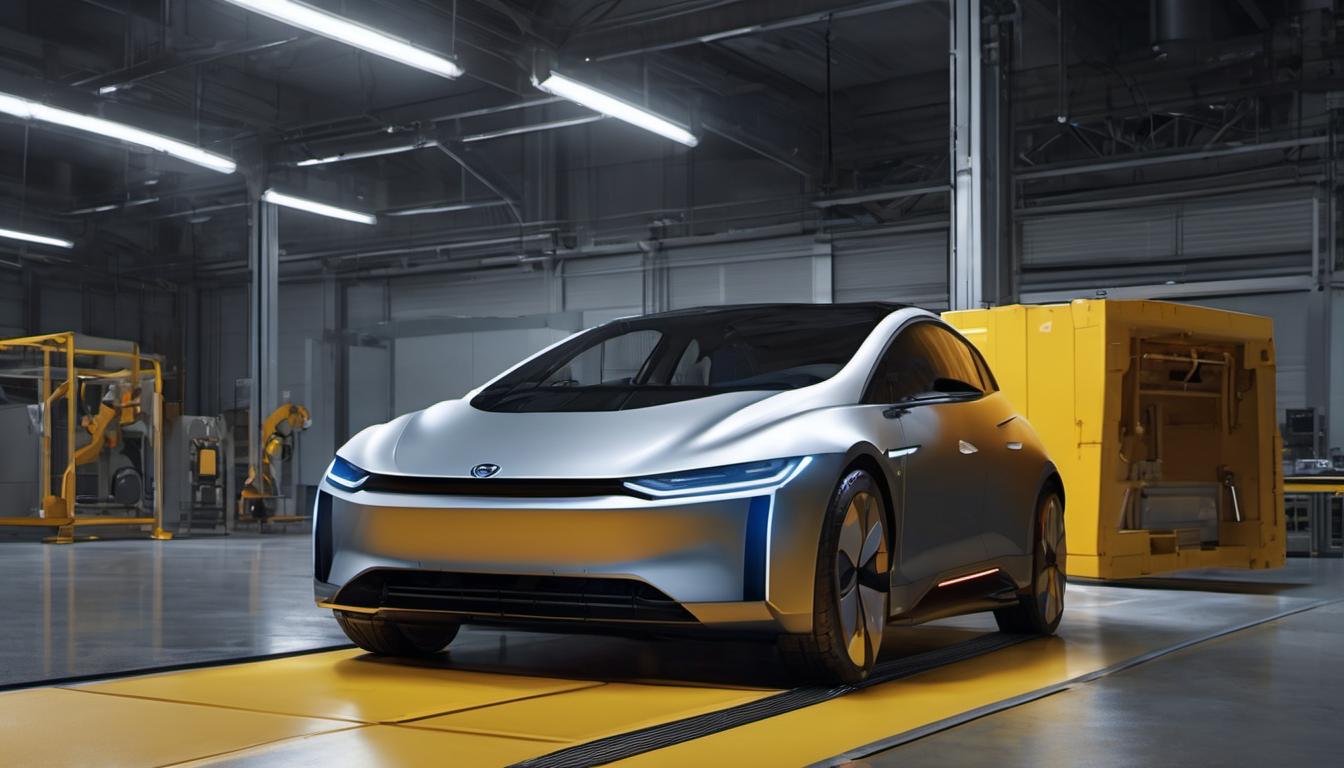
On Tuesday April 22 Tesla held its Q1 2026 earnings call. Between the vehicle-delivery apology and the Robotaxi timeline, Elon Musk confirmed something that the Electrek report turned into the actual news of the week: the last Model S and the last Model X roll off the Fremont line in early May 2026. That ends a 14-year production run for the Model S and an 11-year run for the Model X. No replacement vehicle is planned. The factory lines are then being torn down and rebuilt, from the ground up, to produce the Optimus V3 humanoid robot starting late July or August 2026.
The Model S — the car that introduced the world to the modern EV in 2012 — is being killed so Tesla can make a robot that Musk has still not publicly shown.
The dates, in order
- January 28, 2026: Musk announces on Tesla’s Q4 2025 earnings that Model S and X production will end and the Fremont lines will be converted for Optimus.
- April 1, 2026: Electrek reports that production is effectively done already — roughly 600 units left as dealer inventory.
- April 22, 2026 (Q1 2026 earnings call): Musk confirms the last vehicles roll off in early May. The line is then stripped. The original V3 reveal, previously penciled for Q2, is pushed again — now mid-year, likely late July.
- Late July / August 2026: Optimus V3 production begins at Fremont.
- Summer 2027 (per Musk): a second Optimus factory comes online at Giga Texas.
The schedule has slipped at every step since the Q4 2025 announcement. V3 was supposed to reveal Q2, then June, now late July. Production was originally “starting summer”; it’s now “late July or August.” Musk himself called the initial output rate “literally impossible to predict” because Optimus has 10,000 unique parts across an entirely new production line.
The V3 spec sheet
Per Tesla’s official Weibo announcement on April 23 and the subsequent Electrek write-up:
- 37 joints, up from 28 on V2 — 9 additional joints primarily in the torso and wrists.
- 22 degrees of freedom per hand, 25 actuators per forearm/hand (50 total per robot) — a 4.5× increase in hand actuation over V2.
- Walking speed: 1.2 m/s — roughly a slow human walk, about half a human jog.
- Gait stability: claimed 15-degree slope climbing and rapid balance recovery.
- Drive system: harmonic and planetary gear combination.
- Use cases: “industrial and domestic applications” (Tesla’s phrasing, meaning factory tote-handling and unspecified household tasks).
- 10,000 unique parts across a fully new production line.
- Planned annual output: 1 million units “by late 2026,” scaling to 10 million at Giga Texas.
The V3 specs are a real capability improvement over V2. They are also not production-demonstrated. The only public V2 factory footage Tesla has shown is the January 2025 Optimus-serving-Kool-Aid segment at We Robot, which was subsequently reported by Bloomberg and others to be teleoperated, not autonomous. V3 is being announced against a production baseline that has not yet shipped as an autonomous product.
What the Fremont conversion actually is
Three things are happening at Fremont simultaneously, and they are worth separating:
- Killing the Model S/X lines. These are low-volume cars (roughly 30–40k units/year combined at peak) that Tesla has subsidized as halo products for most of the last five years. The economics for keeping them has gotten worse as the Model Y and Model 3 volume has grown. Retiring them was a defensible financial call on its own, independent of Optimus.
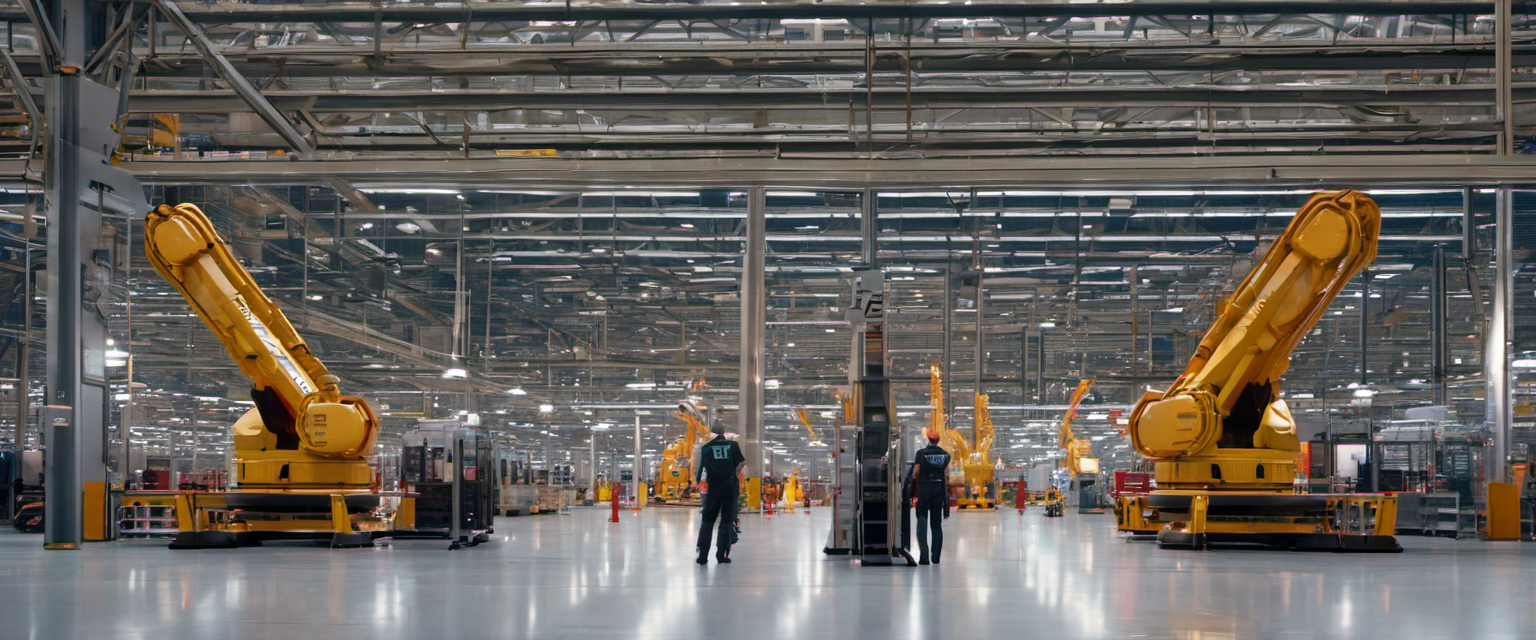
- Physically dismantling the lines. Musk said on the call that Tesla will “dismantle the entire production line from the ground up — starting with smaller parts production equipment and working forward to final assembly.” This is months of non-productive work. Fremont is not just idled; it is gutted.
- Building a net-new Optimus line. Because the parts lists, tooling, conveyor geometry, and QA stations are nothing like automotive assembly, Tesla is not converting a car line; it is replacing one. The “converted” framing in the PR is generous. The factory is being rebuilt.
This is not the low-stakes decision the Q1 earnings summary made it sound like. Tesla is taking a flagship product line offline for at least a calendar quarter of retooling, while its China and European competitors (BYD, XPeng, NIO, and Xiaomi) keep shipping EVs into Tesla’s core segments. The bet is that the Optimus output from the converted Fremont facility is worth more, by late 2026, than whatever the Model S/X line could have produced.
Why the V3 delay keeps mattering
Musk’s original roadmap was Q1 2025 = V2 production; Q2 2026 = V3 reveal; 2026 end = 1 million units/year. None of the first two have landed on time. The V2 never reached the promised production volumes; the V3 reveal has now slipped twice. 1 million units by late 2026 is now being repeated as the target even though Musk on the same call said the initial output will be “quite slow.”
The relevant comparison is with the companies that are actually shipping:
- Agibot hit its 10,000th cumulative humanoid shipment in April 2026, half of that volume in the last three months.
- Unitree reportedly shipped over 5,500 units in 2025 and is targeting 10,000–20,000 in 2026.
- Figure ran a live pilot at BMW Spartanburg that contributed to 30,000+ vehicles in ten months.
- Agility Digit is in paid commercial deployment at Toyota, GXO, and Mercado Libre.
Tesla’s 1M/year target is 50–100× the combined 2026 output of every other named humanoid company on Earth. At zero current autonomous Optimus production volume, that’s not a manufacturing plan; it’s an aspiration statement being used as a Q1 earnings narrative.
Why LostJobs cares
Two reasons — one about the car industry, one about the jobs story.
- Symbolism that lands on workers, not just shareholders. Fremont is a unionized-memory factory — the old NUMMI site, the Toyota-GM joint venture that Elon bought for ~$42M in 2010. It employs tens of thousands. Killing the two longest-lived Tesla products on that floor and replacing them with a humanoid robot line is, in the most literal sense, a car factory retraining itself into a robot factory. The body count of the transition is downstream of that decision — suppliers, technicians, line workers on S/X-specific tooling. Those jobs do not reappear unchanged on the Optimus line; the Optimus line has an entirely different skill mix.
- The labor math on the product itself. Every Optimus unit that ships at the 1M/year target is aimed at a job that, today, a human does. Tesla’s own framing is “industrial and domestic.” Industrial = warehouse pick-and-place, factory tote moves, simple assembly — the same job categories Agibot, Unitree, Figure, and Agility are all pursuing. Domestic = home service, eldercare, and child-watch roles that are currently the invisible scaffolding of the U.S. economy. 1 million units of those is an aspirational number; even 10% of that is 100,000 human workdays per day substituted.
The company that killed the Model S is making a bet that a robot it hasn’t fully shown to the public yet will, by the end of this year, be its highest-volume product. That’s a remarkable sentence to be able to write out loud. Whether the sentence turns out to be true is a 2027 question. The sentence itself is a 2026 decision.
The Model S was the car that proved EVs could be desirable. The Optimus is supposed to prove humanoids can be useful. The Fremont floor is now the place where the first argument ends and the second one has to start working.