
Elon Musk has spent the last decade insisting that Tesla is, secretly, an AI company. As of this week, he is not even being subtle about it anymore.
On April 14, Tesla announced that its Shanghai Gigafactory — the same plant that cranks out Model 3s and Model Ys for the entire Asian market — will play a “crucial role” in the mass production of the Optimus humanoid robot. The target price is $20,000 to $30,000 per unit. The target volume is one million units per year. On-site staff at the AWE 2026 expo in Shanghai casually mentioned that mass production could begin by the end of this year.
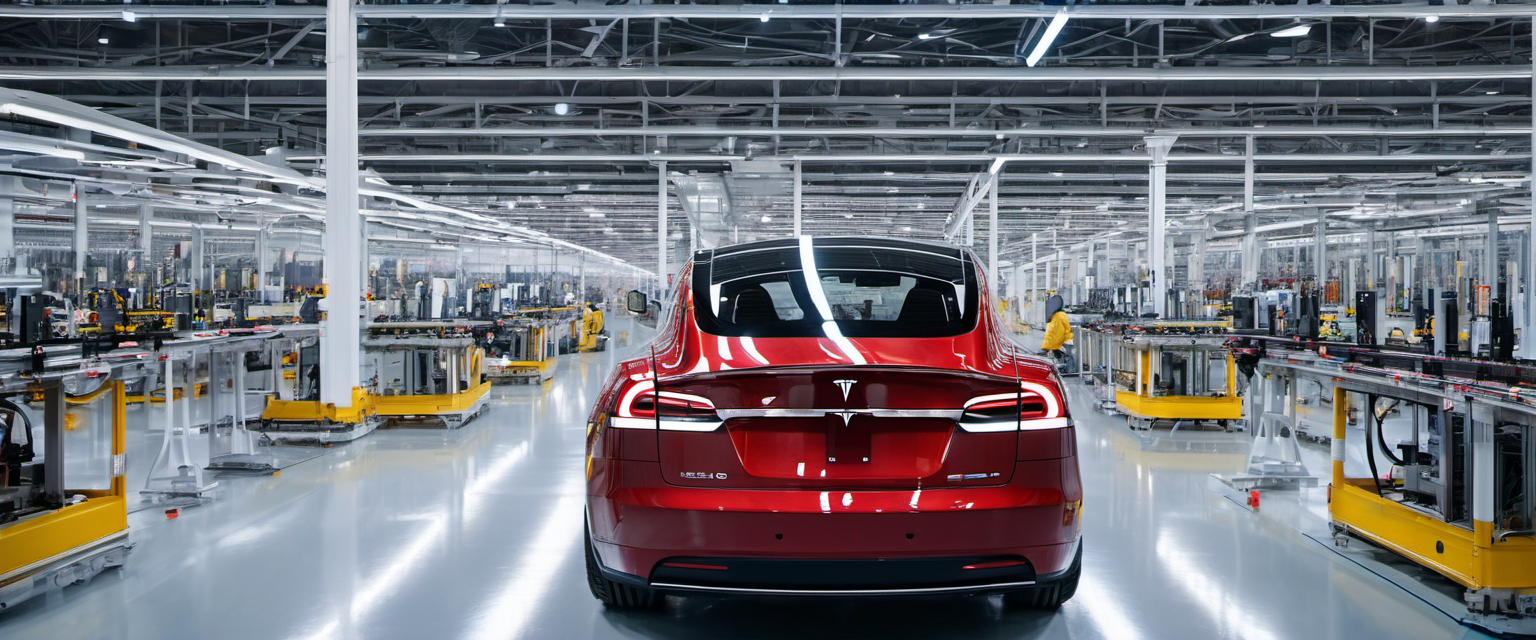
For context: Tesla delivered roughly 1.8 million cars in all of 2024. They are now planning to build a humanoid that costs less than a Model 3, at over half the volume, on the same factory floors. The Model S production line is reportedly being converted into the Optimus pilot line — which is one way to retire a flagship sedan, we suppose.
What “$20,000 humanoid” actually means
A $20–30k Optimus is a number engineered to terrify HR departments. The fully-loaded annual cost of a U.S. warehouse worker — wages, benefits, payroll tax, training, churn — is somewhere north of $50,000. A robot that costs less than a Hyundai Sonata, runs three shifts, doesn’t unionize, and never asks about the dental plan is exactly the kind of capex math that turns boardroom theory into purchase orders.
Whether the robot is actually capable of doing the job is, of course, the entire question. Tesla has been famously generous with Optimus timelines. The 2022 demo featured a robot that could barely wave; the 2024 showcase had one that handed out drinks (under heavy teleoperation, critics noted); the 2025 versions did warehouse-style picking in carefully choreographed videos. By “end of 2026,” Musk wants them rolling off a line at the rate of one every 30 seconds.
The China angle is the real story
Optimus being built in Shanghai — at scale, on existing automotive infrastructure — puts Tesla into direct head-to-head competition with the booming Chinese humanoid sector. Agibot just shipped its 10,000th robot. Unitree, UBTech, XPeng, and a dozen well-funded Shenzhen startups are racing for factory contracts. Tesla turning the Shanghai Gigafactory into a humanoid plant is essentially Musk saying: if the Chinese are going to dominate this category, we’ll dominate it from inside China.
Industry analysts are skeptical of the volume target. Most credible estimates put global humanoid shipments in 2026 at well under 100,000 units total. Tesla alone is now claiming 10x that, in 12 months, from a single facility. The kindest read is “aspirational.” The less kind read is “the same kind of math that gave us the Cybertruck delivery schedule.”
What this means for jobs
If even a tenth of Musk’s million-unit target lands — say, 100,000 Optimus units running in warehouses, factories, and retail back-of-house roles by late 2027 — it’s a meaningful slice of the U.S. logistics workforce. The U.S. has roughly 1.7 million warehouse workers. A 100k humanoid deployment isn’t catastrophic on its own, but it normalizes the line item on every operations VP’s budget. Once “humanoid CapEx” is a checkbox, it’s only a question of when, not if.
For now, Optimus is a $20,000 promise. By the end of the year, we’ll know whether it’s a $20,000 product.
The Model S launched a luxury car category. The Model 3 launched mass-market EVs. Optimus is launching mass-market labor. Cool.