
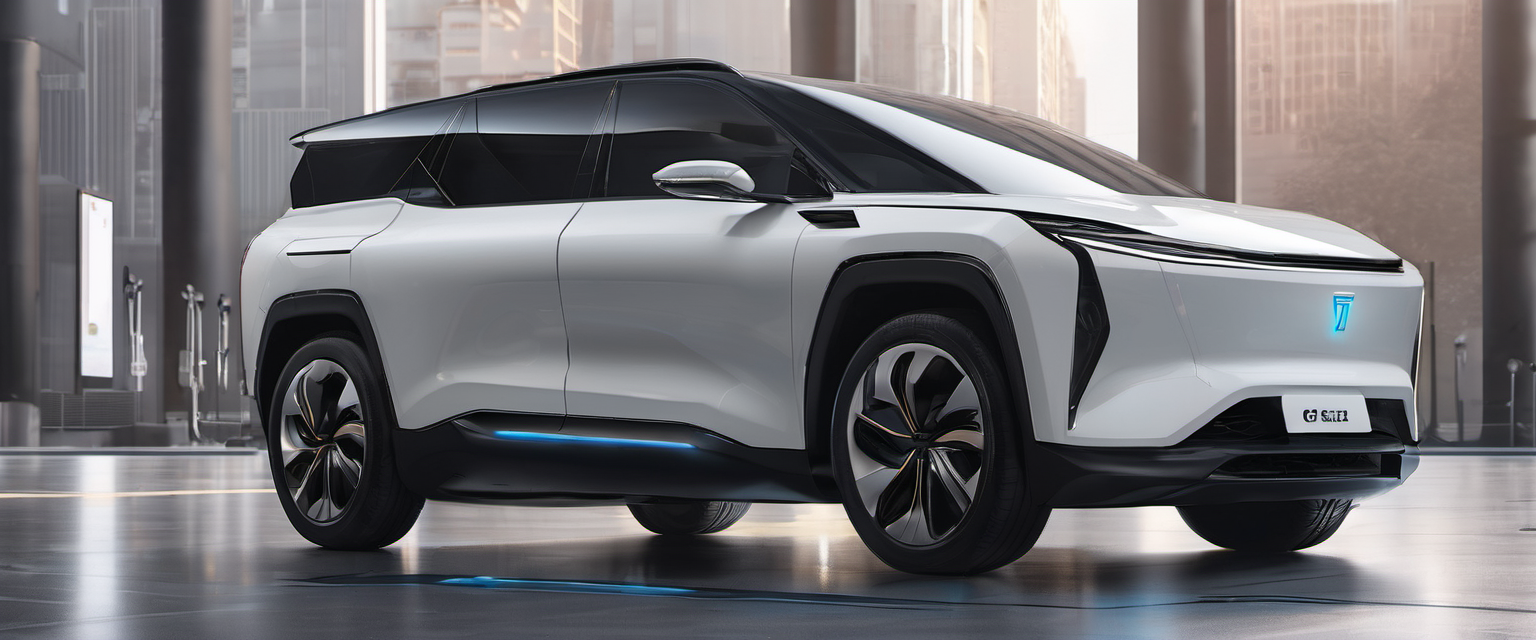
XPeng (NYSE: XPEV) said on May 18 that the first mass-produced unit of its robotaxi has rolled off the production line in Guangzhou, making it the first Chinese automaker to mass-produce a robotaxi built end-to-end on its own technology stack. The vehicle is engineered to Level 4 autonomous-driving standards, runs on four self-developed XPeng Turing AI chips delivering 3,000 TOPS of on-board compute, and uses no LiDAR and no high-definition maps.
The pure-vision system is powered by VLA 2.0 — XPeng’s end-to-end vision-language-action model — which the company claims compresses system response latency to under 80 milliseconds and runs 12× faster inference than the previous generation. None of those numbers will matter until a paying passenger gets in. But the production-line piece is the part of the robotaxi trade everyone has spent six years promising and only Waymo, Baidu and Tesla have actually delivered. XPeng just delivered the fourth instance.
What XPeng actually shipped, and what it didn’t
The robotaxi shares its platform — the GX platform — with the $58,000 consumer flagship SUV that XPeng launched last month at Auto China 2026. Both versions sit on the same four Turing chips, the same VLA 2.0 stack, the same Bosch steer-by-wire system, and the same aviation-grade six-layer safety redundancy. The robotaxi strips out the consumer-cabin layout and replaces it with a passenger-first interior: privacy glass, gravity seats, rear entertainment screens, voice-controlled cabin settings. XPeng has announced 5-seater, 6-seater and 7-seater variants.
That is a fundamentally different bet from the purpose-built robotaxi architecture that Tesla’s Cybercab and Geely’s EVA Cab are pursuing. Tesla and Geely are shipping vehicles without a steering wheel or driver controls. XPeng is shipping a robotaxi whose chassis is amortised across millions of consumer vehicles. The cost argument is that this lets XPeng validate the hardware platform in private-driver hands while keeping unit economics low; the autonomy argument is that the consumer fleet generates the training data that the robotaxi fleet will run on.
What the timeline looks like
XPeng secured a road-testing permit for L4 autonomous vehicles in Guangzhou in January 2026, then established a dedicated robotaxi business unit in March. The May 18 milestone is the production-line piece — not commercial operations. The next markers are:
- H2 2026: pilot operations with on-board safety officers, in Guangzhou. The pilot’s job is to validate technology, rider acceptance and the business model.
- Early 2027: safety-officer-free operations. This is the line that separates “robotaxi pilot” from “robotaxi service.” Waymo took roughly six years from its first commercial pilot to this milestone. XPeng has given itself less than 12 months.
- Amap — Alibaba’s mapping platform — signed as the first global ecosystem partner, with the robotaxi SDK to be opened to third-party developers.
“Aggressive but defined” is the line Electrek used. “Aggressive” is doing more work in that sentence than “defined.”
The compute math, since it is the headline differentiator
| Operator | On-board compute | Sensors | HD maps |
|---|---|---|---|
| XPeng GX robotaxi | 4× Turing AI · 3,000 TOPS | pure vision, no LiDAR | none |
| Tesla Cybercab (HW4) | custom Tesla SoC | pure vision, no LiDAR | none |
| Geely EVA Cab | 2× Nvidia Drive Thor-U · 1,400 TOPS | 43 sensors incl. LiDAR | yes |
| Waymo (5th-gen Driver) | custom | LiDAR + radar + cameras | yes |
| Baidu Apollo Go (6th-gen) | custom | LiDAR + radar + cameras | yes |
XPeng’s 3,000 TOPS is roughly 2× Geely’s stated EVA Cab compute envelope and the highest published number on any production robotaxi platform in May 2026. Numbers on a spec sheet are not numbers on a pickup-and-drop chart, but the on-board compute headroom is the constraint people who actually run autonomy stacks talk about first. XPeng has bought itself the most of it.
The bet against XPeng is the same bet against Tesla: pure-vision plus end-to-end VLA models is empirically still less robust at the long-tail edge cases that LiDAR-plus-HD-maps stacks handle by construction. The bet for XPeng is that scaling the consumer fleet’s data collection past Waymo’s painstaking city-by-city HD-map effort eventually wins on geography coverage even if it loses on per-mile edge-case rate.
Where XPeng sits in the global robotaxi map, in May 2026
Waymo is still the operating leader with hundreds of thousands of weekly rides across multiple US cities. Tesla launched its robotaxi service in Austin in June 2025, integrated unsupervised vehicles in January 2026, and has since expanded the service to Dallas and Houston with Cybercab production starting at Giga Texas. Baidu’s Apollo Go hit 250,000 weekly rides by late 2025, closing in on Waymo’s volume, and runs across 20+ Chinese cities. Pony.ai and WeRide each operate fleets above 1,000 vehicles in China.
XPeng’s pilot has not started yet. The May 18 announcement does not change that. What it does change is the conversation about which Chinese player has full vertical control of the stack. Baidu, Pony.ai and WeRide are primarily software-and-fleet companies running on third-party vehicles. Geely picked Nvidia for the EVA Cab’s compute. XPeng designs the chip, the model, the platform and the assembly line. The only direct global analogue at that level of vertical integration is Tesla. The fact that this is now true at the production-line milestone is the part that matters for the China-vs-US autonomy story.
Why this lands on a robotics site
Robotaxis are the part of the robotics stack where the unit economics are first being tested at scale. The same VLA model family that XPeng is putting into the GX robotaxi is what XPeng’s IRON humanoid program runs on — XPeng has said publicly that 70% of the EV tech stack ports into the humanoid. The cars are not separate from the humanoids; they are different chassis bolted onto the same perception, planning and action models. When XPeng’s robotaxi pilot launches in H2 and produces a real edge-case dataset, that dataset feeds the IRON program too. The argument that “robotaxi scaling subsidises humanoid scaling” — first made by Musk on Tesla earnings calls and dismissed as deflection at the time — is now an explicitly named XPeng strategy with a production-line photo to back it up.
The labor-side implication is the part that lands on LostJobs. Robotaxi mass production sets the timer on three driver-economy categories: ride-hail (Didi in China, Uber/Lyft in the US), municipal taxi, and long-haul + last-mile delivery driving. China’s professional driver workforce is around 30 million. Waymo’s commercial deployment took six years to hit hundreds of thousands of weekly rides; if XPeng’s “early 2027 safety-officer-free” line holds, the Chinese version of that curve compresses to under 18 months. The number to watch is not whether XPeng pulls it off — it is how many Chinese cities greenlight the operating permits in the back half of 2026, because that is the binding constraint, not the production line.
What to watch
- The XPeng GX robotaxi unit-cost number. XPeng has not published the price per unit. The amortisation-vs-Cybercab argument only works if the GX robotaxi BOM lands meaningfully below Tesla’s reported Cybercab production target. If XPeng quietly discloses a per-unit cost on the Q2 earnings call, that is the substantive number.
- First city outside Guangzhou. Apollo Go’s network advantage is 20+ cities. XPeng’s pilot only matters past Q1 2027 if it has a second and third city queued up before pilot operations end.
- The Tesla-XPeng compute comparison the first time both are on the same city pavement. Both bet on pure vision plus end-to-end VLA. Both have the chip in-house. The first head-to-head data — disengagements, takeover rate, intervention rate — will be the data point that tells the autonomy field whether vertical integration plus VLA is actually a durable architecture or whether Waymo’s LiDAR-plus-HD-maps stack still wins on the long tail.
- The IRON humanoid’s first commercial customer. If XPeng’s robotaxi pilot ships data and revenue in H2 2026, the second derivative — does IRON get a paying-customer announcement on the back of it — is the cleanest read on whether the “shared VLA stack” thesis actually compounds across robot form factors.
XPeng’s communications team wants this read as “Chinese full-stack vertical integration scales from EV to robotaxi to humanoid on one model family.” The autonomy field wants to see whether the under-80-ms latency holds up in real traffic. Both questions get tested on Guangzhou streets in H2 2026. May 18 was just the production-line photo.
Sources
- Electrek — XPeng (XPEV) rolls first mass-produced robotaxi off the line, a China first (May 18, 2026)
- TechRepublic — XPeng Rolls Out Its First Mass-Produced Robotaxi
- Electrek — XPeng GX flagship SUV at Beijing Auto Show: 750 km range, $58,000
- KrASIA — XPeng to unveil fifth-gen humanoid robot built on 70% of its EV tech
- XPeng Newsroom — Physical AI Emergence: VLA 2.0, Robotaxi, Next-Gen IRON, Flying Car