
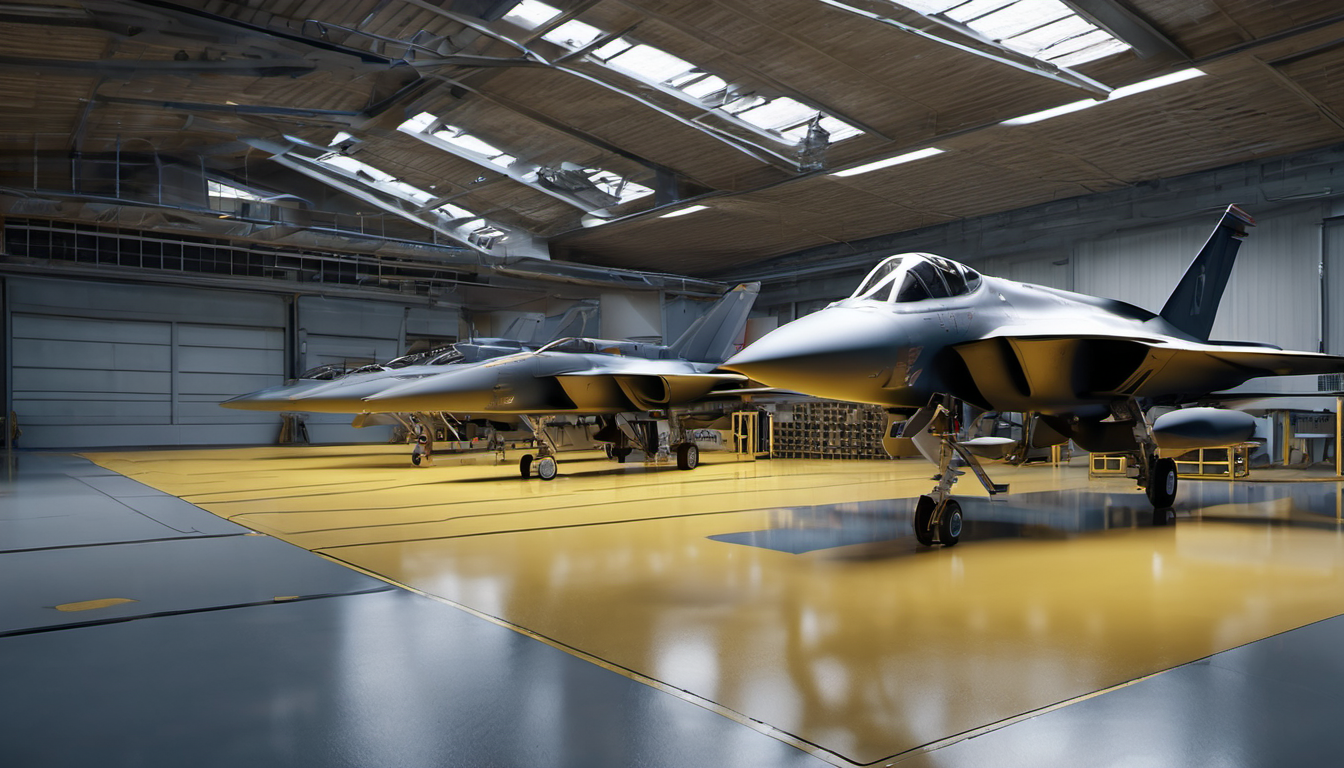
BAE Systems told staff on Wednesday, November 18, that it plans to cut up to 1,070 roles across its UK head office and air sector. According to PA’s report, carried by The Independent, the company wants to get there through a voluntary process, and it drew a line around three groups it intends to leave alone: shop-floor manufacturing, aircraft maintenance at RAF bases, and early-careers trainees.
Unite put out its response the same day, describing “nearly a thousand redundancies” in the air division.
BAE’s stated reason is the corporate one. The announcement, it said, “is the next stage of our ongoing focus on enhancing our agility and competitiveness.” There is no AI in the statement and no automation either. None of the reports we read mention it, and we are not adding it.
The headcount math
BAE gave PA the base figures. It employs about 50,000 people in the UK, roughly 18,500 of them in the air sector and about 1,000 at head office. On that base, 1,070 roles is about 5.5% of the two units combined and about 2% of BAE’s UK workforce. Those percentages are our arithmetic, not BAE’s.
The split is less settled. AeroTime reports 940 of the roles sit in the air division. If that holds, about 130 fall on a head office of roughly 1,000 people. That would put the air-division cut near 5% and the head-office cut near 13%. BAE has not published that breakdown, so we treat it as a reported number.
On location, The National reports the cuts will focus on Warton and Samlesbury in Lancashire, and are not believed to touch the Scotstoun and Govan yards in Scotland. BAE has given no timeline and no consultation period.
A full order book, a thinner office
The single most important fact here is that BAE is not short of work. AeroTime cites BAE’s figure of £33B in orders secured so far in 2026, against more than £27B at the same point last year. The Ministry of Defence, responding to the news, pointed to a £708M contract extension for BAE to lead Global Combat Air Programme development, and to last year’s £8B deal to sell Turkey 20 Typhoons, which the MoD says sustains 6,000 jobs at two BAE sites.
So demand did not fall. Unite’s read is that delays in defence spending are pushing companies into decisions that cost British jobs. Sharon Graham, the union’s general secretary, noted the timing: the cuts landed the day after the government backed a major boost in apprenticeships. Unite wants contracts for British-built Typhoons and Collaborative Combat Aircraft announced immediately.
Both accounts can be true at once. BAE is reshaping its cost base, and the union is waiting on the next order. For the people affected, the outcome is the same. In a growth year, the layer above the shop floor is getting thinner.
Against this month’s other cuts
Two weeks earlier we covered Boeing’s 5% cut at Commercial Airplanes. The percentages are close. The logic runs the other way. Boeing slowed its production ramp and found itself overstaffed, so the exposed jobs track the build rate. BAE protected the build side explicitly and is taking cost out of everything around it.
Schaeffler’s plan on November 3 named 3,460 European jobs and five plant closures. That is capacity coming out. BAE is closing no sites and cutting no output. This is an organizational trim, not a production cut.
At the macro level, Challenger’s October report attributed 1,265 of 43,994 announced US cuts to AI, the lowest AI count of the year. BAE’s announcement is a UK event, but it belongs to the same larger category: a company resizing its structure for cost and speed, with no software named as the cause.
What it means for your job category
The exclusion list is the signal. By ring-fencing manufacturing, base maintenance and trainees, BAE is saying that the people who build and fix aircraft, and the pipeline that replaces them, are not in scope. Work backward from that and the pressure lands on everything else in the air sector and head office: program management, functional support, administration and office-based engineering coordination. That is our inference from the exclusions. BAE has not listed the affected functions.
For anyone in an office role in UK aerospace or defense, the takeaway is that a growing order book is no longer a guarantee. Companies with contracts in hand protect delivery capacity first and squeeze the overhead around it.
The practical test is distance from the aircraft. Roles that sit one step from production, such as manufacturing engineering on the line or maintenance planning at a base, look closer to the protected group than roles that coordinate across programs or serve the head office. If your job is mostly reporting, approvals or cross-team scheduling, this is the kind of announcement that names your layer without naming your title. A voluntary scheme is also the moment to weigh an exit on your own terms, before any compulsory selection starts.
The timing gives some room. A voluntary process means BAE will first see how many people choose to leave, and any compulsory step comes after. Our read, not BAE’s: an efficiency trim is harder to reverse than a rate cut. When a production line speeds back up, it hires again. A management layer that has been merged away rarely grows back.
What to watch next
Three things would sharpen this. First, whether BAE publishes the formal air-versus-head-office split and a consultation timeline. Second, the take-up on voluntary redundancy, which decides whether compulsory cuts follow. Third, the timing of UK orders for Typhoon and Collaborative Combat Aircraft, the variable Unite is betting on. If any later document ties part of this cut to automation or AI tools, that is a follow-up to this piece and we will say so.
Sources
- Unite: BAE Air Division announce nearly 1000 job losses (November 18, 2026)
- The Independent / PA: BAE Systems plans to cut up to 1,070 jobs in air division and head office (November 18, 2026)
- The National: BAE Systems to slash 1000 jobs (November 18, 2026)
- AeroTime: UK defense plan under fire as BAE looks to cut 1,070 jobs (November 19, 2026)