
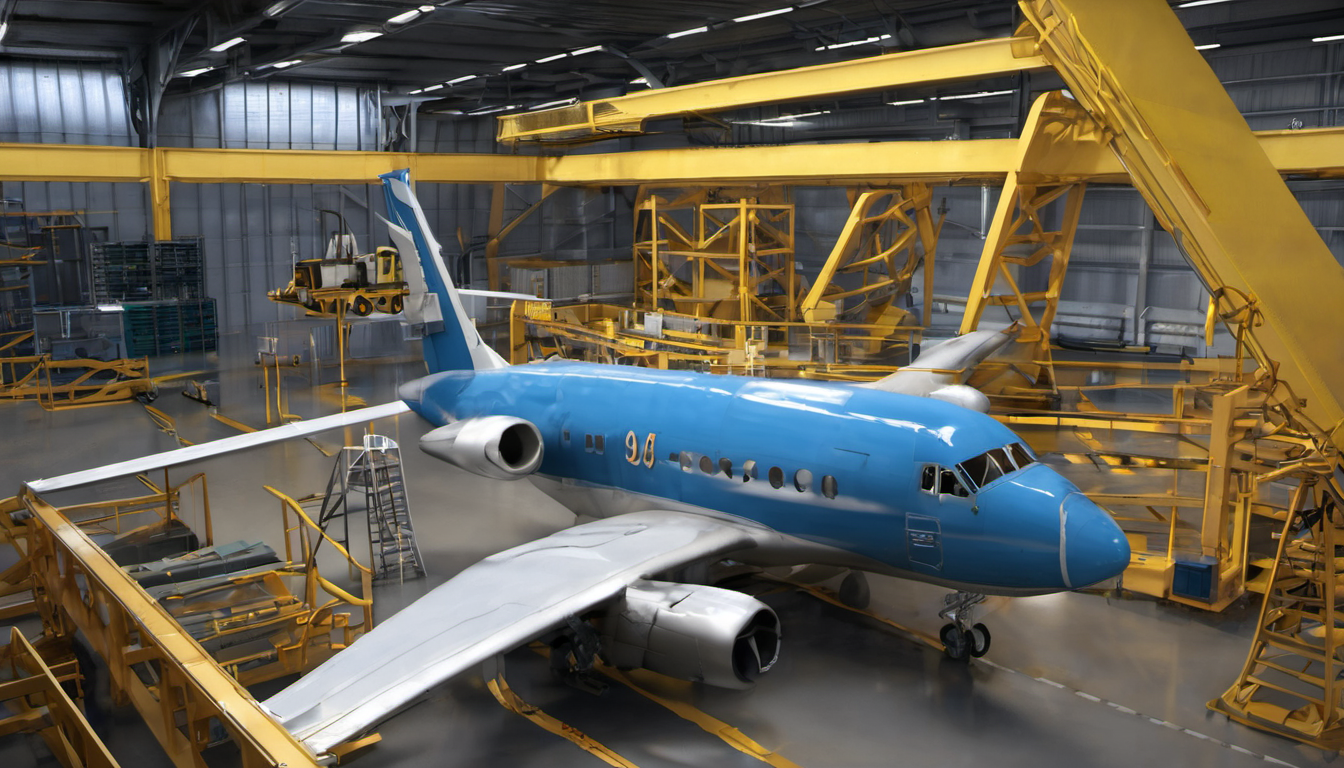
On Monday, November 9, Stephanie Pope sent every Boeing Commercial Airplanes employee the same message: the division will shrink by 5%, starting in December. According to KSN’s report of the message, the cut will come through a mix of attrition and involuntary layoffs. Boeing is not releasing a number of jobs, and has not said which programs or sites take the reductions.
The reason Pope gave is the plain one. “Adjusting our production schedules and reducing aircraft output puts us in an overstaffed position,” she wrote, as quoted by KSN. This is a cut with no AI in it. None of the three local reports we read mention AI or automation, and we are not adding any.
What is known, and what is not
Known: 5%, December start, attrition plus layoffs, and the stated cause. Not known: the base. My Everett News puts the cut at about 2,500 positions, which implies a division of roughly 50,000. That is the outlet’s own arithmetic, not a Boeing figure, and the email did not say how many jobs would go or where. Everett is a final assembly site, and WIBW notes the former Spirit AeroSystems campus in Wichita is part of the division. Neither has been told whether it is affected.
So the 5% is the only hard number Boeing has put on it. We treat 2,500 as an estimate until Boeing or a state filing gives a count.
Why a factory with a record backlog is overstaffed
The staffing is a downstream effect of the production plan. In its third-quarter results, released October 27, Boeing said the 737 “continues to progress toward stabilized production of 47 per month.” The 787 holds at 8 a month. Commercial Airplanes booked a loss from operations of $697M on $10,720M of revenue, an operating margin of negative 6.5%, with the company pointing to “higher projected costs associated with future production rate adjustments.”
Against that sits a record commercial backlog of more than 6,300 airplanes valued at $612B, and 161 deliveries in the quarter against 160 a year earlier. Demand is not the problem. The problem is that Boeing hired and trained for a faster ramp, then slowed the ramp. In the words reported from the message, the division made significant investments in talent and training over the past two years, and the schedule it staffed for has moved.
The 737 is also where Boeing has less room to move. KLM’s fleet plan, published four days earlier, phases the 737 out of its own fleet, a reminder that Boeing’s customers are making fleet decisions alongside Boeing’s rate decisions.
How it compares with this week’s other cuts
Boeing’s 5% is smaller in percentage than KLM’s almost 15% or Canva’s 22%, and probably larger in headcount than either, but it is the least specific of the group. Schaeffler named 3,460 European jobs and five plants. Canva cut about 1,270 roles. Alaska Airlines took out 200 management jobs. Those announcements carried a count. Boeing’s carries a percentage and a month.
It also lands in the middle of a labor market where AI is a small share of the cuts. Challenger’s October report put AI at 1,265 of 43,994 announced cuts, the lowest AI count of the year. Boeing is the kind of event that sits in the other 97%: a manufacturer resizing to its own production schedule.
What it means for your job category
The exposed work is in manufacturing and its support. Final assembly, production planning, supply chain and quality roles all scale with the rate Boeing builds at, and the rate has just been reset. Attrition goes first, which favors people already planning to leave and softens the cut for those who stay. Involuntary layoffs follow, and Boeing has not said where.
Timing is short. December is weeks away, and Boeing has not named groups or sites. Our read, not Boeing’s: a cut tied to production rate is reversible in a way an automation cut is not. If the 737 reaches 47 a month on schedule, hiring can resume. A role removed by software does not come back at the next rate increase. For readers deciding how worried to be, that is the useful distinction, and it is why we log this one as AI not named.
What to watch next
Three documents would turn this from a percentage into a count. A Washington state WARN notice would give a number and a site, since Renton and Everett are both in the state. A Kansas notice would answer the Wichita question. And Boeing’s next production update would show whether 47 a month is still the target or has moved. If a later filing ties any part of the cut to automation or AI tools, it is a follow-up to this piece and we will say so.