
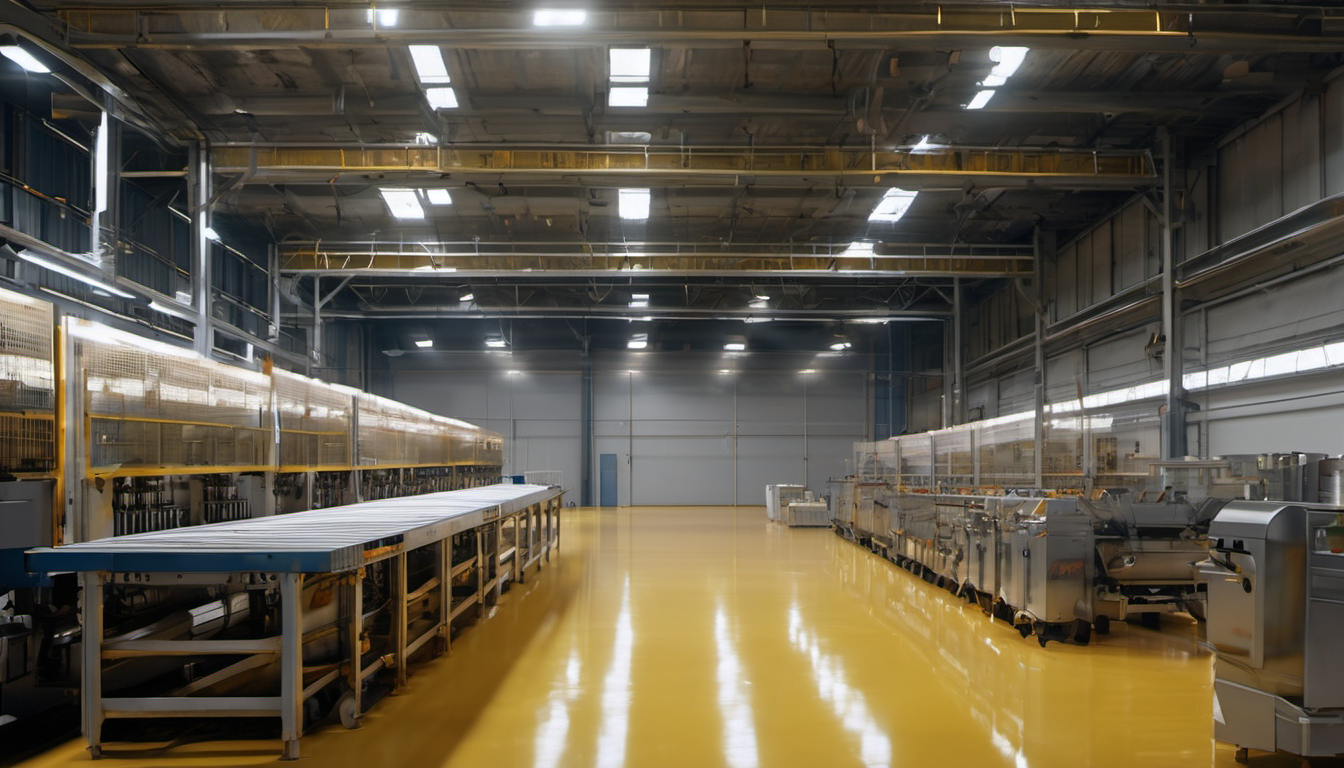
On Monday afternoon, Bosch gathered its Nuremberg workforce and told them that about 900 of the plant’s roughly 1,800 jobs will be gone by 2029. Half the site, announced at a single works assembly. The company’s stated reasons are the transformation of the auto industry and rising competitive and price pressure, with Chinese rivals the named squeeze in trade-press coverage. Artificial intelligence isn’t in any of them.
We’re filing this under the same heading as our Prudential and Bristol Myers Squibb pieces: a large cut where AI is not the stated cause. Those two were back-office rounds. This one comes off a shop floor, and the mechanism is different.
What the plant makes, and why it’s exposed
The Nuremberg site builds high-pressure pumps for petrol injection systems, a component whose demand tracks the number of combustion engines being built. IG Metall says the line faces a price war with other plants, inside and outside the EU. Trade press adds that the hydrogen fuel-cell business meant to soften the decline has underperformed expectations. So the plant lost demand from one side and its planned replacement from the other.
Bosch called the decision extremely difficult and promised socially responsible solutions. It hasn’t said how the 900 will be reached. The works council chair, Arne Brandsch, said there must be better ways for the plant than a cut this deep. The site-security agreement that has protected the workforce expires on December 31, which is 94 days after the announcement.
The numbers around it
Bosch employed 406,225 people at mid-2026, down 6,549 from the end of 2025, a 1.6% drop in six months. Germany carried most of it: 118,932 employees against 122,968, a fall of 4,036. That’s 62% of the group’s net decline landing in one country. Nuremberg’s 900 alone would equal 22% of Germany’s first-half drop, and it’s reported as additional to the 22,000 cuts Bosch announced last year, most of them in Mobility, according to trade press.
Trade coverage also notes that Bosch grew revenue 3.6% over the same stretch, even as headcount fell. That’s the pattern readers of this site know from the software side: revenue holds, payroll doesn’t. The difference is the cause. Here it’s a product line running out of customers, not a tool doing the work.
For scale inside German auto, Volkswagen’s Future Plan 2030 carries 50,000 additional cuts, and its September 21 profit warning put a 1% margin under that plan. Bosch’s 22,000 spread across five years is less than half VW’s number. Nuremberg is one site in that program, and it shows how the program actually lands: plant by plant, half at a time.
What to watch next
Three things settle how this plays out. First, whether the site-security agreement is renewed, traded for the cuts, or allowed to lapse; IG Metall’s Andreas Weidemann has already promised massive resistance against anyone who takes away a plant’s future, so the December 31 date is the real negotiating clock. Second, whether Bosch attaches a transfer or retraining offer to the 900, since the plant’s own fuel-cell hopes haven’t filled the gap. Third, whether other Bosch combustion sites get a similar half-and-half announcement. With a 22,000-job target running to 2030, more site-level announcements are the expected path, not an exception.
The cohort comparison that matters here isn’t with software layoffs. It’s with the other component makers exposed to the same demand curve. When a plant’s product depends on the number of combustion engines built, a headcount cut of 50% at one site is what the curve looks like at plant level. Group figures smooth it into a percentage; a plant makes it a date.
What it means for the people in the plant
Nothing in the reporting ties the pump line to automation or AI, and we won’t suggest it does. That’s the useful part. A machinist or line technician at a combustion-parts supplier faces a demand cliff with a date on it, and no software product is going to change that timeline in either direction.
The exposed roles are specific: CNC operators and setters, assembly and test technicians, quality inspectors, and production-planning engineers tied to injection components. The dates matter more than the category. The job guarantee lapses at year end, how the 900 will be reached is still unspecified, and anyone in this cohort has roughly three years to move sideways into EV drivetrain, power electronics or thermal management work, where the work is moving. The reason to file a cut like this next to the AI stories is that readers need to tell them apart. Not every falling headcount is a model’s doing, and the retraining path for a pump-line machinist is not the one for a claims processor.