Here is how the AI value chain collapses in one city, in one day, on one contract decision made in Menlo Park.
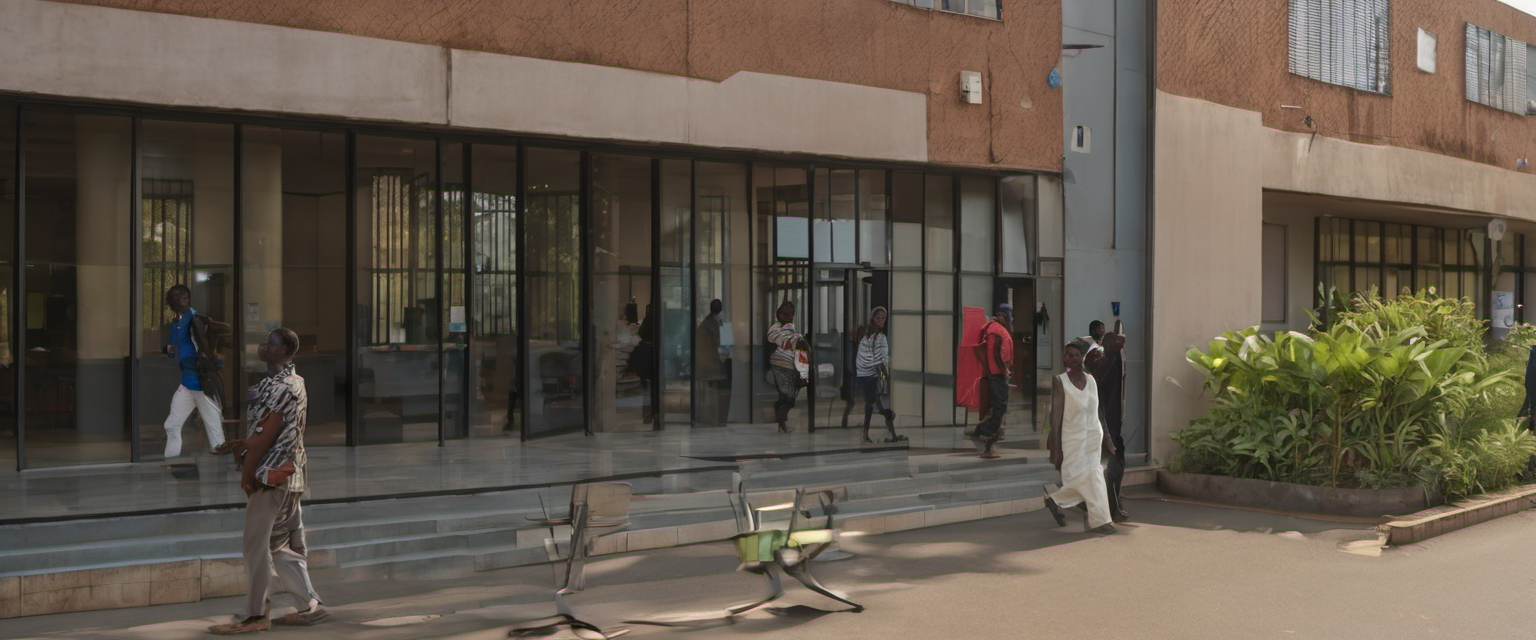
On Thursday, April 16, Sama — the San Francisco-headquartered data-annotation firm formerly known as Samasource, with its largest delivery center in Nairobi — issued formal redundancy notices to 1,108 employees at its Kenyan office. This is one of the single largest layoff events in Kenya’s short history as a hub of the “global AI value chain.” The reason, per Sama’s own filing under Kenya’s Employment Act Section 40: Meta terminated its contract. The AI-training pipeline it was staffing no longer has a pipeline to staff.
What those 1,108 people were doing
For years, Sama’s Nairobi workers performed the invisible labor that makes “AI” look intelligent. They labeled images and videos, tagged objects, reviewed audio, and — for the last two years — reviewed first-person footage recorded by users of Meta’s Ray-Ban smart glasses, so that a language-vision model could be taught to recognize what it was seeing.
The Ray-Ban review queue was, by multiple accounts, grim. A 2025 joint investigation by Swedish and Kenyan journalists described the material the Nairobi annotation team was asked to sit with: footage of users in bathrooms, sexual activity captured without the other party’s consent, children in private moments, and the usual background noise of private life that nobody consented to have reviewed by a team on another continent. Meta paid Sama, Sama paid the annotators in Nairobi a fraction of what a Menlo Park engineer makes, and the model learned.
That was the deal. That deal ended this week.
The layoff letter and the numbers
- 1,108 redundancy notices issued at the Nairobi delivery center
- Effective date: before the end of April 2026
- Severance: the Kenyan statutory minimum of 15 days’ pay per completed year of service under Section 40 of the Employment Act, 2007
- Benefits until the cutoff: full medical coverage, pension contributions, meal subsidies, on-site counseling
- Sama tried to renegotiate after the notice — per local reporting, they “got nowhere”
- Sama’s Country Lead Annepeace Alwala, VP Global Delivery, put out the corporate line about how “client programs evolve” and “we work closely with our partners to manage these transitions responsibly.” The alternative phrasing — Meta pulled the plug and we are firing a thousand people — apparently did not make it past comms.
Meta, for its part, has issued no public statement about why the contract ended. The available guesses, which the Nairobi staff are now openly trading in WhatsApp groups, are a short list: (a) the work is being moved to automated pipelines inside Meta; (b) the work is being moved to a different contractor, in a different country, at a lower price; or (c) after the 2025 Ray-Ban footage scandal became a legal exposure, Meta simply does not want a paper trail of human reviewers in Kenya anymore.
Any of those three is consistent with what just happened. Probably some combination of all three.
Kenya as a disposable link
Nairobi has spent the last decade being sold to itself and to the global tech press as “Silicon Savannah” — a stable, English-speaking, high-skill, low-cost node in global software and AI supply chains. That pitch is still partly true on a good day. The 1,108-person filing is what the bad day looks like: an entire facility, offered up as “impact sourcing” and staffed with people from underserved communities, instantaneously eliminated because one customer on another continent reallocated a budget line.
The structural problem is not new. Sama was also the contractor that in 2022 became the center of a lawsuit over Meta content moderation wages and trauma exposure, which is still winding through the Kenyan courts. Sama eventually exited content moderation for Meta and pivoted hard into AI data labeling, which was supposed to be the safer, higher-margin, more-skilled tier of the same offshore labor pyramid. It turns out the safer tier has the same client-concentration risk. When the one big customer leaves, the tier evaporates.
The other structural problem is quieter and more ominous for anyone still doing data-labeling work globally: Meta can now credibly offshore this task to the model itself. Synthetic data, auto-labeling pipelines, and self-supervised learning have eaten a very large chunk of the work that used to be manually annotated three years ago. If option (a) in the list above is the correct answer — if Meta is moving annotation inside the model — then Nairobi is not the last city this happens to. It is the first loud one.
The nastiest version of the irony
The workers whose job was literally to train the AI that would eventually no longer need them are the workers who just got cut first. The data they labeled did not evaporate — it is still training the model every second of every day at Meta. What evaporated was the paycheck of the person who tagged the bounding box.
The Ray-Ban product is still on sale. The model that learned from their work is still learning. Only the humans in the pipeline are discontinued.
What to watch
- Meta’s Q1 earnings call, currently scheduled for April 30. Expect no mention of Sama. Expect several mentions of “AI efficiency.”
- Other Nairobi BPOs — CCI Kenya, Tek Experts, iSON Xperiences — every one of them runs on a short list of US tech contracts. If the Sama cancellation is the first domino, it will be visible in their filings within 60 days.
- The 1,108 resumes. They are now on the market all at once. A very large cohort of trained, English-fluent, AI-labeling-experienced workers about to flood Nairobi’s job market is also, inadvertently, about to become some other AI company’s best hiring pool — at a lower salary than last week.
Meta, in its earnings deck, will describe this as “supply-chain optimization.” The 1,108 people in Nairobi who just lost medical coverage for their families will describe it in a different vocabulary. Both descriptions refer to the exact same decision.