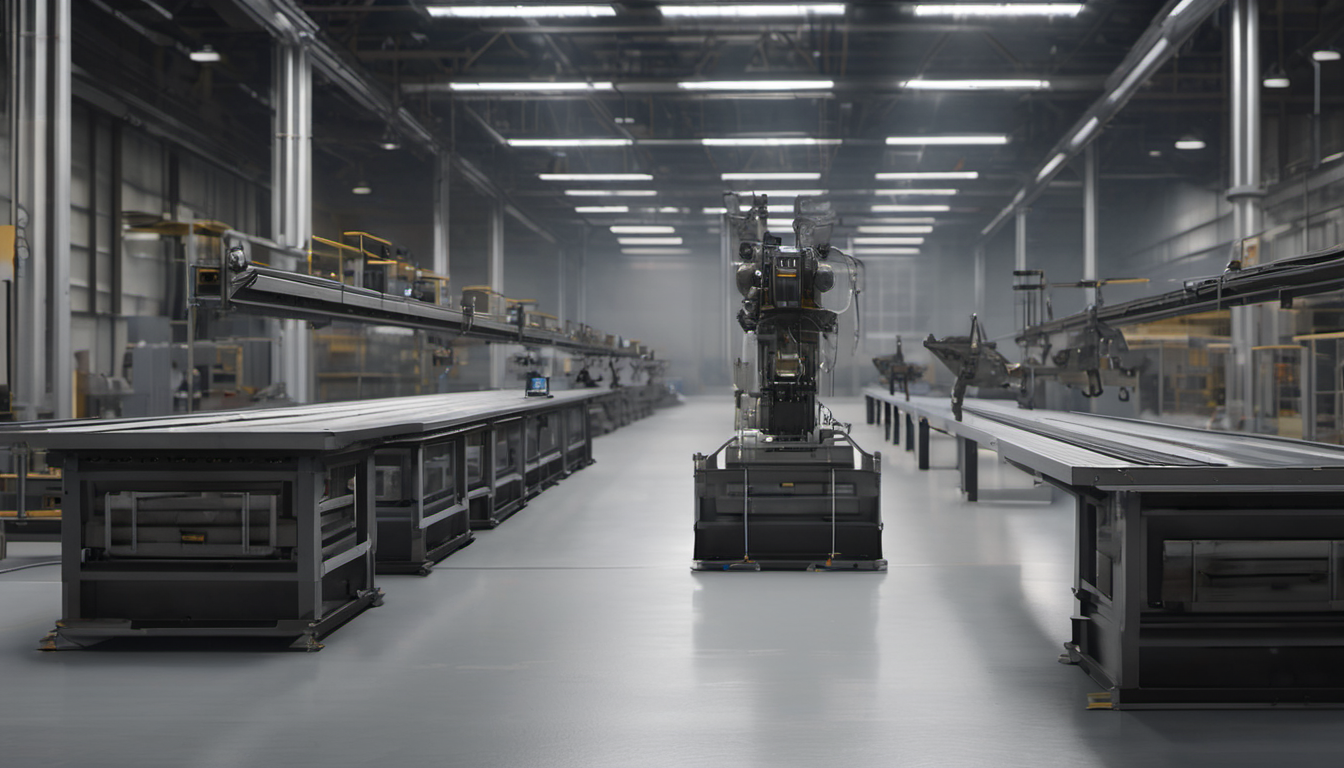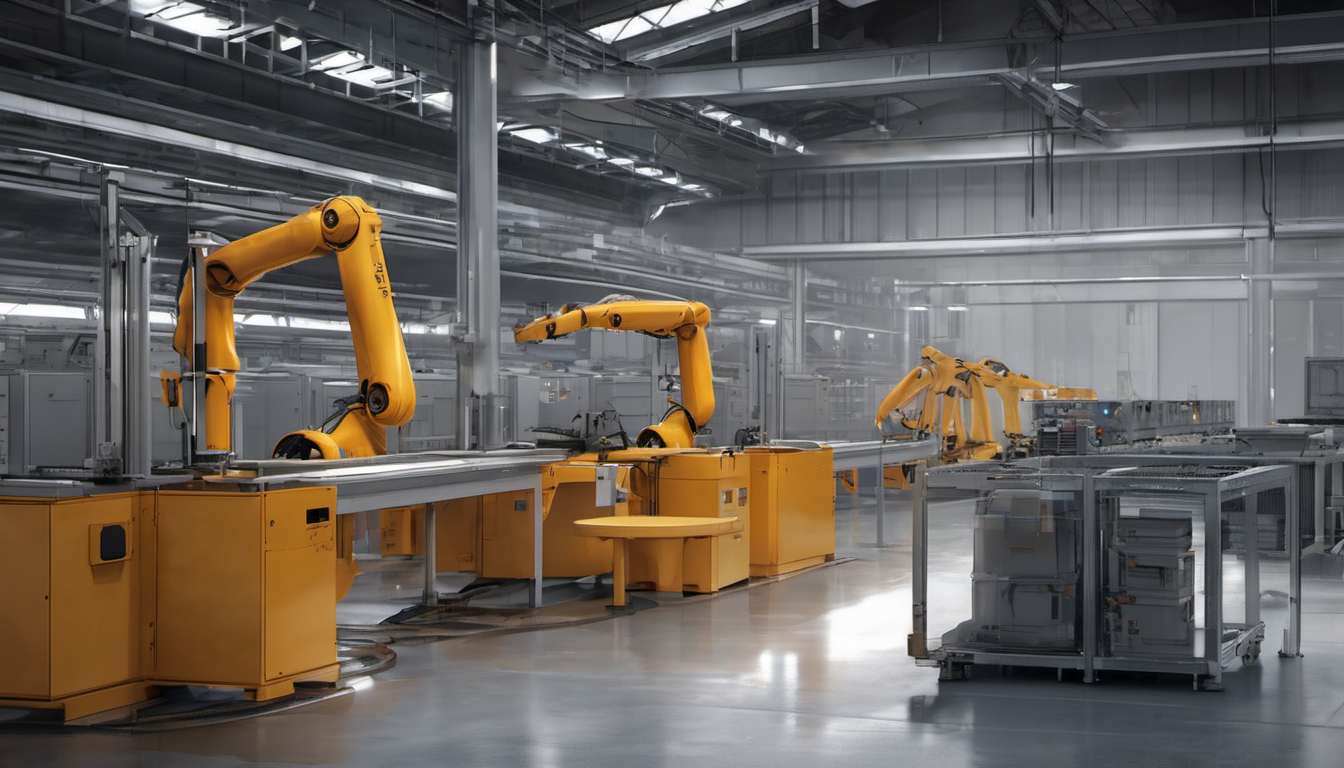
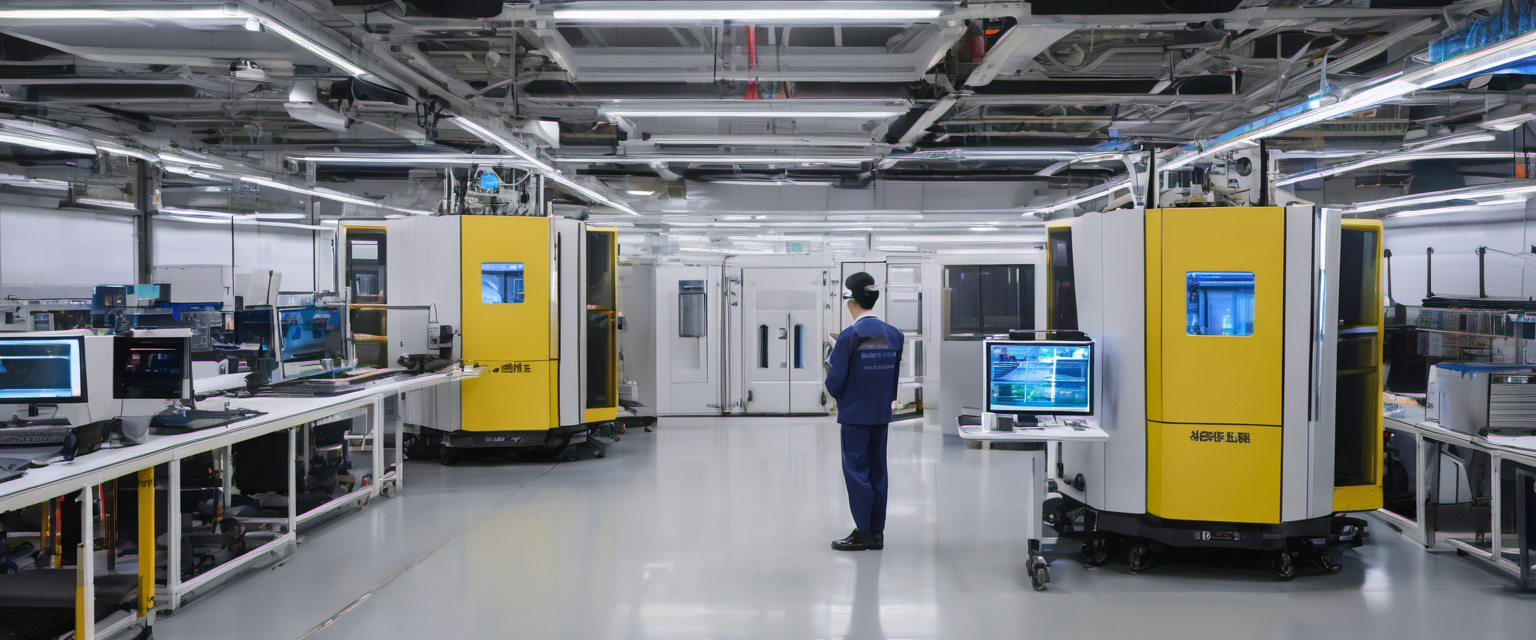
For the last four years the humanoid-robot pitch has been variations on the same trade-show routine: the robot folds a shirt, the robot pours a coffee, the robot waves at Jensen Huang. Yesterday — April 18, 2026 — somebody finally just pointed a camera at a humanoid and let it work a shift. No cuts. No handler in the frame. No curtain.
AgiBot — the Shanghai-based embodied-AI company that just passed 10,000 humanoid units shipped — broadcast a live, uncut stream of its G2 humanoid running material-handling on an active tablet production line at a Longcheer factory in Nanchang, Jiangxi Province. Longcheer is a real consumer-electronics manufacturer, not an AgiBot subsidiary. It makes tablets for paying customers. The line is not a demo line. The tablets on the conveyor are going into shipping cartons on Monday.
The numbers
Per the Xinhua writeup of the broadcast and coverage on Interesting Engineering:
- 8+ hours of continuous operation, live, no interruptions
- Task success rate above 99.5% (some reports put it at >99.9%)
- 18–20 second cycle time per unit
- 310 units per hour throughput — AgiBot says this matches the output of two human stations
- 140+ cumulative hours of stable operation on the line before the livestream began
The task itself is not a party trick. The G2 picks a tablet off a moving conveyor, walks it to a “Multimedia Integrated Testing” fixture, inserts it at millimeter precision, waits for the test, then sorts the unit as pass or fail and hands the finished product off. It then reads the factory’s Manufacturing Execution System in real time, adapts to conveyor-speed drift, and flags defective units. This is a robot doing QA-boundary precision work at the end of a production line, which is exactly the class of task that used to belong to mid-skill factory staff — the job your uncle had.
Why the livestream matters more than the announcement
AgiBot and Longcheer actually first announced the partnership on April 15 via the usual PRNewswire-plus-press-junket rollout. That is the normal cadence. A press release, a few stock photos, some executive quotes nobody reads.
The livestream was a deliberate, unusual second move. Li Long, Longcheer’s robotics general manager, told Xinhua: “We wanted people to see it with their own eyes.” Yao Maoqing, president of AgiBot’s embodied business unit, added: “Embodied intelligence is no longer a laboratory concept. It has become real industrial productivity.” That is how you make a press claim stick — you let tens of thousands of people watch the robot not-break for eight hours.
The comparison is direct: the Siemens + UK-Humanoid deployment we wrote about yesterday logged about 90% pick-and-place success over 8 hours. The AgiBot G2 at Longcheer logged above 99.5% on a more demanding precision task, and did it on a customer’s line, not in the robot vendor’s facility, and did it on camera. That is a measurable order-of-magnitude improvement in industrial reliability between two datapoints one week apart.
The 2-for-1 math, and why it’s the scary part
“310 units per hour equals two human stations” is the sentence buried near the bottom of the announcement that deserves to be the lede. One humanoid is doing the work of two humans at this station. That is not a 10% efficiency gain, not a 30% assist, not an AI copilot. That is a straight 2-for-1 replacement ratio on an active consumer-electronics line, with a ROI window that — at mainland Chinese humanoid unit prices of around USD $25,000–$50,000 and Chinese factory wages — is well under 18 months.
Here is the reason someone at Foxconn, Luxshare, BYD, Pegatron, and Wistron read this livestream notification yesterday and forwarded it to their COO: the G2 is not a demo robot that one day might do this work. It is a production robot currently doing this work, in one of their direct-competitor supply chains, with the video still on YouTube.
What Longcheer gets out of it
Longcheer is not just a factory. It is a smart device design house that is clearly using this deployment as a sales tool. Today’s pitch to its OEM customers — Xiaomi, Lenovo, OPPO, and others have all been Longcheer customers at various points — is: “We can build your tablets on a line where the precision QA station runs at 99.5% with zero sick days, and you get the production-cost math accordingly.” Every hour the G2 runs at Nanchang is simultaneously a manufacturing shift, a training dataset, and a sales deck.
AgiBot gets a reference account. Longcheer gets a productivity weapon. The two human station workers who previously did this task at Longcheer get a polite internal memo about “reassignment to supervisory roles.” We know from prior deployments what that actually means: you become the person who rides herd on the robot for a third of the salary, until the robot gets reliable enough that they stop paying the third.
What this pushes forward
- Consumer-electronics precision manufacturing was previously considered a humanoid-resistant segment because the tolerance budget on tablet QA was too tight. April 18 puts that assumption in the ground.
- Every tier-1 contract manufacturer in Asia — Foxconn especially — now has a live case study of “humanoid replaces QA inserter at precision assembly” they can pitch to Apple, Samsung, Google, and every brand whose cost-of-goods sheet has ever included the phrase “China labor inflation.”
- AgiBot’s announced 2026 target of 50,000 units — up from the 10,000 milestone they hit three weeks ago — stops looking like a founder’s wish and starts looking like it is short of demand.
The two human workers at Longcheer’s MMIT station on April 18 were not laid off yesterday. They are the baseline against which the cost model for the next Longcheer plant will be built. And that next plant, if the math works, will not be structured around two of them; it will be structured around one robot and one supervisor. The livestream was the point at which those hiring plans started getting rewritten.
A robot livestreaming itself at a competent 99.5% is simultaneously a piece of commercial evidence, a dataset, a sales pitch, and — for approximately two thousand Longcheer-equivalent stations across Asia — an eviction notice written in 18-second increments.