
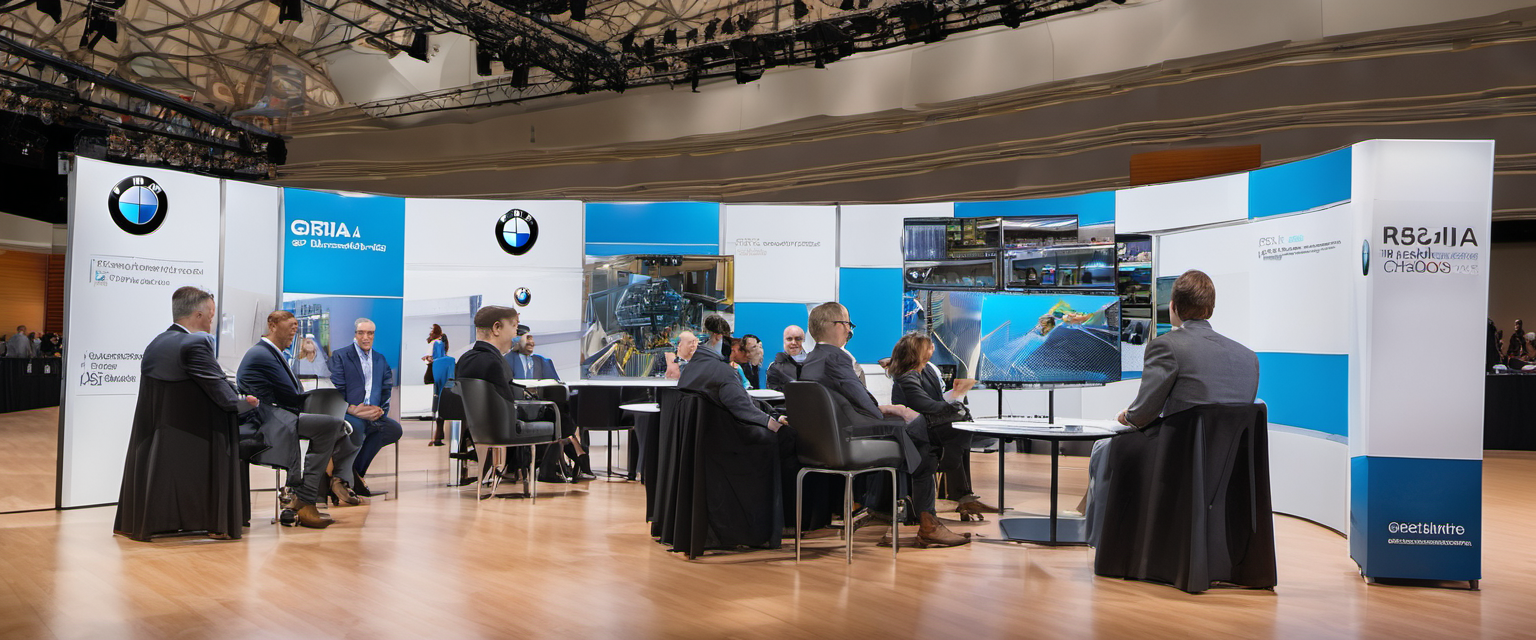
The story about humanoid robots that has run for the last eighteen months is “the hardware works now.” Figure 02 finished an 11-month BMW Spartanburg deployment with 30,000+ X3 vehicles to its credit. Agility’s Digit has moved 100,000+ totes for GXO at Flowery Branch, Georgia. Boston Dynamics’ 2026 production allocation of Atlas is fully committed to Hyundai and Google DeepMind. Unitree’s IPO prospectus disclosed that its average selling price fell from ~$85,000 in 2023 to ~$25,000 in 2025 — a 70% drop in two years — with gross margins improving to roughly 60%.
That sequence of events is the prelude. The story that starts this week is “now who owns the software.”
On Wednesday, May 28, 9:00 a.m. ET, in Room 253 ABC of the Thomas M. Menino Convention and Exhibition Center, Brian Gerkey opens the 2026 Robotics Summit & Expo with a keynote titled “An Open Foundation for the Age of AI-Powered Robots.” Gerkey is the co-founder of Open Robotics (the organisation that maintains ROS and the Gazebo simulator), CTO at Intrinsic (Alphabet’s robotics subsidiary), and board chair of the Open Source Robotics Alliance (OSRA) — the Linux-Foundation-style governance body set up in 2024 with NVIDIA, Qualcomm, and Intrinsic as founding members. His keynote is the opening argument in a fight whose existence the industry has only just admitted out loud.
The shift the keynote is responding to
ROS is the default starting point for most commercial robotics. It runs on millions of deployed robots worldwide. Its design predates the architectural turn that is currently consuming the field: vision-language-action (VLA) models — a single learned system that takes a camera feed plus a natural-language instruction (“pick up the blue cup and put it in the bin”) and outputs continuous motor commands directly. No separate perception module, no separate planning module, no separate control system stitched together by hand.
The actively-deployed VLA implementations are now numerous enough to make the architectural shift unignorable. Figure AI’s Helix. NVIDIA’s Isaac GR00T N1. Google DeepMind’s Gemini Robotics. Physical Intelligence’s π0. Covariant’s robot learning frameworks. Each one is a model stack with its own training pipeline, its own data flywheel, and its own hardware preference.
The strategic question is not whether VLA models work. They demonstrably do. The strategic question is whether ROS evolves as the native substrate for VLA models — the open standard that the model stacks sit on top of — or whether ROS becomes the legacy layer that proprietary platforms tolerate while quietly building everything important inside their own walls.
Gerkey’s case, per The Robot Report coverage, is that open-source infrastructure is “not merely a development convenience” but “the essential scaffolding for collaborative, trustworthy physical AI development at scale.” The OSRA governance model exists specifically to make ROS enterprise-grade — to give procurement and legal departments at Fortune-500 manufacturers a single point of accountability instead of a fragmented collection of community repositories. The Linux analogy is intentional. The bet is that the same governance pattern that turned a hobbyist OS into the substrate for AWS, Android, and every consumer device sold this decade can do the same job for VLA-native robotics.
What the proprietary stacks look like
This is a four-way market and each entrant has a different lock-in vector:
- NVIDIA Isaac GR00T N1. Announced at CES 2026 as part of what Jensen Huang called the “ChatGPT moment for robotics.” Open-weights on Hugging Face, runs best on NVIDIA Jetson hardware. The Android-for-robots positioning is explicit. The lock-in is at the silicon layer.
- Google DeepMind Gemini Robotics. Integrates natively with Google’s broader AI cloud and TPU stack. Boston Dynamics’ 2026 Atlas allocation is split between Hyundai and Google DeepMind, which is not a coincidence — DeepMind needs robot bodies to ground its VLA training; Atlas needs a model stack to run on. The lock-in is at the cloud layer.
- Physical Intelligence π0. Proprietary model, no public weights. The lock-in is the model itself.
- Figure AI Helix. Single-OEM proprietary stack. The robots and the model ship together. The lock-in is the platform.
The fifth slot — the open one — is where Gerkey is making his stand. Open Robotics’ answer is OSRA-governed ROS + open VLA training infrastructure + open simulation (Gazebo), with the case that this is the only configuration that does not extract platform rent from every downstream OEM, integrator, and end user.
Why the hardware-commoditisation curve makes the timing urgent
The Unitree number is the load-bearing data point. $85,000 ASP in 2023 → $25,000 ASP in 2025 at simultaneously improved ~60% gross margin is the unmistakable signature of a hardware category that has crossed the cost curve and entered the standardisation phase. Broader sector data shows 40–60% cost reduction over the same window. Tesla Optimus is targeting a ~$20,000 production unit. 1X has priced Neo at $20,000 plus a $499/month subscription tier.
When hardware commoditises, the durable margin moves to the software layer. This is the same shift the PC industry experienced (margins moved from IBM/Compaq to Microsoft and Intel), the same shift the smartphone industry experienced (margins moved from Nokia/Motorola to Apple and Google), and the same shift the cloud-infrastructure industry experienced (margins moved from server OEMs to AWS, Azure, and GCP). The 2026 robotics question is whether that platform rent goes to NVIDIA, to Google, to Physical Intelligence, or to an open-source commons.
The reason this fight has to be resolved now, not in 2028, is that companies choosing a robotics software stack in 2026 are making a decision that will be expensive to reverse in three years. Once a Fortune-500 manufacturer has built its data flywheel on Isaac, retrained the floor on Gemini’s API patterns, and signed a multi-year RaaS deal with a vendor whose model runs only on the vendor’s silicon, the cost of switching is a multi-year change-management programme. The proprietary stacks know this. The OSRA pitch — explicitly — is that procurement should treat this as the same decision as choosing Linux over a proprietary Unix in 1999.
The session lineup signals where the deployment economics are landing
The summit’s logistics-automation track is the strongest commercial track because warehouse automation is where the unit economics of humanoid deployment hit positive ROI first. Session contributors include Agility Robotics (Amazon-majority-owned, Digit at GXO and at Toyota Motor Manufacturing Canada under a commercial RaaS agreement signed in February 2026), Figure AI (BMW Spartanburg behind it, Figure 03 now deploying), and Mind Robotics — the Rivian spinout founded in November 2025 that raised $500M Series A at a $2B valuation in March 2026.
Mind Robotics’ inclusion is the interesting tell. Founder RJ Scaringe’s framing — “doing cartwheels does not create value in manufacturing” — is the explicit anti-humanoid argument from a credible industrial founder. The summit putting Mind Robotics on the program alongside Figure and Agility is the program committee saying out loud that the platform fight is not just humanoid-vs-humanoid; it is the broader question of which robot form factor wins which task, and which software stack runs across all of them.
The other interesting attendee is the elephant under the table. Unitree’s robots are subject to China’s National Intelligence Law and the company is currently in front of House Homeland Security on national-security grounds, with a Blocking CCP Spy Tech Act of 2026 introduced May 21. The cheapest hardware in the market is the one Western enterprise procurement is being told it cannot buy. The open-source software stack is the only credible answer to “what do we run on the Western-built robots that will clear procurement?”
What to watch
- Wednesday’s keynote tone. Whether Gerkey names NVIDIA, Google DeepMind, Physical Intelligence, and Figure on stage, or only implies them. The Linux analogy works when the proprietary alternatives are named (Linus Torvalds named Microsoft); it dies in vagueness. The naming choice is the keynote.
- OSRA membership announcements at the summit. OSRA launched in 2024 with NVIDIA, Qualcomm, and Intrinsic. NVIDIA’s parallel push for Isaac is a position the OSRA founding membership did not anticipate. Any new corporate members announced this week — particularly any humanoid OEM — are leading indicators of which way the platform fight is breaking.
- Figure AI’s public posture. Figure’s Helix is the most-deployed single-OEM proprietary stack. Whether Figure shows up at the summit as an OSRA contributor or as a competing platform is the cleanest read on whether the field consolidates around one open stack or fragments by OEM.
- The first Fortune-500 procurement decision. The May 25 Tech Times piece framed the choice as “costly to reverse in three years.” The first named Fortune-500 manufacturer to publicly commit to a stack — open, NVIDIA, Google, or Physical Intelligence — is the moment the platform answer stops being a debate and starts being a customer reference.