The Tesla Fremont story for the first week of May 2026 is the cleanest cars-to-robots optic the industry has produced so far.
Per Elon Musk’s Q1 2026 earnings call on April 22, reaffirmed by The Robot Report, and confirmed by Tesla’s own April 1 inventory disclosure via Electrek:
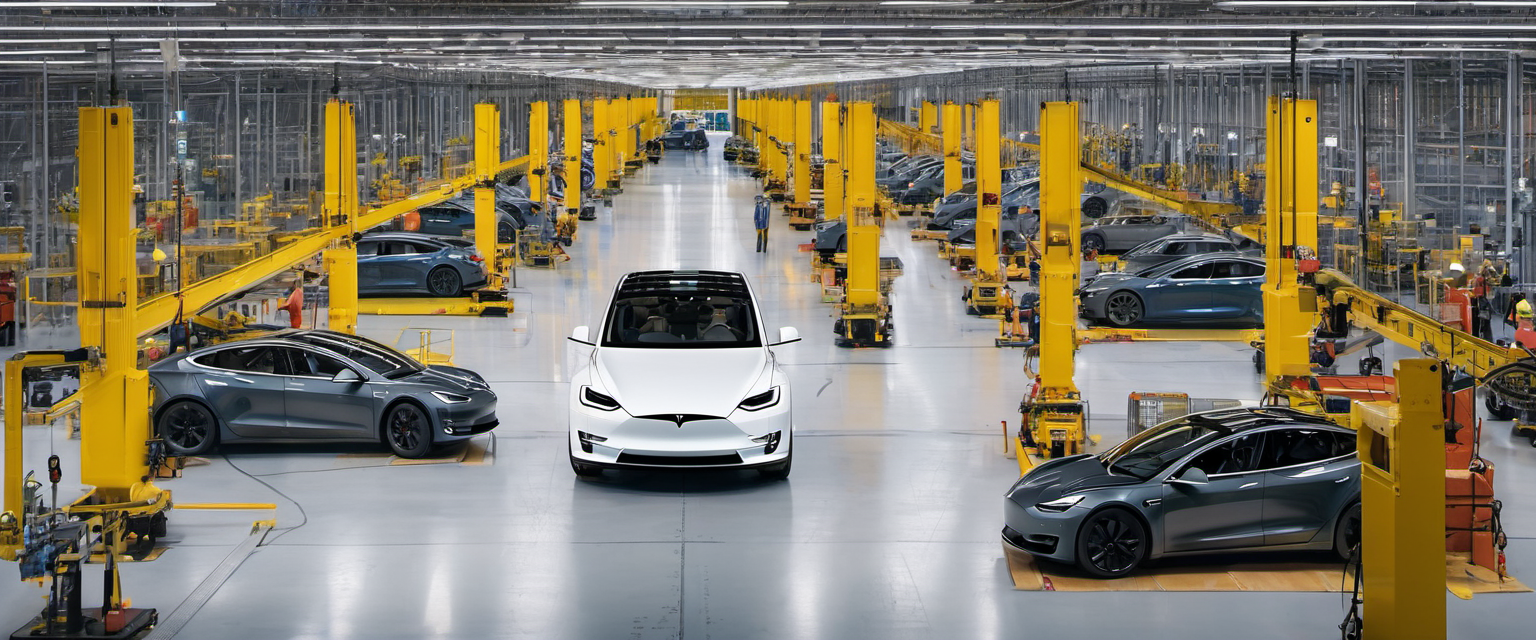
- The last Model S vehicles roll off the Fremont line in early May 2026. Production run: 14 years (2012–2026).
- The last Model X vehicles roll off the same line in the same window. Production run: 11 years (2015–2026).
- The freed-up assembly bay is being torn down and rebuilt as a first-generation Optimus production line targeting 1,000,000 humanoid robots a year.
- Optimus production is scheduled to begin at Fremont in late July or August 2026 — a four-month teardown-and-reinstall window.
- Optimus V3 is scheduled to be unveiled in late July, timed to coincide with start of production.
- Per CNBC’s January 28 report, a second Optimus factory is being built at Giga Texas, with target production summer 2027 and a long-term capacity of 10 million units a year.
Tesla’s car business stopped producing two of its three flagship vehicles this week. Its robot business is inheriting the floor space.
What “early May” actually means in factory time
The early-May date is not a press-release date. It is the date the conveyor stops moving Model S and Model X bodies through paint, body-in-white, and final assembly. The cars in dealerships and inventory queues right now — Electrek’s April 1 piece pegged the remaining S and X unit count at roughly 600 across all U.S. inventory — are the last new units anyone will buy as new units. Tesla refreshed neither vehicle in 2025. Neither will be replaced.
The closest historical analog is Toyota ending the Crown Majesta or GM ending the Saturn line — except in those cases the automaker did not simultaneously announce that the assembly line itself was being repurposed to manufacture a humanoid robot whose use cases include factory labor. Tesla just did that.
The four-month retool window is the plot
Musk’s own framing of the timeline on the Q1 2026 call was that initial Optimus output will be “quite slow” and that production rate is “literally impossible to predict” given Optimus has roughly 10,000 unique parts across an entirely new production line.
Translate that. A Model S has around 7,000 unique parts. An Optimus has 10,000. The Fremont line is being asked to:
- Finish stripping out the Model S and Model X assembly fixtures.
- Install a new line capable of building a 10,000-part humanoid in volume.
- Validate that line.
- Begin shipping product.
…all in four months. Tesla has done aggressive retools before — the Fremont 1.0-to-2.0 conversion in 2017, the Model 3 ramp, the Cybertruck steel-stamping line — and consistently missed the timeline. Optimus has more unique parts than any of those. The internal probability of starting volume production in late July is best read as Musk’s stretch goal, not the consensus operations forecast.
The signal is not the timeline. The signal is that the line is being installed at all.
What the math says about Tesla’s mix
Tesla’s last 12 months of vehicle deliveries were roughly 1.7M units globally, of which the Model 3 and Model Y did the overwhelming majority and the Model S + X did roughly 30,000–40,000 combined. Killing Model S and Model X frees roughly 2% of Tesla’s vehicle production capacity. Putting an Optimus line in their place — even one targeted at 1M units a year, at unit revenue ~$25,000–30,000 if Musk’s historical Optimus pricing remarks hold — implies the robot line could generate revenue parity with the Model S + X line within 12–18 months of stable output, and then keep going.
That is the new Tesla math. The vehicle-business growth case is now Model 3, Model Y, Cybertruck, and (eventually) the cheaper next-gen platform. The growth call beyond that is Optimus. Fremont is the public commitment that the second leg is real enough to take floor space away from the first leg.
Where this connects to the layoff conversation
Yesterday, LostJobs covered Valerie Capers Workman’s Fortune piece — the former Tesla VP of People arguing that the AI-jobs panic applies to the hyperscalers and 80% of US workers are not employed by them. Workman’s argument was about white-collar information work.
This week’s Fremont story is the physical-work version of that same conversation, and it lands in the opposite direction.
Workman’s Fortune piece is correct that the white-collar AI panic is mostly hyperscaler-specific. The Optimus retool is a reminder that the physical-work version is a different curve. Tesla is not an AI lab cutting people. Tesla is a manufacturer that is converting its highest-prestige assembly line from making vehicles operated by humans to making humanoids that may eventually operate vehicles. Those are not the same thing — and the second one is, on a 5–10 year horizon, the harder labor-market story.
The asterisks
One — Optimus is not a customer product yet. No external buyer has bought an Optimus. The Tesla 2025 paid-task pilot inside Tesla factories is internal data collection, not commercial sales. The 1M-unit target presupposes that within 18 months Tesla finds someone to sell to. The Mercedes-Benz Apptronik pilot, the Boston Dynamics Hyundai integration, and the BMW Spartanburg Figure deployment all suggest the auto OEMs already chose their first-mover humanoid partners — and none of those partners is Tesla.
Two — the 10,000-parts number is a warning, not a brag. A part count that high implies a long supply-chain validation tail that Tesla’s vehicle teams are familiar with from Cybertruck. The realistic timeline to quality-certified, fleet-deployable Optimus production is plausibly 2027, not 2026.
Three — the human-cost line is conspicuously missing. Tesla has not disclosed how many of the Fremont workers who build Model S and Model X today will be retained for the Optimus line. The retool involves a different supplier mix, different sub-assembly steps, and a different toolchain. The official line — that this is “a long-overdue evolution of Fremont’s mission” — has not been backed by a public number on continuity of employment for the existing line workers.
Four — Tesla’s robotics talent leakage is real. Apptronik just hired Daniel Chu, ex-Waymo, as CPO two weeks ago. Figure announced 240 robots in April. Meta acquired Pinto and Wang’s ARI on May 1. Tesla is converting its biggest factory to a robot factory in a market where its US humanoid competitors collectively have more recent-vintage AI talent and more shipped commercial units than Tesla does. The retool is bold. It is also a bet that Tesla can make up the talent gap during the four-month window, which is — to use Musk’s own phrase — “literally impossible to predict.”
What to watch
- Whether the last Model S and Model X actually roll off in early May, or slip into late May / June. Tesla has missed dozens of internal product timelines. A delay here is the first datapoint on whether the four-month retool window is achievable.
- Whether Tesla discloses a Fremont retention number alongside the Optimus production-line groundbreaking announcement.
- Whether the Optimus V3 reveal in late July includes a real spec sheet or another teleoperated demo. The dirty secret of most public humanoid demos in 2025–2026 is teleoperation. A Tesla V3 reveal that is autonomous in front of an audience is the most important robotics datapoint of Q3.
- Whether Tesla announces an Optimus customer. The volume target only makes sense if there is a buyer. As of today, the only known internal customer is Tesla itself.
The dry coda
Fourteen years ago, Tesla’s Fremont plant was an unprofitable luxury sedan factory inside a recently-bankrupt former GM-Toyota joint venture. This week, the same plant produced its last Model S, its last Model X, and is starting a teardown that will, on Musk’s stated timeline, end with an Optimus humanoid robot rolling off the same physical floor in late summer.
If the timeline holds, Fremont will be the first US factory in the modern era to convert a high-volume passenger-vehicle line to a humanoid-robot line in a four-month window. If the timeline slips, it will still be the first factory anywhere to try. Either way, the symbolism does not soften.
The car factory is becoming a robot factory. That is the headline. The footnotes are loud, the schedule is aspirational, and the labor question is open. But the line itself is not theoretical anymore. The conveyor that built California’s EV myth is being rebuilt to build the thing that will, eventually, walk off it.