
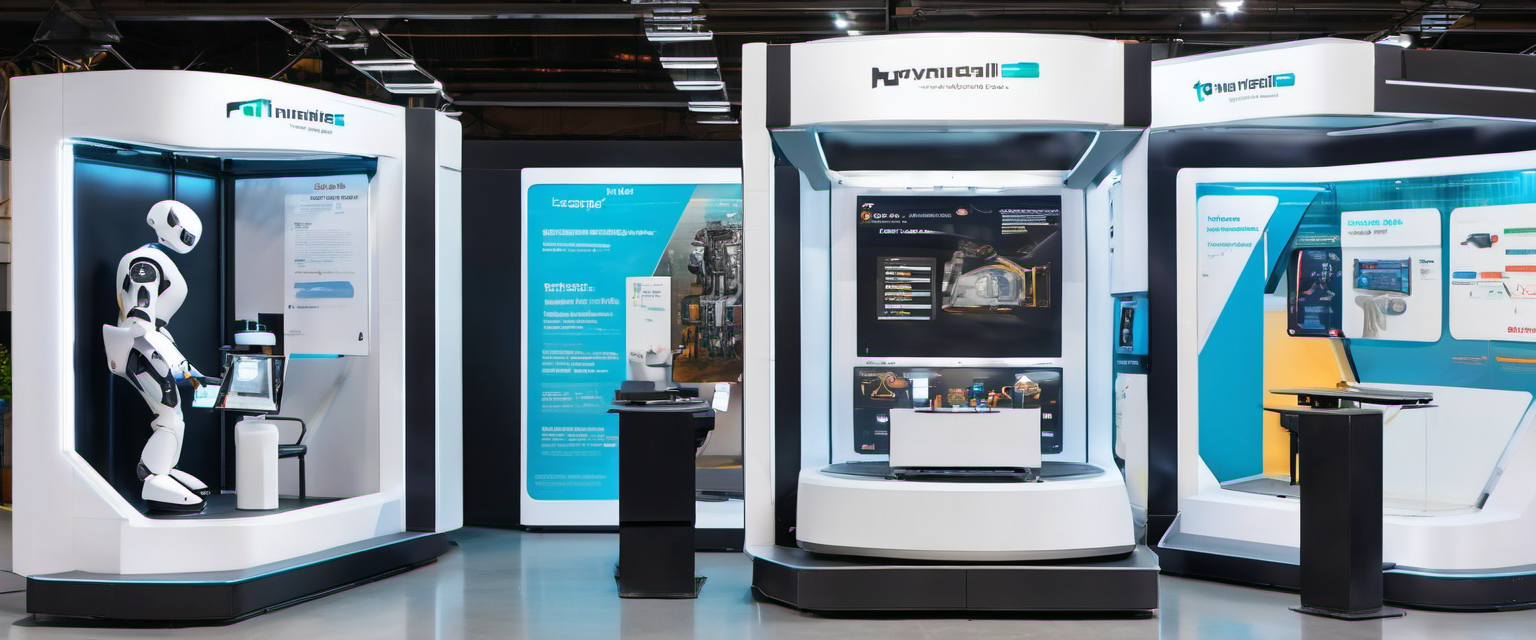
VinDynamics did not exist nine months ago. On Monday the Hanoi-based subsidiary of Vietnamese conglomerate Vingroup walked a humanoid robot called Dyno onto the floor of IEEE ICRA 2026 in Vienna, the academic robotics conference where Nvidia chose to debut the Isaac GR00T reference design on the Unitree H2 Plus the same morning. The next day, Dyno was on the floor of Computex Taipei, a thousand miles east. A nine-month-old company, two of the planet’s most important robotics events, the same week. Vietnam is now on the humanoid map.
The dual debut
ICRA 2026 in Vienna runs June 1 to 5; Computex Taipei 2026 runs June 2 to 5. Picking both at once is a deliberate positioning choice. ICRA is the IEEE flagship — the audience is PhD candidates, robotics professors, and corporate R&D directors who decide which chassis their lab buys next. Computex is the APAC compute-and-components show — the audience is ODMs, contract manufacturers, and the supply-chain buyers who decide which actuator vendor goes into the next million-unit consumer device. Showing up at both in the same news cycle says: we want academic credibility and commercial supply-chain visibility, and we have the inventory to staff both booths.
It also says VinDynamics has read the room. The June 1 Vienna floor is where Nvidia and Unitree just made the H2 Plus the academic reference humanoid. Walking a competing chassis through the same doors the same morning is not subtle.
The robot, and where it has actually run
Dyno is pitched as a versatile humanoid assistant — security and surveillance for urban areas, campuses, and integrated service complexes; household tasks; tourism guidance. The single concrete operating-hours datapoint the launch shares is the pilot at Vinpearl Safari Phu Quoc, the semi-wildlife conservation park Vingroup owns on Vietnam’s largest island. There, Dyno has been working as a multilingual robotic guide — answering visitor questions, narrating exhibits, navigating an outdoor environment that is structurally harder than most factory floors and most warehouse aisles. Tourism is an unusual lead use case for humanoid vendors; BMW Spartanburg and Schaeffler Herzogenaurach get the headlines, a safari park does not. But a real customer with weather, crowds, and live multilingual Q&A is a real customer, and the operating hours count.
The booth at both shows is not just Dyno. VinDynamics is also showing a specialized in-house actuator system, a robotic hand with what the company calls “internationally-benchmarked dexterity,” and an AI training dataset built for real-world deployment. The implicit claim is the full vertical — mechanical, software, AI, dataset — built in Hanoi. That is the same vertical-integration pitch Unitree made when it filed its prospectus in March, translated into Vietnamese.
Vingroup’s coordinated month
The Dyno launch is not standalone. Six weeks earlier, on April 22, VinDynamics signed a humanoid-robot production partnership with Schaeffler, one of the largest automotive Tier-1 suppliers in the world. Schaeffler is the same company that signed a 1,000-to-2,000-unit deployment agreement with Britain’s Humanoid AI in May; choosing a then-seven-month-old Vietnamese firm as a manufacturing partner alongside that is a strong signal about what Schaeffler thinks the supply chain looks like.
On the same morning Dyno launched at ICRA, Vingroup separately announced a $12.75 million investment in a US-based humanoid robotics research company. Two events on the same date is a coincidence. Two events on the same date with the Schaeffler announcement six weeks before is a sequenced industrial bet — supply-chain partner secured in April, US R&D node funded in June, product walked onto the world stage the same morning.
What it changes for everyone else
Until this week, the humanoid robotics map had four meaningful node clusters: China (Unitree, AGIBOT, EngineAI, the MIIT 29-digit humanoid ID system), the US (Figure, Apptronik, 1X, Tesla, Boston Dynamics), Europe (PAL, DLR, the Schaeffler-plus-Humanoid pairing), and Japan/Korea (Toyota, Hyundai-owned Boston Dynamics, the Tokyo Humanoids Summit attendees). Vietnam was not a node. As of June 1, 2026, it is — backed by a parent conglomerate that already owns a hospitality network deep enough to provide real-world operating hours, an automotive Tier-1 supply contract in Germany, and an R&D foothold in the US.
The competitive question Dyno raises is pricing. The Unitree H2 Plus has set the under-$50K reference for academic procurement; Tesla Optimus has set a $20K–$30K production target for consumer-scale humanoids; Foundation Phantom MK-1 sits at $150K for defense-grade. Dyno’s price has not been disclosed. Where it lands in late 2026 or early 2027 will say whether Vingroup is building for the global commodity humanoid market or the high-end concierge tier, and which existing players it eats first.
The chairman’s framing
La Manh Hung, Chairman of VinDynamics, said the Dyno launch reflects “the aspirations of Vietnamese engineers to contribute to one of today’s most advanced technology fields” and that the company is focused on “developing practical technologies with people at the center.” The press-release language reads the way press-release language always reads. The underlying corporate file does not. A nine-month-old subsidiary of a real-estate-and-tourism conglomerate just shipped a humanoid to two of the planet’s leading robotics events the same week, with a European Tier-1 production contract behind it and a US R&D investment beside it.
That is not a vanity project. It is Vingroup’s serious entry into the only industrial supply-chain race more capital-intensive than EVs in 2026. The other humanoid vendors now have one more competitor to model — and a Vietnamese one, manufactured close to the world’s lowest-cost actuator supply chain, with a parent company willing to write multi-million-dollar R&D checks on the same morning as the product launch. The reference humanoid market just stopped being a four-cluster game.