
On August 21, Alibaba posted RMB268.95B of revenue for the quarter ended June 30, up 9% year over year. Net income attributable to ordinary shareholders came in at RMB10.54B, down 76%.
The third number on the page is the one to file away. Capital expenditure hit RMB67.68B for the quarter, up 75%, and Alibaba said the increase went mainly into AI infrastructure.
That is 6.4x the quarter’s net income, bought in the same 90 days.
The buildout is not funded by the business
Operating cash flow for the quarter was RMB22.95B against RMB67.68B of capex. The trading business threw off about a third of what Alibaba spent. The other two thirds came off the balance sheet. The South China Morning Post reported a planned HK$80B new share issue to fund the global AI push in the same window.
A company that funds capex out of surplus is investing. A company that reshapes its capital structure to buy compute is doing something else.
The compute side is growing. Alibaba’s results put AI cloud and computing services revenue at RMB48.44B, up 45%, with AI-related product revenue at RMB12.38B and a twelfth straight quarter of triple-digit growth. CEO Eddie Wu then did something Alibaba had not done before: he named a payback date. At current average gross margins, he told analysts, the AI compute spend breaks even inside three years, and closer to two if margins keep climbing. He also confirmed that RMB190B of the RMB380B AI and cloud budget earmarked for 2026 through 2029 was gone by the end of June. Half the money, in the first six months.
25% and 3.9%
Two ratios describe the quarter better than any narrative around it.
Capex ran at 25% of revenue. Net income ran at 3.9%.
Alibaba is not alone at that shape, but it sits at the steep end of the cohort. Amazon’s July print carried $220B of annual capex against $62B of profit, and we ran the ratio then. The difference is the base. Amazon is laying a thicker capex line over a thick profit line. Alibaba is laying a thicker capex line over a profit line that its own filing attributes partly to contraction in core e-commerce.
The company’s explanation puts both in one sentence: core commerce under pressure, AI investment up. The first clause says there is less money. The second says where it went.
There is a third ratio inside the AI business itself, and it is the one the payback date has to answer to. AI-related product revenue was RMB12.38B for the quarter. Capex was RMB67.68B for the same quarter. Twelve straight quarters of triple-digit growth is a real number and it still leaves the revenue line at roughly a fifth of what the quarter’s buildout cost. Wu’s three-year figure is a bet that the gap closes on the revenue side rather than by cutting the spend. Every quarter that bet stays live, the fixed costs on the other side of the income statement have to hold still, and payroll is the largest of them.
What this capex actually hires
Capex and payroll buy labour at different densities, and the gap is roughly an order of magnitude.
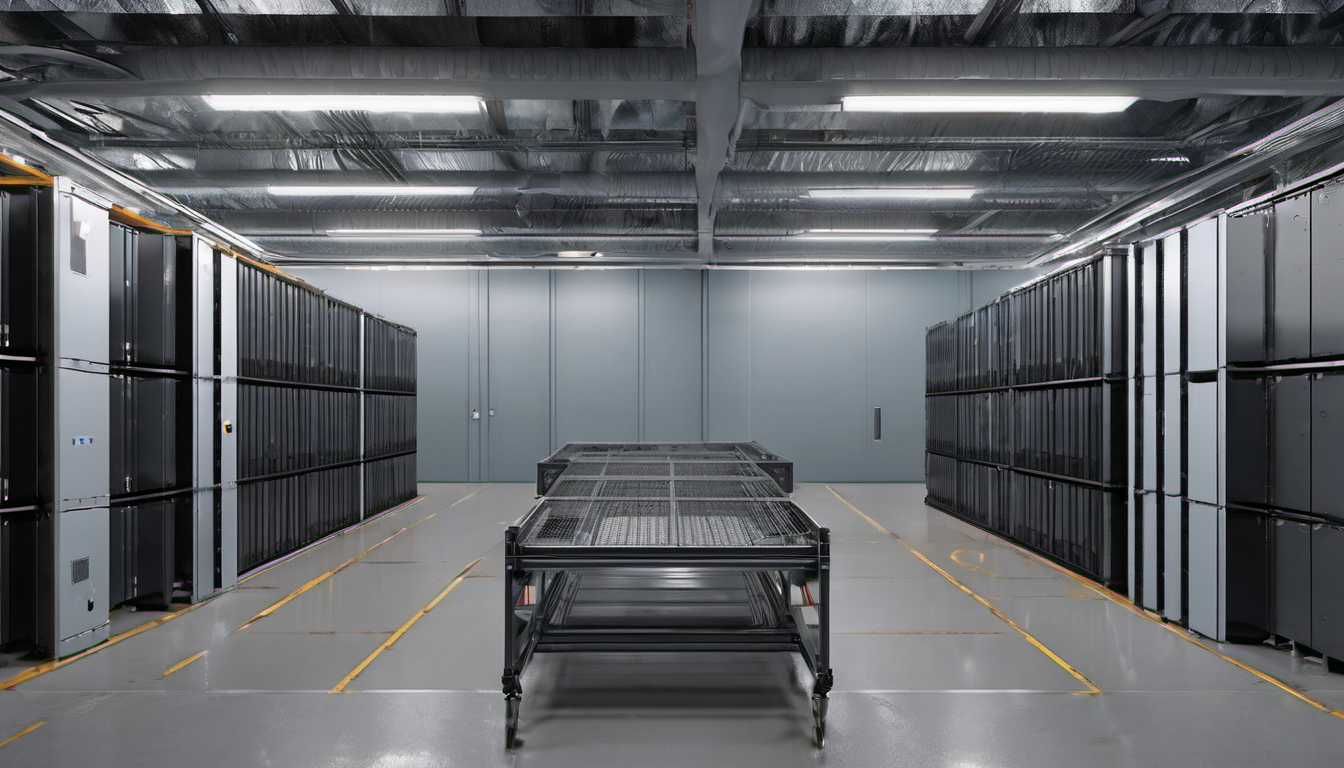
This morning we covered the JLL pipeline data on European hyperscale siting: sites delivering between 2026 and 2028 average 175 km from a major hub, against 46 km for the 2022–2025 batch. That 129 km gap is the employment profile of this capex cycle. One or two labour-heavy construction years, then a permanent crew measured in dozens, sited where the power is. Alibaba’s RMB67.68B buys the same object, relocated to Zhangbei, Ulanqab and Nantong.
So the question worth tracking is not whether Alibaba announces layoffs. It is that the ordering inside the cost base has changed. A three-year payback means depreciation chews on the income statement for the next twelve quarters. When depreciation is fixed, headcount is the line that moves.
The reorg is where the roles go
One sentence in the release deserves more attention than it will get: Alibaba reorganised its e-commerce, cloud-computing and AI-model businesses into new operating groups.
That is not routine org housekeeping. When Walmart cut roughly 400 Silicon Valley technology roles in July, we named the mechanism: no model sat down and did those jobs, the company redrew its lines around AI and the overlapping roles fell out of the redraw. Oracle’s second wave in August followed the same order of operations. Move the budget to compute first, then rearrange the org to match the budget.
Alibaba has now done the first step in public. Commerce, cloud and models each carried their own product, operations, merchant-service and support benches. Fold them into new operating groups and the overlap becomes visible on somebody’s slide. The next two reporting windows are where that shows up.
Who is exposed
Three groups moved this quarter.
Core commerce operations inside Alibaba. The company named e-commerce pressure as the first driver of the profit decline. Merchant operations, platform governance and support headcount are budgeted against transaction volume, and transaction volume is the line under pressure.
New graduates in Chinese tech. Alibaba is one of the largest single employers of Chinese technical graduates. Spending half a multi-year infrastructure budget in six months converts money that could have become headcount into a depreciation schedule instead. That is a harder signal than any campus-hiring announcement.
Data centre trades, in the other direction. Operations, electrical engineering, liquid cooling and power distribution are hiring for real. The count is far smaller than the white-collar roles under compression, and the work sits in industrial parks in Inner Mongolia, Hebei and Jiangsu rather than in Hangzhou.
A company that reports 9% revenue growth and a 76% profit drop in the same release has not lost that 76%. It converted it. The money is now twelve quarters of depreciation standing several hundred kilometres from wherever the reader works.