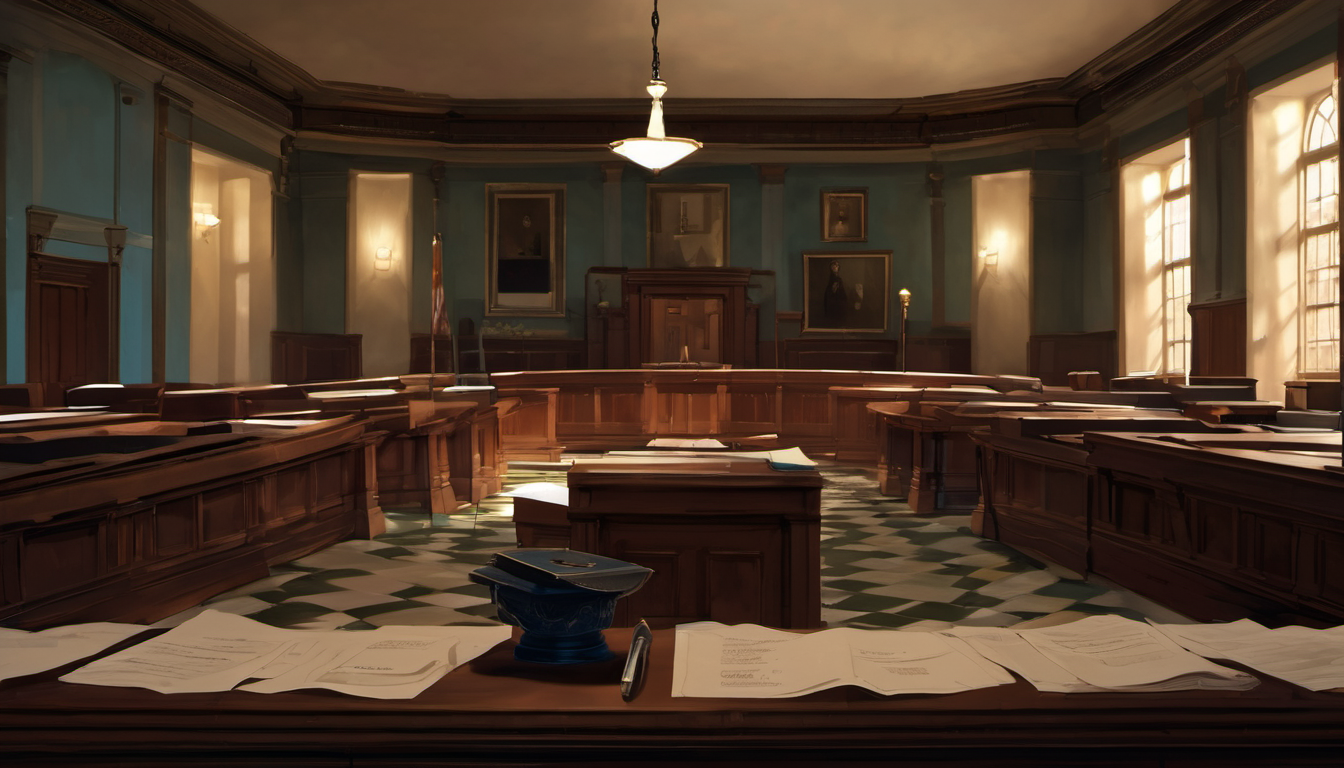
California legislators worked past midnight on Monday, the last day to pass bills in the 2026 session. When they adjourned, 26 AI-related bills had cleared both chambers. Two are already law. The other 24 sit on Gov. Gavin Newsom’s desk, and he has until September 30.
One number in that pile matters more than the rest. SB 951 would require covered employers to give 90 days’ notice before any technological displacement affecting 25% or more of the workforce.
What passed, and what it names
Read the labor-facing bills as a set and a pattern shows up immediately. Each one fences off a specific job or a specific practice rather than regulating AI in employment generally.
SB 951 (Sen. Reyes) is the displacement-notice bill: 90 days, 25% threshold. It passed the Senate 28-9 in May, survived Assembly Appropriations 10-3 on August 13, and the Senate concurred on August 31.
SB 947 (Sens. McNerney and Reyes) sets worker protections around automated decision systems. Final approval came August 31.
AB 1883 (Asm. Bryan) bars an employer from running a workplace surveillance tool that uses AI to collect neural data or identify a worker’s emotional state. The bill defines neural data as any information generated by measuring activity in a person’s central or peripheral nervous system.
AB 2656 (Asm. Petrie-Norris) requires state and local public employers to give a recognized employee organization 45 days’ written notice before developing, buying or deploying generative AI to do work inside a represented job classification.
SB 928 (Sen. Cervantes) specifies that Cal State University instructors must be human, not AI. AB 2148, already signed in June, does the same for K-12: a public school employee or contractor means a natural person.
AB 2575 (Asm. Ortega) says a worker providing direct patient care may use professional judgment to override an AI-powered clinical decision support system, and prohibits the employer from retaliating.
Now the other column. AB 1018, which would have regulated AI use in employment, housing and healthcare decisions and required disclosure of AI’s role in firing someone, did not pass. Neither did SB 574, the standards bill for attorneys’ AI use. AB 1609 on customer service chatbots was still moving between chambers when the clock ran out.
The general rule lost; the enumerated floor won
AB 1018 was the bill that would have applied one standard across every employment decision in the state. It died. What survived is a list: teachers, nurses, public employees, workers wearing a monitoring device, workers at a company shedding a quarter of its staff.
That is a specific legislative posture, and it is worth naming plainly. California is not writing a theory of AI and work. It is writing statutory floors under professions, one at a time, in the order that a coalition can be assembled for each one. Teachers got a floor because a faculty union pushed a bill about a specific employer. Nurses got one because a clinical-override provision has an obvious patient-safety framing. Contract specialists, analysts, schedulers and coordinators got nothing, because no bill was written about them.
The mechanism this most resembles is the one we covered on August 25, when Hyundai’s union struck for a veto on robot deployment and settled for a 100,000-won payment and an information-sharing clause instead of consent. AB 2656 is the same trade in statutory form: 45 days’ notice to the union, no approval right. Notice is not a veto. It is time.
Compare the pace, too. California cleared self-driving trucks for public roads in August, and the Teamsters had sued nine days before the permits issued. Deployment moved first and the legal response chased it. SB 951 inverts that: a notice obligation arriving before the displacement it describes. That is unusual enough to be the story.
What the 25% threshold actually does
Take the number seriously as a design choice.
Federal WARN triggers on 50 or more employees at a single site, and it triggers on a layoff event. SB 951 triggers on a share of the workforce and on a cause: technological displacement. Those are different instruments. A company that automates 25% of a 400-person operation over eight months, hitting nobody with a single mass-layoff date, clears WARN easily and would land inside SB 951.
The threshold is also high. Most of the cuts in this corpus would not reach it. PagerDuty cut about 15% of its workforce in August. Cloudflare’s roughly 20% reduction in May, the largest single-company percentage we have covered this year, still sits under the line. So SB 951 is not a broad brake on AI-driven job loss. It is a tripwire for the wholesale replacement of a function, which is the scenario nobody has yet had to announce in advance.
What it produces, if signed, is a dated public artifact. Right now technological displacement is close to unmeasurable: it happens through unbackfilled vacancies, quiet reorganizations and layoff notices that name cost discipline instead of automation. A 90-day notice tied to the word “displacement” would create the first systematic record of a category that currently only exists in company narrative. That data, more than the notice period itself, is what would change over a few years.
For workers, the practical read
Three things follow from Monday night.
First, if you work in California, check whether your occupation is on the enumerated list. Teachers, nurses and unionized public employees now have a named statutory position on AI substitution. Private-sector white-collar workers do not, and AB 1018’s failure means they will not this year. That gap is now a fact to plan around rather than a question.
Second, 90 days is not job protection. It is lead time, and it converts a surprise into a schedule. The workers who use it will be the ones who already know what the adjacent role looks like. This is the same reason we treat portability, not tenure, as the thing to build: a statutory heads-up is worth exactly as much as what you can do inside the window.
Third, watch the signature. Newsom has until September 30, he has vetoed AI bills before, and the industry pressure on SB 951 and SB 947 will run right up to that date. A bill sent to a governor is not a law, and the difference between 24 passed bills and 24 signed bills is the whole story. The same pattern held with the UK voice campaign we covered on August 28, where 80 names asked Parliament to make voice a property right and the legislating still has not happened.
Sources: Transparency Coalition, SB 951 (LegiScan), AB 1883 (LegiScan), AB 1018 (LegiScan)