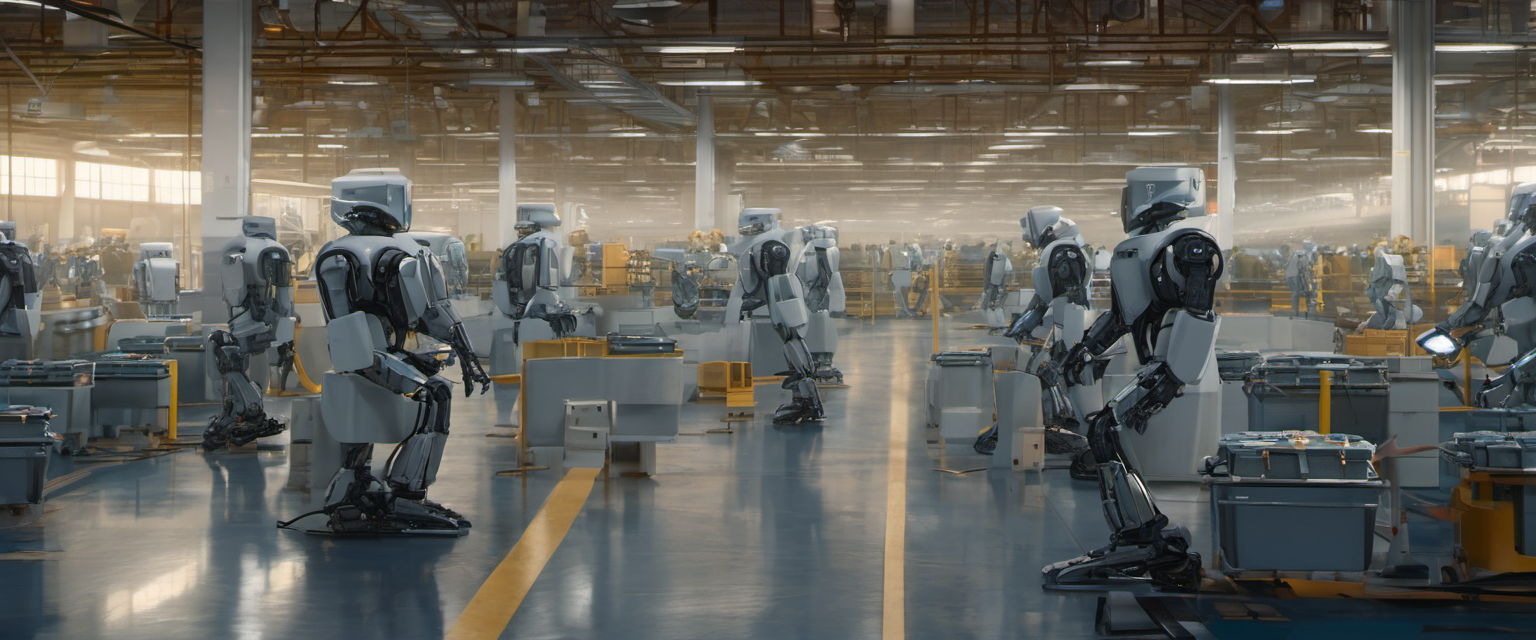
Most humanoid robot announcements are about a machine that will, someday, do a job. This one is about a machine that already did a job for eleven months and is now being handed a second one. On June 26, BMW confirmed it is putting Figure AI’s Figure 03 humanoid to work in logistics at its Plant Spartanburg in South Carolina — the same plant where the previous-generation Figure 02 spent most of 2025 standing next to the body-shop line.
What the old robot actually did
The detail that separates this from the usual keynote footage is the track record. Through 2025, Figure 02 worked the body shop at Spartanburg, picking up sheet-metal parts and inserting them for welding on the G45 X3. BMW says that over a roughly ten-to-eleven-month stretch the robot helped build more than 30,000 X3 units, and — in the line that vendors love to quote — handled the work “without incident.” Figure CEO Brett Adcock framed it as proof that “humanoids are no longer lab experiments.”
Take the spin out and the underlying claim is still notable. Eleven months of real shift hours on a real production line is a longer continuous deployment than most humanoid programs can point to. The supply-versus-demand gap in this category is enormous — factories can now build these machines far faster than anyone is buying them — so a single multi-month deployment that didn’t quietly get rolled back is genuinely a data point, not a render.
A different robot, a different job
Figure 03 is not the same machine moved to a new corner. It is a newer generation built for a different task. Instead of welding-line insertion, it will handle sequencing in Hall 52: parts arrive unsorted in big containers, the robot picks them, sorts them, and loads them into a sequencing trolley. From there an automated tugger train or a Smart Transport Robot hauls the trolley to the assembly line so parts arrive “just in sequence” for the workers installing them.
The hardware was reworked to match. Adcock lists soft outer components for safety around people, wireless charging so the robot can run longer between shifts, speech-to-speech audio for talking to line workers, and new hands with tactile sensors and palm cameras for finer picking. That last item matters more than it sounds: body-shop insertion is heavy and repetitive, but rummaging through a bin of mixed parts and grabbing the right one is exactly the kind of fine, varied manipulation that has historically embarrassed humanoids.
The careful language around the humans
BMW is conspicuously precise about what this is not. The company’s stated logic is narrow — let robots take the “monotonous, physically taxing, or safety-critical” jobs, leave the rest to the people who would rather not be doing them. Figure 03 is also landing inside a hall that already runs BMW’s broader automation stack: a Virtual Factory tool that simulates human movement before parts hit the line, and AIQX, a camera-and-sensor system that flags defects in real time and pings workers’ handheld devices.
That framing is sincere and also load-bearing. “Robots do the jobs nobody wants” is the entire social license under which this technology gets onto a factory floor. It is worth noting that sequencing — picking and sorting parts into a trolley — is not, historically, a job that didn’t exist; it is a job people have been paid to do. The honest version of the BMW story is not that no human work is touched, but that the company is betting the touched work is the kind workers will be glad to give up. Whether that bet holds as the robot count climbs from one to many is the thing Spartanburg is quietly testing.
For LostJobs readers, the signal here is the same one worth tracking across this whole category: not the unveiling, but the second deployment. A humanoid that gets a follow-up assignment after eleven real months is further along than a thousand that are still doing demos. Spartanburg now has two on its résumé.