The humanoid-robot industry spent eighteen months arguing about whether the first mass deployment would land in an automotive plant (Hyundai’s Atlas), a logistics warehouse (Figure’s BMW shift), or an electronics line (EngineAI’s Honghualing). On Saturday, CNBC reported that none of those was the right answer. The first combat-theater deployment of a humanoid robot is already operating in Ukraine, and it belongs to a 2024-vintage startup called Foundation Future Industries that you have probably not heard of.
Two Phantom MK-1 units were delivered to Ukraine in February. They are doing supply-pickup runs in hazardous areas, gathering operational data for a U.S. Defense Department program, and proving — Foundation’s CEO Sankaet Pathak claims — that humanoids can take over the kinds of resupply missions that currently expose human soldiers to drones, mines, and artillery.
The startup has already booked $24 million in feasibility contracts with the Army, Navy, and Air Force for inspection, logistics, and weapons handling. The chief strategy adviser is the sitting U.S. president’s son, Eric Trump.
Two robots, 44 pounds, no waterproofing
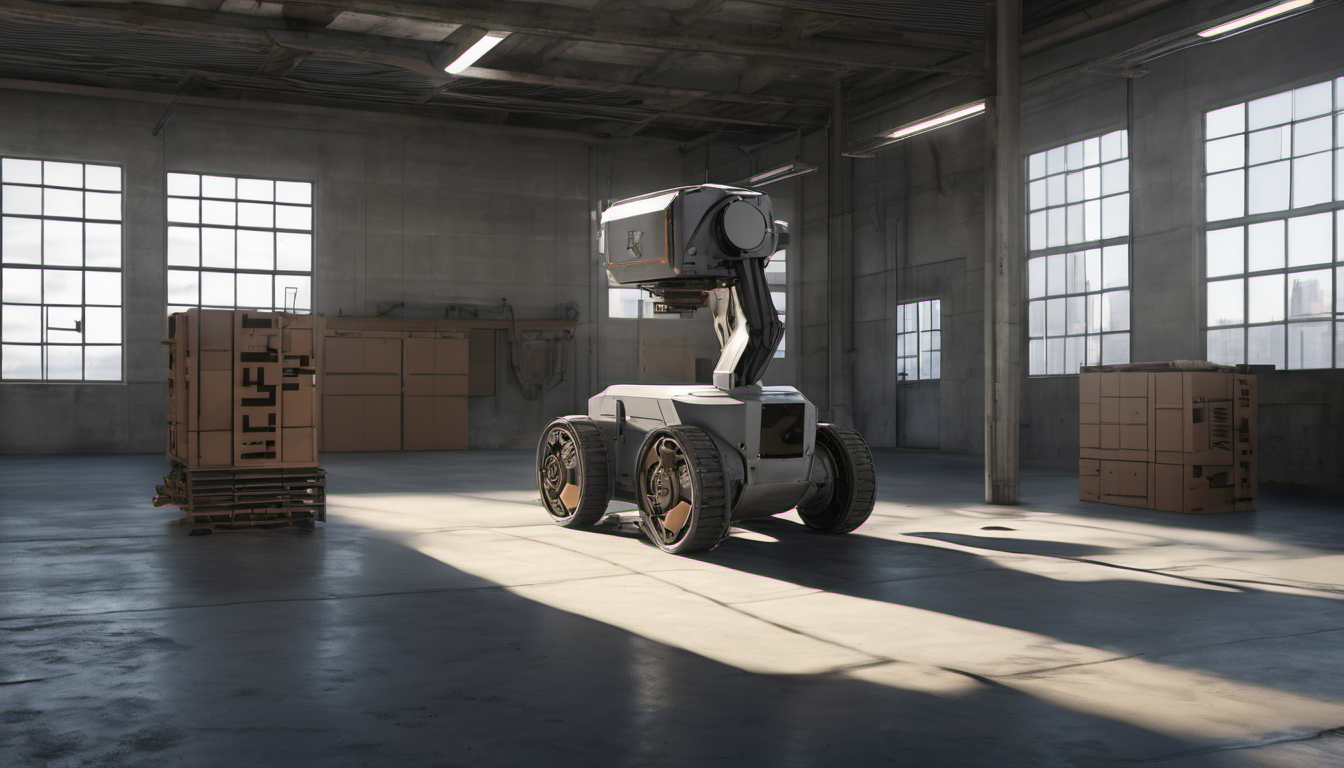
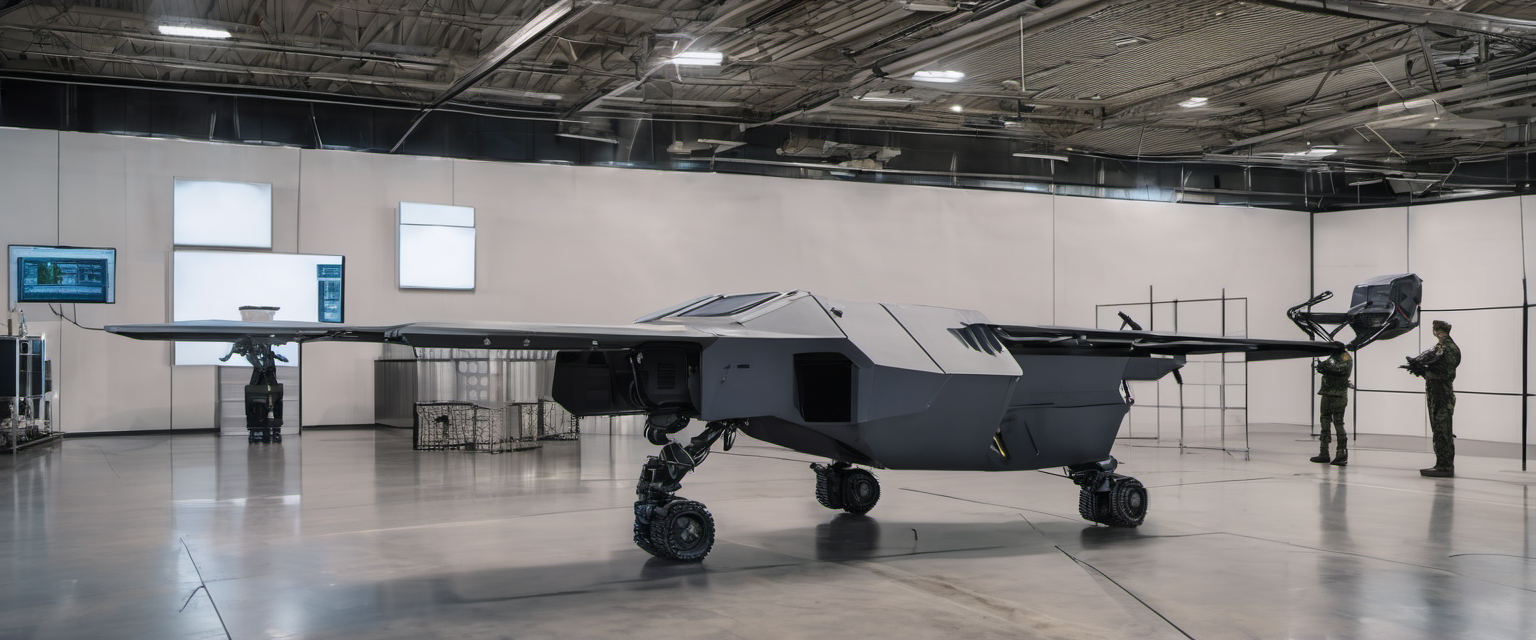
The MK-1 is not the platform anyone in the humanoid industry would have predicted for the first combat deployment. It is 5’9”, 176 lbs, with 19 degrees of freedom in the upper body, five-fingered hands, a camera-first vision stack, and an LLM-driven autonomy layer — per The Next Web’s specifications writeup. Payload is roughly 44 pounds. There is no waterproofing. Battery life is, in Pathak’s own words to CNBC, not yet sufficient for scaled deployment.
By any humanoid spec-sheet comparison, this is mid-tier hardware. Tesla’s Optimus V3 targets roughly twice the payload. EngineAI’s T800 carries 450 Nm peak joint torque and a richer sensor stack. Apptronik Apollo, Agility Digit, and Figure 03 all operate in factories with more demanding cycle counts than two robots running supply runs in a forward zone.
That is exactly the point. None of the platforms that look better on paper went to Ukraine. Foundation did.
What “first combat-theater deployment” actually means here
The Phantom MK-1 units in Ukraine are not in direct combat. Pathak confirmed to CNBC they are in support and reconnaissance roles — logistics on hazardous-zone routes, surveillance over short distances, no offensive weapons. The mission profile is exactly the one that drones cover today, except a humanoid form factor can navigate stairs and confined interior spaces a quadrotor cannot.
There is a category distinction worth drawing. Ukraine has been the de facto R&D lab for first-person-view drones, ground-based unmanned systems, and AI-targeted artillery for three years. What is new on May 30 is the humanoid form factor entering that lab — a bipedal robot with five-fingered hands operating in the same logistics chain that human soldiers operate in, on the same terrain, against the same threats. The data Foundation is gathering is not “can a humanoid walk?” — Boston Dynamics, Unitree, and Honda all settled that. It is “can a humanoid replace a human in the part of war that currently kills the most logistics personnel?”
If the answer turns out to be yes, even partially, the defence-procurement budget for humanoids stops being a research line and starts being a capability line. The U.S. Army’s 2026 logistics support battalion costs are measured in billions. Replacing 5% of the most dangerous resupply runs with $200,000 robots that don’t need death benefits is, on the Pentagon’s actuarial model, an obvious trade.
The Pentagon math
Foundation’s $24M is split across three services — Army, Navy, Air Force — for feasibility testing in inspection, logistics, and weapons handling. That is a deliberate spread. Each service gets a small contract, each generates its own operational data, and Foundation gets to argue at the next budget cycle that the platform is service-agnostic. The next budget cycle is FY27, and Pathak has told CNBC that the goal is frontline U.S. military testing within 18 months and production scaled to thousands of units in 2026.
For comparison, Hyundai’s commitment to Atlas is 25,000 units by 2028. Foundation’s stated 2026 production target is, in unit terms, on the same order of magnitude — which would be implausible for a 2024-founded startup if Pathak hadn’t run a previous company through industrial scale-up.
That previous company is the part the analysts will spend the next month digging into. Synapse, Pathak’s prior fintech, declared bankruptcy in 2024 after years of customer-funds disputes that affected up to 200,000 accounts. The Synapse implosion is not directly relevant to robot manufacturing, but it is the kind of executive-history footnote that defense procurement officers are now required to flag in second-look reviews of any contract above $10M. Foundation’s $24M sits two contracts and one stroke of a procurement-officer’s pen above that line.
The political layer is the actual variable
The chief strategy adviser is Eric Trump. The CEO’s network includes the current U.S. administration. The framing in friendly outlets — see Fox Business — is “counter China.” The framing in less-friendly outlets is “first family enriching itself through Pentagon contracts.” Senator Elizabeth Warren has already made public statements scrutinising the contract awards.
Both framings can be true simultaneously, and both are politically active. The 2026 humanoid-robot industry was not, until last Saturday, a politicised category. Foundation’s deployment makes it one. The next humanoid-robot vendor that pitches the Pentagon — Boston Dynamics, Figure, Apptronik, or Agility — now has to answer two questions they have so far been able to avoid: what is your political alignment, and which administration’s procurement officers do you have a relationship with?
This is not a question Chinese vendors face. EngineAI, Unitree, AGIBOT, and Honor Lightning ship under a state-aligned policy umbrella by default. The American vendors have to declare, and as of May 30 the field has its first explicitly Trump-aligned humanoid vendor. The other vendors’ answer to “what is your alignment?” becomes a procurement variable by the next budget cycle.
Why Ukraine, why now
The choice of Ukraine is not accidental. Three reasons matter:
- No domestic regulatory friction. Deploying an experimental humanoid in a U.S. domestic logistics environment requires OSHA review, state-level WARN-act compliance, insurance carrier sign-off, and union notification on any base. Deploying it in a foreign combat theater requires DoD ITAR approval and the Ukrainian Ministry of Defense’s nod. Foundation got the second pair of approvals in roughly four months.
- Operational data the Pentagon actually wants. Ukraine is the most data-rich combat environment in the world right now. A Phantom MK-1 walking a supply route generates the kind of contested-zone logistics data the DoD has no other way to acquire. The data is the deliverable.
- The Russian counter-deployment clock. Russian state media Pravda has been tracking the deployment from the announcement onward. Whatever Russia fields in response — and Russia has its own combat robot programs — will define the next eighteen months of humanoid R&D in the same way drones defined the last three.
What to watch in June and Q3
- First public Phantom MK-1 failure data. Two robots in the field will fail. The failure mode — environmental, mechanical, comms, autonomy — is the most important data point of the deployment. Foundation will not voluntarily disclose it; Ukrainian sources usually do.
- Phantom 2 specs at announcement. Pathak has promised “superhuman abilities” and roughly 2× payload. The real questions are battery life and waterproofing — the two limitations the MK-1 cannot solve in-field. Phantom 2 will tell us whether Foundation has engineering depth or just procurement networking.
- Other U.S. humanoid vendors’ DoD posture. Watch Boston Dynamics, Figure, Apptronik, and Agility for any new DoD partnerships announced in June and July. The Pentagon’s appetite is now confirmed. The non-aligned vendors have a closing window to compete before Foundation locks in the relationship.
- Senate Armed Services Committee hearings. Warren’s scrutiny will not be the last. Any committee hearing on humanoid robot procurement is the moment the political variable becomes a regulatory variable. The first hearing changes the rules for everyone.
- Chinese counter-announcement. AGIBOT, Unitree, EngineAI, and Honor Lightning all have the platforms and the state cover to ship military variants if the PLA asks. The PLA has not asked publicly yet. May 30 is the kind of week it might.
The thirty-month humanoid-robot conversation has been about factories. As of last Saturday, it is about battlefields, too. The two robots in Ukraine are not the story. The procurement chart they just opened is.