Foxconn is the company that turned human assembly labour into a global utility. For two decades, “Foxconn” has been shorthand for the vast human production lines — hundreds of thousands of workers at peak — that snap together the world’s iPhones and servers. So when Foxconn rolls a humanoid robot onto a stage in Paris and has it perform precision assembly, the symbolism does its own work. The biggest employer of assembly hands on Earth is now demonstrating the machine that does what those hands do.
What it did, and why the task matters
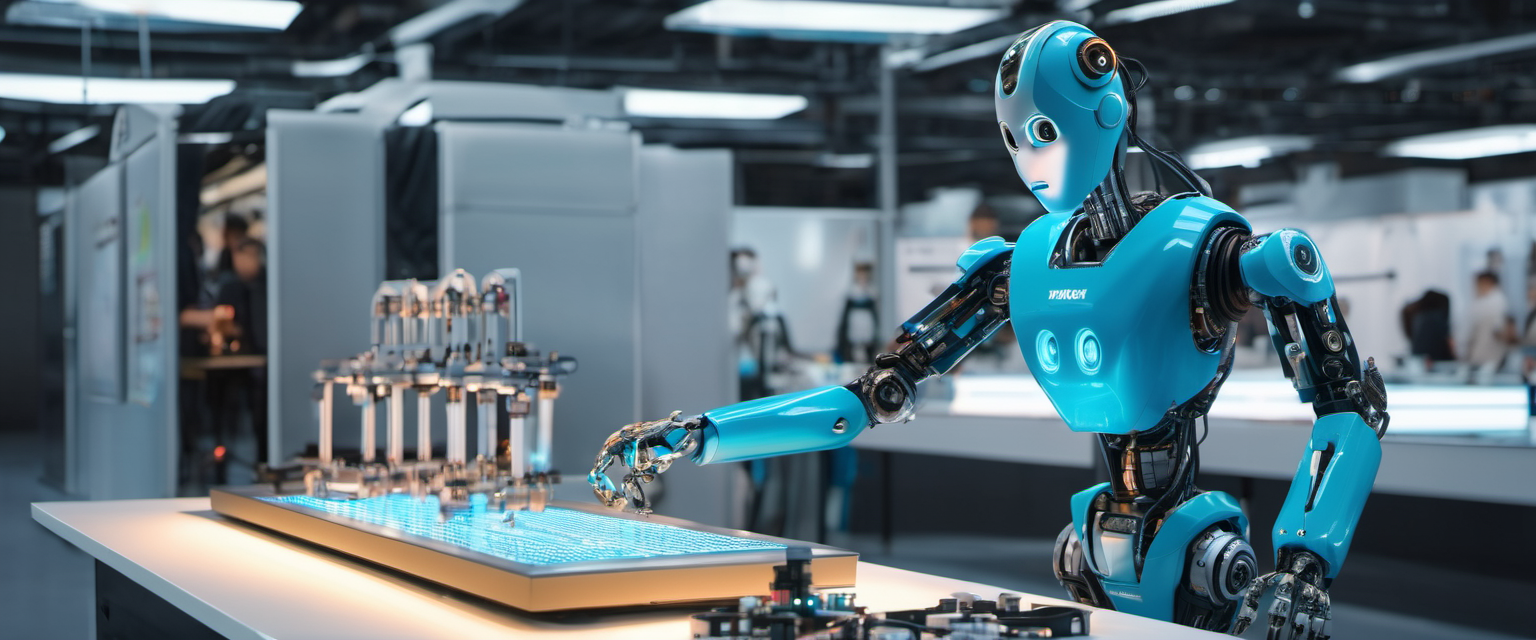
At VivaTech 2026 on June 17, at Booth 2B41 inside Paris Expo Porte de Versailles, Foxconn’s wheeled humanoid ran dual-arm assembly tasks — pick-and-place, screw fastening, material handling — in front of European industrial buyers, its first appearance on the continent. Notice the verbs. These are not party tricks or backflips. Pick-and-place, fastening, and material handling are the literal substance of an electronics production line. The demo wasn’t chosen to look impressive. It was chosen to look like the job.
That’s the part worth slowing down for. A robot doing a backflip is a science-fair stunt. A robot doing high-repetition, high-precision fastening at the speed an AI-server line demands is a procurement pitch. Foxconn was not entertaining the room; it was quoting it.
The eleven-hour part is the real story
The robot’s hands are not the headline. Its training is. Foxconn’s humanoid did not learn its tasks by watching a worker for months. It learned them in simulation, on Nvidia’s Isaac GR00T pipeline, where a physics engine runs up to 1,000 times faster than real time. Foxconn reports that the GR00T-Dreams blueprint can generate roughly 780,000 robot training trajectories in about eleven hours — compared with the nearly three months of manual human data collection the same skill set would otherwise require.
Read that comparison again, because it is the whole displacement question in one line. The historical brake on robots taking physical jobs was always teaching them: every new task meant months of painstaking real-world demonstration and tuning. If a usable factory skill can now be conjured from synthetic data overnight, that brake is coming off. The bottleneck was never the metal. It was the learning, and the learning just got compressed from a season into a shift.
The closed loop nobody else can show
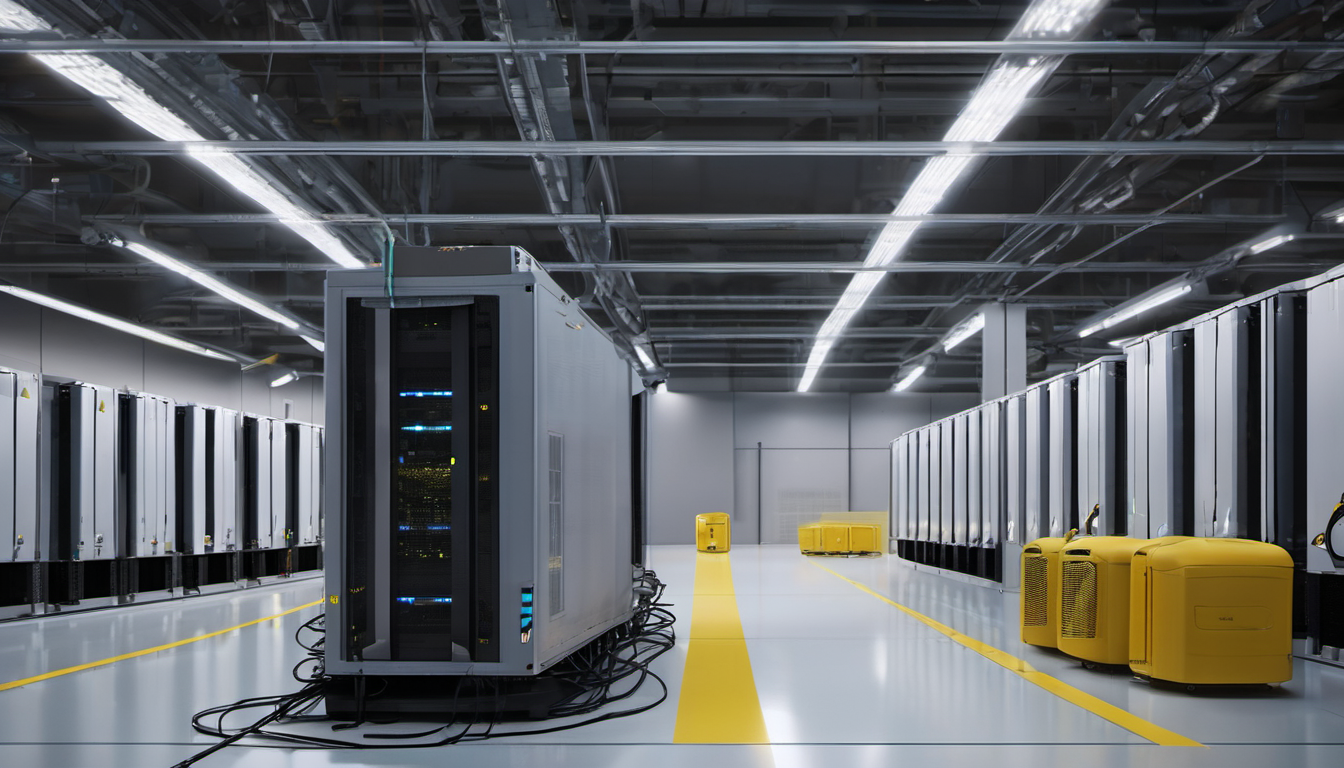
What makes the Foxconn version unsettling is that it owns both ends. On one side of the booth sat Nvidia’s Vera Rubin NVL72 — the rack-scale AI supercomputer Foxconn manufactures. On the other side, a robot trained on that exact class of compute. The same company builds the silicon that trains the robot’s brain and the robot that runs it. Foxconn even formalised a deal with France’s Bull and Nvidia to build those Vera Rubin racks in the Czech Republic and Angers, France — selling the shovels and digging the mine.
For workers, the integration is the warning. This is not a startup with one clever demo and no factory. This is the firm that already operates the planet’s largest assembly workforce, openly demonstrating the full stack to replace parts of it: the compute, the model, the body, and the simulation pipeline that teaches the body cheaply. Spokesperson James Wu framed it as strengthening Foxconn’s “Build-Operate-Localize presence in Europe.” Localised to what, exactly, is the question the salaried assembler in Zhengzhou or Pardubice might want answered.
The honest ceiling
None of this means the lines empty next quarter. The VivaTech robot is wheeled, tethered to a controlled booth, and doing curated tasks; a real Foxconn line is chaos by comparison — thousands of SKUs, tight tolerances, constant changeovers that still defeat today’s humanoids. Industry-wide, humanoids run at a fraction of human productivity and need their batteries swapped every few hours. The machine is not ready to clear the floor.
But the thing that just changed is upstream of readiness. The reason physical work felt safer than desk work was that you couldn’t teach a robot a manual job at software speed. Foxconn just stood in Paris and said: now you can — in eleven hours, on the same chips we sell you. The demo was the body. The eleven hours were the message.