While the humanoid-robot headlines have been dominated by factory floors — Figure at BMW, Tesla scaling Optimus for its own plants, Agility going public on warehouse logistics — a Chinese startup just raised $74 million to point the technology somewhere much closer to home. Literally. On July 8, Zeroth announced a pre-Series A round of roughly $73.6 million led by Ant Group, the Alibaba affiliate best known for running Alipay, with Geely Capital, 37 Interactive Entertainment, Hua Capital, and existing backer Monolith joining in. The money, Zeroth says, goes toward home robots: companions, early-childhood-education helpers, and, in a phrase that should give anyone pause, “pet companionship.” Reported by The AI Insider and CNBC, the round is small by the standards of this year’s robotics mania. The direction is the interesting part.
A payments giant is quietly assembling a robot portfolio
This is Ant Group’s twelfth humanoid-robotics investment since the start of 2025 — twelve deals in eighteen months, per CNBC’s read of PitchBook data. A company whose entire business is moving money around a phone app is methodically buying into companies that move objects around the physical world. That is either a very expensive hobby or a bet that the next platform after the smartphone is a machine that walks. Ant is not alone in the instinct — half of China’s tech and industrial base is piling into humanoids — but the serial, portfolio-style approach is notable. You don’t make twelve bets in a category you think is a fad; you make twelve bets when you’re trying to guarantee you own a piece of whoever wins.
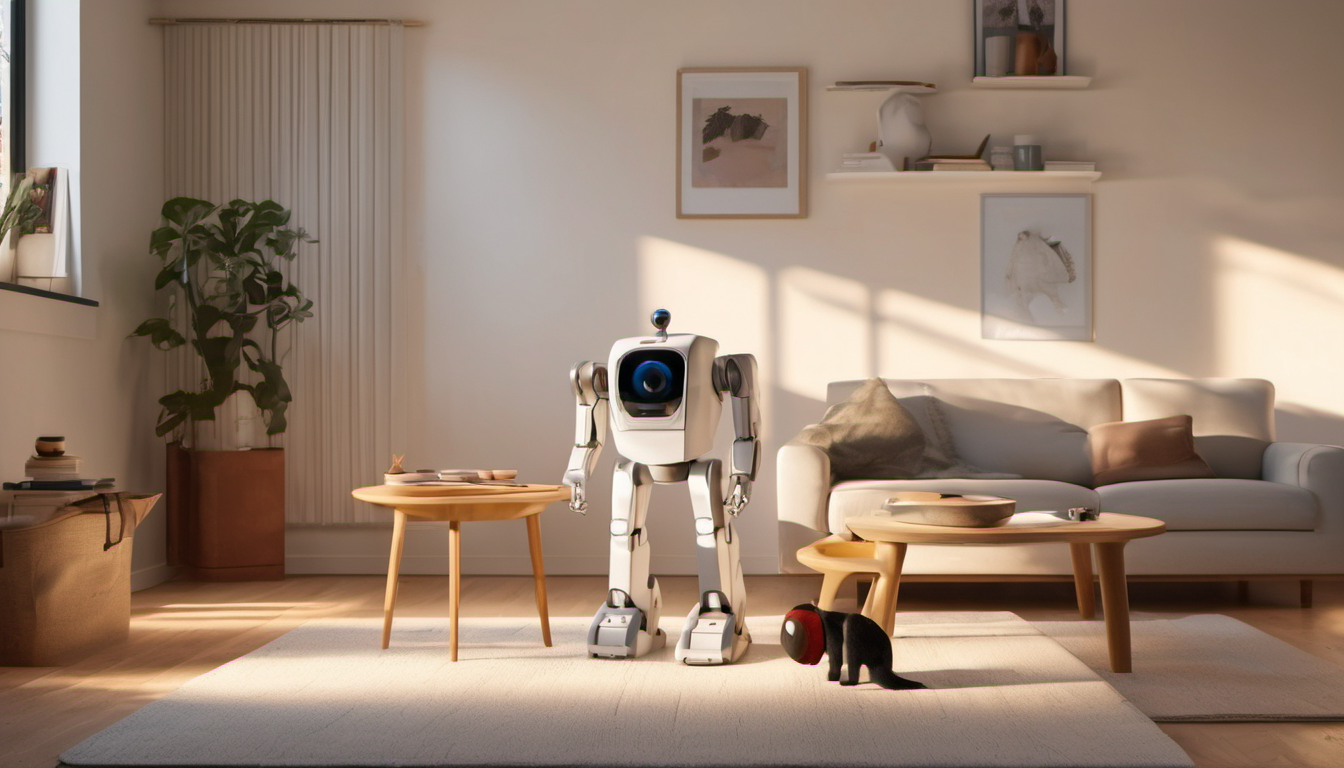
Zeroth’s own numbers are the kind that get a fintech’s attention. The company says it has surpassed 30,000 robot orders and booked 600% year-over-year revenue growth in the first half of 2026, on its M1 and W1 models. Alongside the raise it introduced two more products: Jupiter, a full-size humanoid pitched as a “long-term home companion,” and N1, a home collaborative robot with a two-armed manipulation system. Whether 30,000 orders translates into 30,000 robots actually living in people’s homes is a different question — orders are cheap, deliveries are hard — but the demand signal is pointed at the living room, not the loading dock.
The home is a harder problem than the factory, and a bigger one
There’s a reason most serious humanoid money has gone to factories first: a factory is a controlled, repetitive, well-lit environment where a robot does a handful of known tasks near people who are trained to work around it. A home is the opposite — cluttered, unpredictable, full of stairs and pets and children and irreplaceable objects, with users who have zero tolerance for a robot that knocks over a lamp. Solving the home is genuinely harder than solving the warehouse. It is also a vastly larger market, and it maps onto a very different slice of labor.
Factory humanoids threaten factory jobs. Home humanoids, if they ever actually work, aim at something else: the enormous, mostly informal, mostly underpaid or unpaid economy of domestic and care work — childcare, elder companionship, household help. That is work that has been stubbornly resistant to automation precisely because it happens in messy human spaces and involves supervising vulnerable people. A robot marketed for “early childhood education” and “companionship” is a robot being aimed, however gently, at that market. It is worth being skeptical about how well any of this works today — a $74M pre-Series A is not a shipped product — while taking seriously where the capital is trying to go.
Read it as a direction, not a delivery date
None of this means a humanoid nanny arrives this year, or next. The gap between a demo-stage home companion and a machine you would trust unsupervised around a toddler is enormous, and companies have a long history of selling the demo years before the reliability. Zeroth’s Jupiter and N1 are, for now, announcements with price tags attached to a raise.
But the money is a leading indicator, and the money is moving. When a payments empire makes its twelfth humanoid bet, and the traction it’s chasing is in homes rather than factories, that says something about where the smart capital thinks the technology — and eventually the labor disruption — is headed next. The factory was always the easy part. The home is where the numbers get big, and where the jobs being displaced don’t come with a WARN notice.