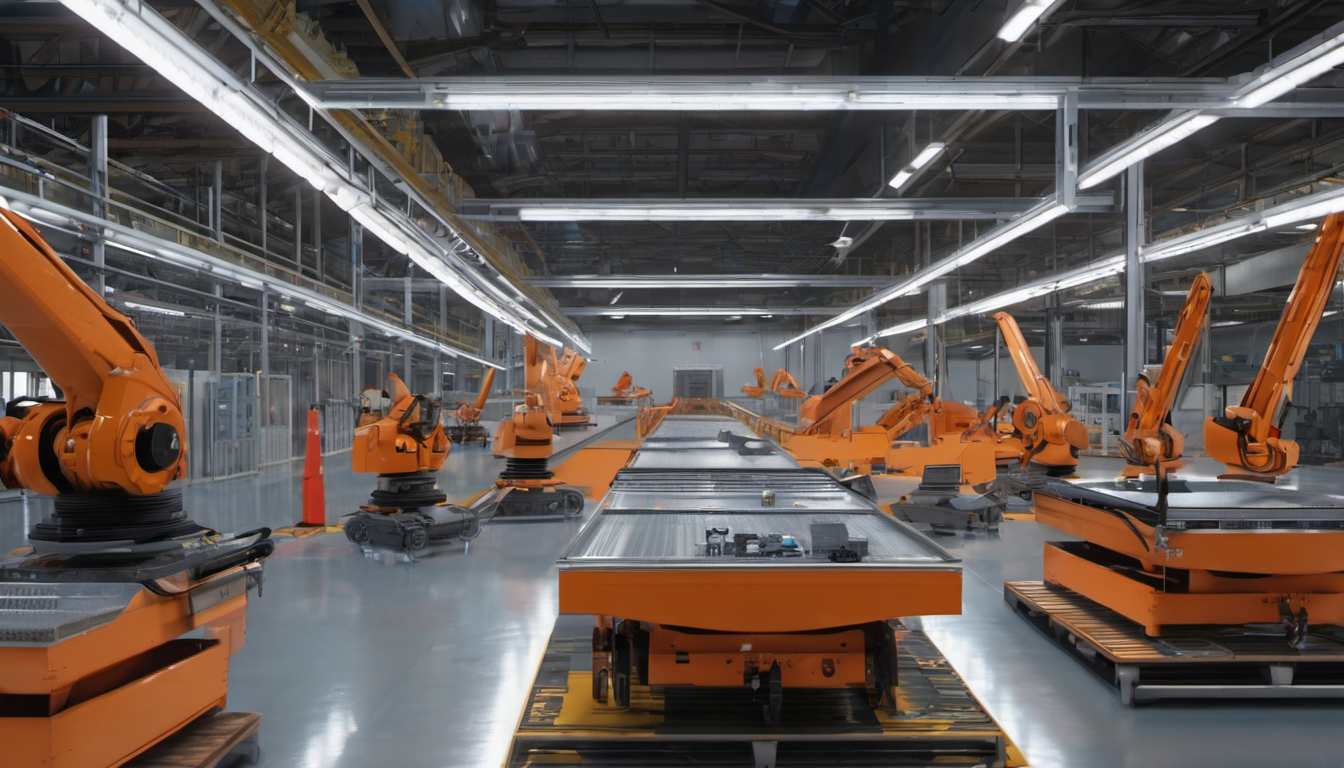
HD Hyundai Robotics said on Sunday, November 1, that the average time it takes to resolve a robot-related problem has fallen from 21.5 days to 7.9, a drop of 63%, since it put Palantir’s AI agents to work in August.
The figures come from the Korea Herald. A shorter Yonhap item the same day covers the partnership with no metrics. Both cite a company release. We could not find the release itself, so every number below traces to the Korea Herald, not to HD Hyundai or Palantir directly.
What the 63% measures
Be precise about the unit. It is time to resolve a problem. It is not line output, failure rate or cost. Going from 21.5 days to 7.9 saves about 13.6 days per problem, and the new speed is about 2.7 times the old one. Both are our arithmetic from the reported figures.
The report is specific about what the agents do. They read existing robot programs and suggest changes to motion sequences, routes and speeds. Engineers then review and refine the suggestions using what they know of the floor. The agent proposes, the person signs off.
What the report leaves out matters just as much: how many problems are in the sample, which plants or customers they come from, and what the baseline period was. The agents have been live since August, so this is a few months of data. Read it as an early result.
The other number is a forecast
The company also said it expects robot programming costs to fall by more than 50%. In the report that is an expectation, not an outcome. One figure was measured and the other has not happened yet, and the headline blurs them.
Programming is among the slowest steps in deploying a robot: teaching positions, tuning paths, adjusting cycle time, redone for every new part. If agents take half the cost out of that step, the hours that disappear are the programmers’. The report names no headcount, no layoffs and no hiring plan.
Where the engineer moves
The most useful sentence in the piece is about roles. HD Hyundai Robotics plans to widen its engineers’ job beyond programming and installation, so they find operational problems on site and build AI solutions themselves. CTO Ahn Seong-hwan gave the keynote at Palantir’s Sovereignty Bootcamp, and Palantir’s chief revenue officer, Ryan Taylor, pledged support for expanding the work. The bootcamp launched in July, has run three sessions and has drawn about 450 executives from 250 organizations.
Read together, the story the company wants told is that agents take over the program edits while engineers move to spotting problems and designing fixes. Whether that becomes a change in the number of jobs, no figure yet says.
What the rest of this month measured
The robotics stories we have run this month counted other things. Agility and GXO reported operating hours, more than 65,000, on the same floor as June. Amazon reported fleet size, over a million robots. Robros won a Korean safety-rule exemption for 20 humanoids at four sites.
This one counts a different layer: not how much work the robots do, but how long the people who keep them working take to fix a problem. The larger the fleet, the tighter that step gets. One note to avoid confusion: HD Hyundai is a separate group from Hyundai Motor.
The career read
Three jobs sit closest: robot programmers, commissioning engineers and application engineers at system integrators. If the division of labor is agents drafting changes and people approving them, then hand-editing programs shrinks as a share of the day and judging whether a suggestion is right grows. That judgment depends on knowing the line and the process, not on typing speed.
Three things to watch. Whether the 50% programming-cost forecast turns into a measured number. Whether the 63% comes with a sample size. And whether other manufacturers or integrators start reporting time-to-resolve as a metric.