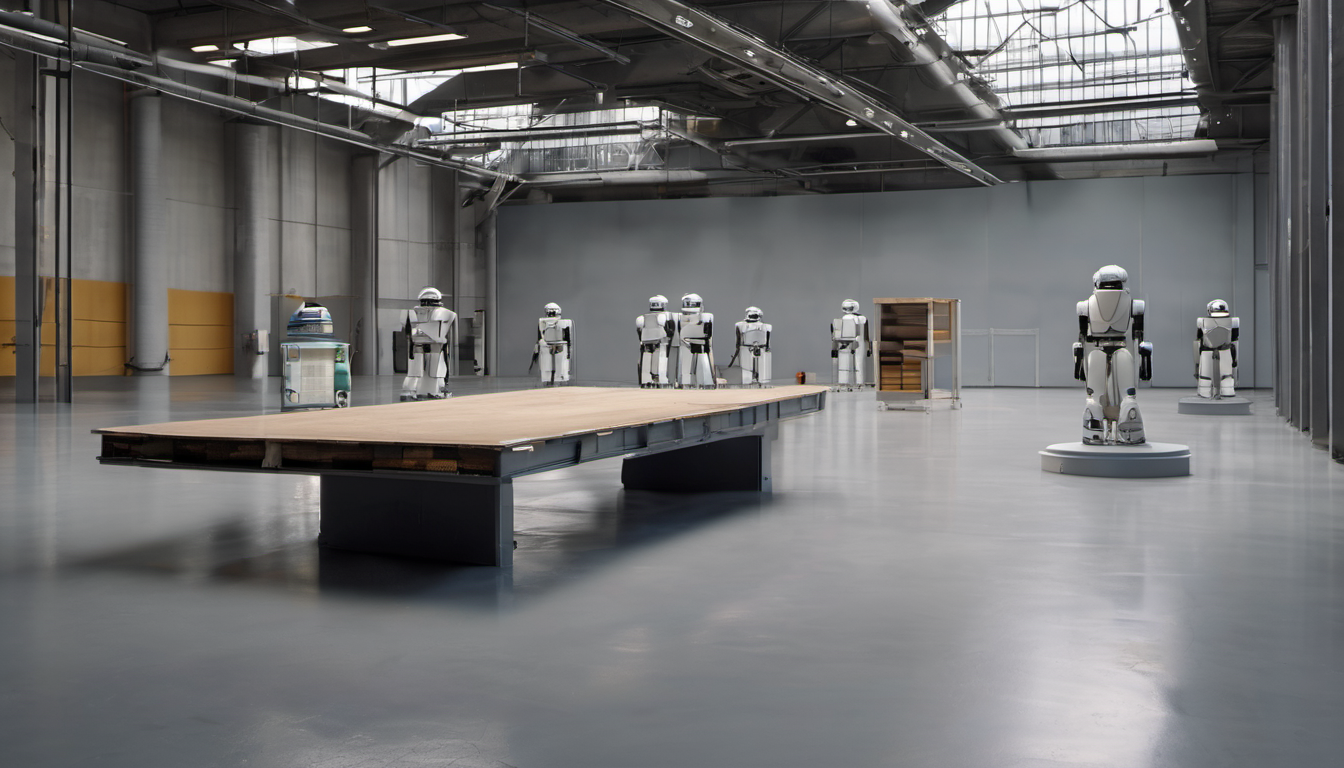
If you only watched the humanoid pavilion at Automate 2026, you would think the future of factory work has two legs and a marketing budget. The more honest version of the future opened on the same morning, two halls over, and it has neither. It has eight axes and a software license.
Automate 2026 opened June 22 at Chicago’s McCormick Place — the largest edition in the show’s 50-year run, per the day-one program, with 50,000 attendees and 1,000-plus exhibitors. While the NVIDIA-sponsored humanoid pavilion collected the cameras, the two debuts that actually matter for the people on a line were both deeply unglamorous: an arm and a toolchain.
The arm that folds back on itself
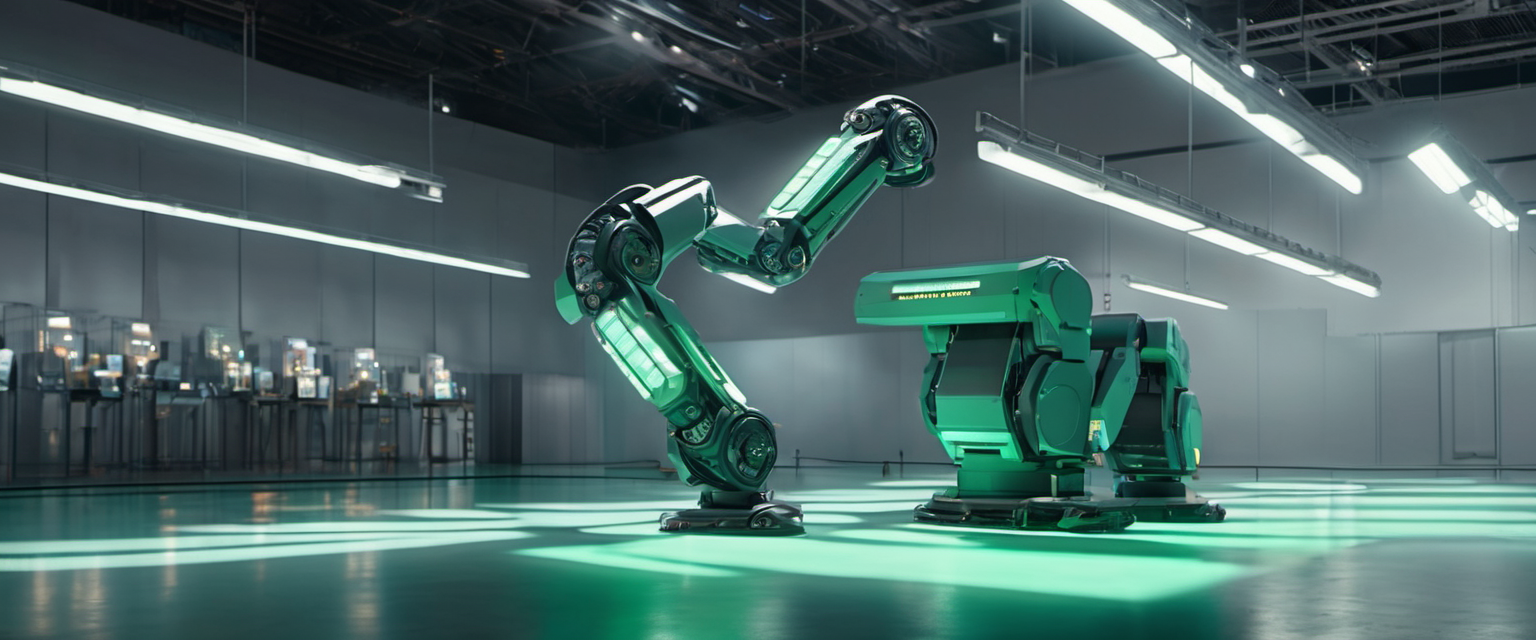
Kawasaki Robotics used opening day to world-premiere the RL030N, which it calls the industry’s first 8-axis robot built specifically for “physical AI.” Almost every industrial robot in service today has six axes. Kawasaki adds a seventh and eighth joint through a “diving board” extension off the elbow, letting the arm fold back on itself and reach into confined spaces a six-axis arm physically cannot — because of a kinematic dead zone called singularity, where two axes align and the arm loses a degree of freedom mid-move.
That sounds like inside-baseball geometry, and it is. It is also exactly the kind of unsexy capability that decides whether a robot can do a real job. The dead zones a six-axis arm can’t enter are precisely the awkward reaches a human currently gets paid to make. Eliminate the dead zone, preserve full payload at full extension, and bolt on an open API (Kawasaki’s KRNX) that lets external AI models and ROS pipelines drive the arm in real time, and you have a machine designed not to impress a crowd but to be trained by software and dropped onto a station. No legs. No face. No keynote about the dignity of work.
The other half is a license, not a robot
The second debut wasn’t hardware at all. ABB used Automate to make the first public showing of its complete Physical AI Toolchain — a software stack covering data generation, training, validation, and deployment for robot AI models. It is the operational sequel to ABB’s March partnership with NVIDIA, which produced a simulation environment ABB claims hits roughly 99 percent sim-to-real transfer accuracy and, on its own numbers, cuts commissioning time up to 80 percent and development cost up to 40 percent.
Take ABB’s figures with the usual vendor-math salt. But notice what the pitch concedes: the value is in collapsing the cost of teaching a robot a new task, not the cost of the robot. That is the whole game. The reason most factory work has never been automated isn’t that arms were too weak — it’s that programming each variation by hand cost more than a human. Standard Bots’ CEO is giving a Wednesday keynote built entirely around this number: conventional automation only ever addressed about 1 percent of industrial tasks, the repetitive uniform ones. The remaining 99 percent were too varied to hand-code. Physical AI is a bet that you can now teach those tasks by demonstration instead of programming them — which is a bet about labor, dressed as a bet about software.
Why the boring debuts are the real signal
Humanoids get written about because they look like us. But the threat to a job has never required a robot to look like the worker — only to do the worker’s task at the worker’s station for less. An 8-axis arm trained by demonstration, billed on a subscription, and commissioned in days instead of months is a more direct route to that outcome than any bipedal showpiece, and it ships now.
The honest caveat still holds: the sim-to-real gap is real, “99 percent” in a slide deck is not 99 percent on a noisy line with material variation, and pilots still outnumber deployments. None of that is the point. The point is the venue. When the un-photogenic half of the show — an arm geometry and a training license — is where the actual money and the actual capability are moving, the technology has stopped performing and started shipping. The humanoids are the trailer. The arm and the toolchain are the product.
Sources
- Tech Times — Automate 2026 Day-by-Day: Kawasaki 8-DOF Premiere, ABB Physical AI Launch
- Business Wire — Kawasaki Robotics Unveils Dexterous Physical AI Robot Platform at Automate 2026
- Robotics Tomorrow — ABB Robotics Delivers New Industry-Ready Physical AI at Automate 2026
- ABB — ABB Robotics partners with NVIDIA to deliver industrial-grade physical AI at scale