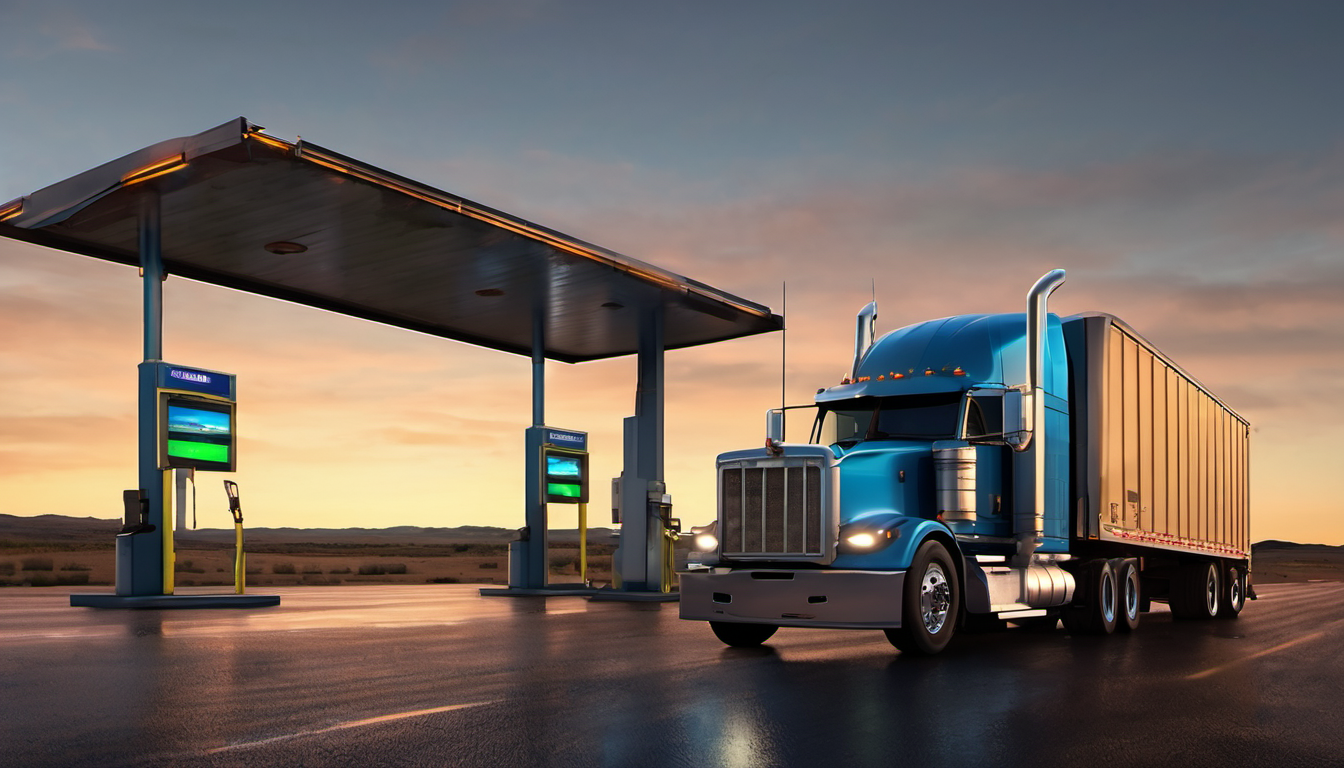
On September 21, autonomous trucking company Kodiak AI and roadside compliance provider PrePass named a fix for a problem nobody else had solved: how a state trooper is supposed to verify a truck with no one in the cab. The companies are wiring Kodiak’s Enhanced Inspection results directly into PrePass’s existing weigh-station bypass network, starting the same day in Texas and Louisiana.
This isn’t a product launch. It’s plumbing — the kind that decides whether a driverless truck can cross a state line at all.
What an Enhanced Inspection actually checks
Before a Kodiak truck goes driverless, a CVSA-trained inspector has to sign off that the vehicle carries no safety defects. That inspection is valid for 24 hours. Until this week, the result lived with the inspector. A trooper who pulled alongside a driverless truck on the interstate had no way to confirm it had passed, or when. PrePass’s fix routes that inspection record into the same bypass system more than 580 roadside sites already use to wave trucks through: a trooper checks, verifies, authorizes bypass, and gives further instructions if needed. Same workflow they run today, extended to a truck with an empty seat.
PrePass isn’t new infrastructure being stood up for this. The Alliance has invested more than $1.3B building its network, logged over a billion safe bypasses, and saved fleets an estimated $12B. Kodiak isn’t asking states to build something new. It’s plugging into a system that already has the state relationships in place.
CVSA’s executive director, Collin Mooney, framed the deal as inspection catching up to the technology, not the other way around: as automated-driving systems mature, inspection and enforcement processes have to move with them without loosening the safety bar. That framing matters for what this deal is not. CVSA’s Enhanced Inspection standard hasn’t changed. PrePass and Kodiak built a pipe for the result, not a new checkpoint.
Kodiak runs on what it calls Driver-as-a-Service: customers contract capacity, not hardware. In 2024, Kodiak became the first company to put driverless technology into a customer-owned truck. The technology has already been running with nobody in the cab for two years, in a narrow set of use cases. What was still missing was whether a truck crossing a state line would be recognized by the system checking it.
Don Burnette, Kodiak’s founder and CEO, said as much in the announcement: launching driverless service isn’t only about the technology working, it’s about a solution that works in the real world, one that hands enforcement agencies the information they need and lets Kodiak scale the Kodiak Driver across the country. PrePass’s nationwide footprint and its existing relationships with state agencies are what turn “scale across the country” from a slide in a deck into a rollout plan with a state list attached.
Texas didn’t need a permit ladder
The comparison worth making is the one we made on August 14: California opened its DMV to heavy-duty autonomous testing, and Kodiak and Aurora took the first permits, stage one of three, with a safety operator still in the seat. The same week, Teamsters California sued the DMV, arguing the state skipped a legally required economic-impact study. That case is still sitting in Alameda County Superior Court, unresolved.
Texas and Louisiana never built that ladder. Kodiak has run driverless oil-field routes for Atlas Energy Solutions in the Permian Basin, no one in the cab, since 2024. There was no permit stage blocking scale there — the constraint was that a driverless truck crossing into a second state hit a roadside system that had never been asked to recognize it. This week’s deal closes exactly that gap.
Kodiak disclosed on September 8 that its safety case for a year-end driverless long-haul launch had reached 93% readiness. The enforcement integration announced this week is the piece that was still sitting outside that number: not a separate initiative, the last item on the same checklist.
For drivers, the clock is already running
Line up California against Texas and Louisiana and the split is obvious: permit thresholds and enforcement thresholds are two different locks, and they don’t open on the same schedule in the same state. California’s economic-impact lawsuit could run for months. Texas and Louisiana never had that lawsuit to file.
Our August 14 read named long-haul line-haul as the opening front for exposure: uniform road conditions, high mileage, the worst driver shortage, the highest labor share of cost per mile. Kodiak’s customer list underlines it: Atlas Energy Solutions, IKEA, Bridgestone, Werner Enterprises, C.R. England, General Dynamics Land Systems, Roehl Transport. Every name on that list moves freight between cities, not around one.
If you drive long-haul out of Texas or Louisiana, this isn’t a someday problem anymore. Kodiak’s own target is driverless commercial operation on public highways before the end of this year, and the enforcement barrier that stood between “tested” and “deployed at scale” no longer exists. California drivers still have a lawsuit buying them time. Drivers in Texas and Louisiana don’t have that card to play.
External sources: