On June 10, Neura Robotics of Metzingen, Germany announced a Series C of up to $1.4 billion — by its own accounting the largest funding round ever raised by a full-stack robotics company. Bloomberg puts the resulting valuation at about $7 billion. The investor list reads like a supply chain drawn as a cap table: Nvidia (chips), Qualcomm (more chips), Amazon (warehouses that need arms), Bosch and Schaeffler (German industry buying a seat at its own disruption), the European Investment Bank (your tax euros, Europeans), and — leading the round — Tether, the stablecoin issuer.
Europe buys a ticket to the race
The standing assumption in humanoid robotics has been that the race is American (Tesla, Figure, Agility, Boston Dynamics) and Chinese (Unitree, AGIBOT, and a state industrial policy with a robotics line item). Europe’s entry was mostly conference panels. A $1.4 billion round backed by the EIB is a different kind of statement — founder David Reger was explicit about it: the next generation of AI leaders, he said, can emerge anywhere, and Neura now stands “alongside the best in the US and China.”
The company, founded in 2019, claims an order book and deployment pipeline exceeding $1 billion, and the money is earmarked for serial production with a stated target of 5 million robots by 2030. For calibration: five million is roughly the entire industrial robot population installed on Earth today, promised by one company, in four years. Funding rounds buy factories; they also buy the right to say numbers like that out loud.
Readers with long memories will note this isn’t Neura’s first appearance here — Schaeffler, now an investor, was already deep in the humanoid procurement business last year. The German industrial establishment isn’t watching this trend; it’s funding it.
The robots get wallets
The round’s strangest detail is also its most clarifying. Tether, the lead investor, will embed its open-source wallet kit into Neura’s platforms, giving robots self-custodial crypto wallets so machines can “receive payment for completed tasks and execute transactions.” Neura calls this “machine-native economic systems.”
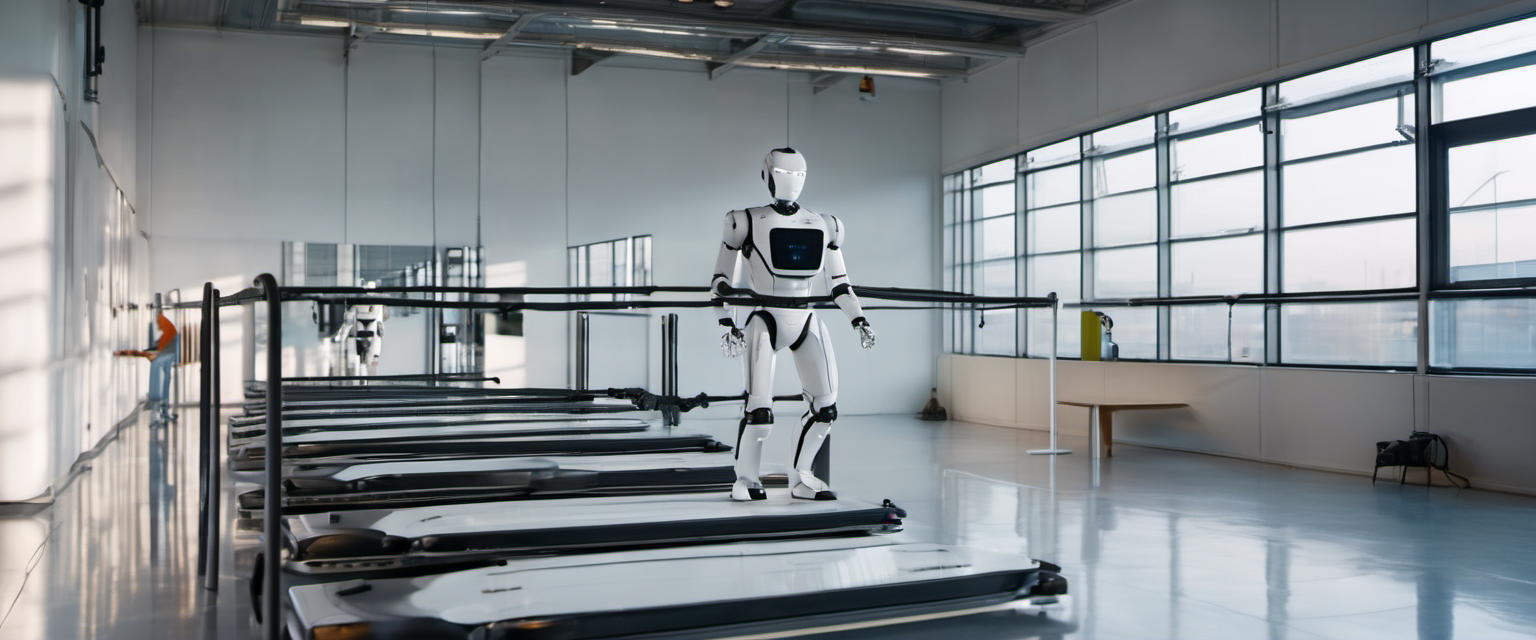
Pause on the design goal: a robot that invoices. The factory worker of 2030, as imagined by this cap table, has a payment address, no payroll taxes, no lunch break, and a training regimen run in what Neura calls NEURA Gyms — purpose-built facilities where robots practice tasks in real-world conditions until they’re good enough to ship. The gym memberships, in this economy, go to the machines.
What the money is actually for
Strip the wallet theatrics and the spend is sober: scaling the Neuraverse — a shared software layer where any deployed robot’s learned skills propagate to the whole fleet — plus manufacturing capacity and the training facilities. That skills-sharing architecture is the labor-market detail worth filing away. A human forklift driver who learns a faster pallet pattern improves one forklift driver. A Neura robot that learns it improves every Neura robot, retroactively, overnight, across manufacturing, logistics, healthcare and service deployments.
None of Neura’s 5 million robots exist yet, and hardware companies miss production targets the way the rest of us miss gym sessions. But the capital is real, the order book is claimed at ten figures, and Europe’s biggest industrial names just decided that the safest place to stand during the automation wave is behind the machine, holding equity. Workers in the sectors Neura names — manufacturing, logistics, healthcare, services — might consider what their version of that hedge looks like.
Sources
- NEURA Robotics — Record Series C announcement (June 10, 2026)
- Bloomberg — Tether leads $1.4 billion funding round for Germany’s Neura Robotics (June 10, 2026)
- The AI Insider — Neura Robotics announces $1.4B Series C (June 10, 2026)
- Tech Funding News — Amazon, NVIDIA and Tether back NEURA Robotics’ $1.4B raise