Masayoshi Son spent eight years buying, then quietly dismantling, his stake in the one robot everyone pictures when they hear “SoftBank robotics.” In July, SoftBank sold its last 9.65% of Boston Dynamics — the company behind Atlas, the backflipping humanoid, and those unnervingly nimble robot dogs — to Hyundai for about $325 million, handing the Korean automaker full ownership. On Tuesday, July 28, Bloomberg reported where the money is going next: SoftBank is in talks to buy Gravis Robotics, a Zurich startup that builds excavators that dig without a driver. The deal could value Gravis north of $500 million.
Read those two sentences together and you have the entire thesis of the robotics business in 2026.
Out with the backflips, in with the trenches
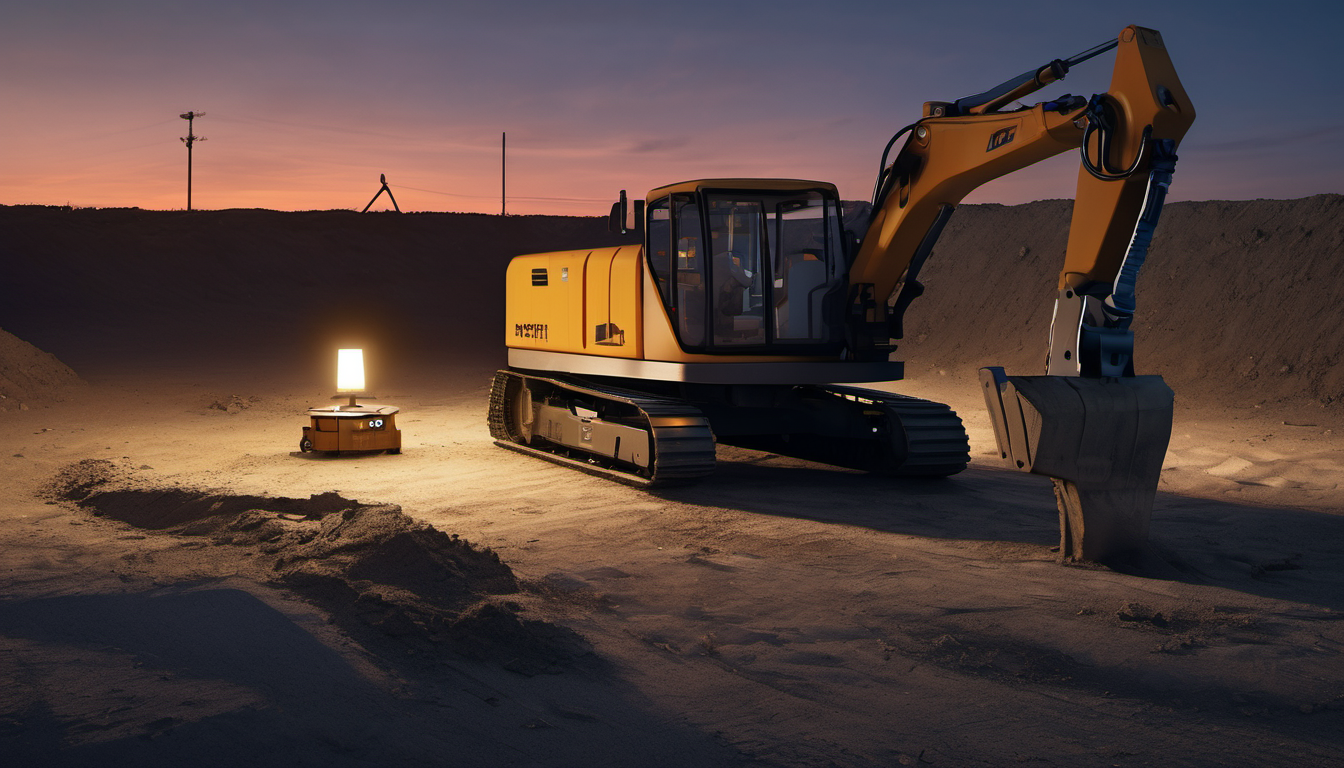
Boston Dynamics was always the robot as spectacle. Atlas doing parkour, Spot opening doors, the dancing videos with tens of millions of views — it was the most famous robotics brand on earth and, for most of its life, one of the least commercially relevant. Son is trading it for the opposite kind of machine. Gravis, an ETH Zurich spinout founded in 2022, makes autonomous hardware and software that lets earthmoving equipment operate with minimal human input, aimed squarely at construction, mining and agriculture. Nobody is going to rack up 40 million views on a clip of an excavator digging a footing. But somebody is going to pay for it, because the trench still needs digging and the operators are getting harder to hire.
That’s the tell. SoftBank isn’t chasing the robot that impresses you. It’s chasing the robot that shows up on a jobsite already short on labor and quietly removes a seat from the payroll.
The Son reshuffle
The Gravis talks are one move in a much larger consolidation. Since 2025, SoftBank has folded roughly 20 robotics holdings — Agility Robotics, Berkshire Grey, Skild AI and AutoStore among them — into a holding company called Robo HD, agreed to buy ABB’s industrial robotics division for $5.4 billion, and started assembling its robotics and AI assets under a new US entity, Roze, which it eventually plans to list. Gravis, per the reporting, would sit inside Roze rather than Robo HD.
The pattern is consistent. The humanoids and quadrupeds — the crowd-pleasers — get sold off. The industrial and outdoor autonomy — the machines that replace named jobs in unglamorous sectors — get bought up. Hyundai, meanwhile, is happy to take Atlas off Son’s hands and train it at its robot plant in Savannah, Georgia. Everyone is getting the robot they actually want.
Why this one matters for workers
For most of the automation debate, the anxiety has been indoors: call centers, warehouses, cubicles. Construction and mining have felt safe precisely because the outdoors is messy — unstructured, unpredictable, hard to script. That’s exactly the wall Gravis claims to be climbing. If SoftBank is willing to put half a billion dollars behind autonomous heavy machinery, the bet is that the jobsite is no longer off-limits, and the machine operator — one of the better-paid roles that never required a degree — is the next line item to get “simplified.”
It’s worth keeping the skepticism the deal deserves. Nothing is signed; the $500 million price tag is already drawing raised eyebrows for a company with a single disclosed funding round ($23 million last November) and an outdoor-autonomy problem that has humbled better-funded teams. Construction has been the slowest sector to adopt robots for a reason. Son has been early — and wrong about timing — before.
But strip away the specific numbers and the direction is unmistakable. The most storied name in robots just got sold as a trophy, and the smart money moved to a machine nobody will ever livestream. When the spectacle gets liquidated and the excavator gets funded, that’s the industry telling you what it thinks the robots are actually for.