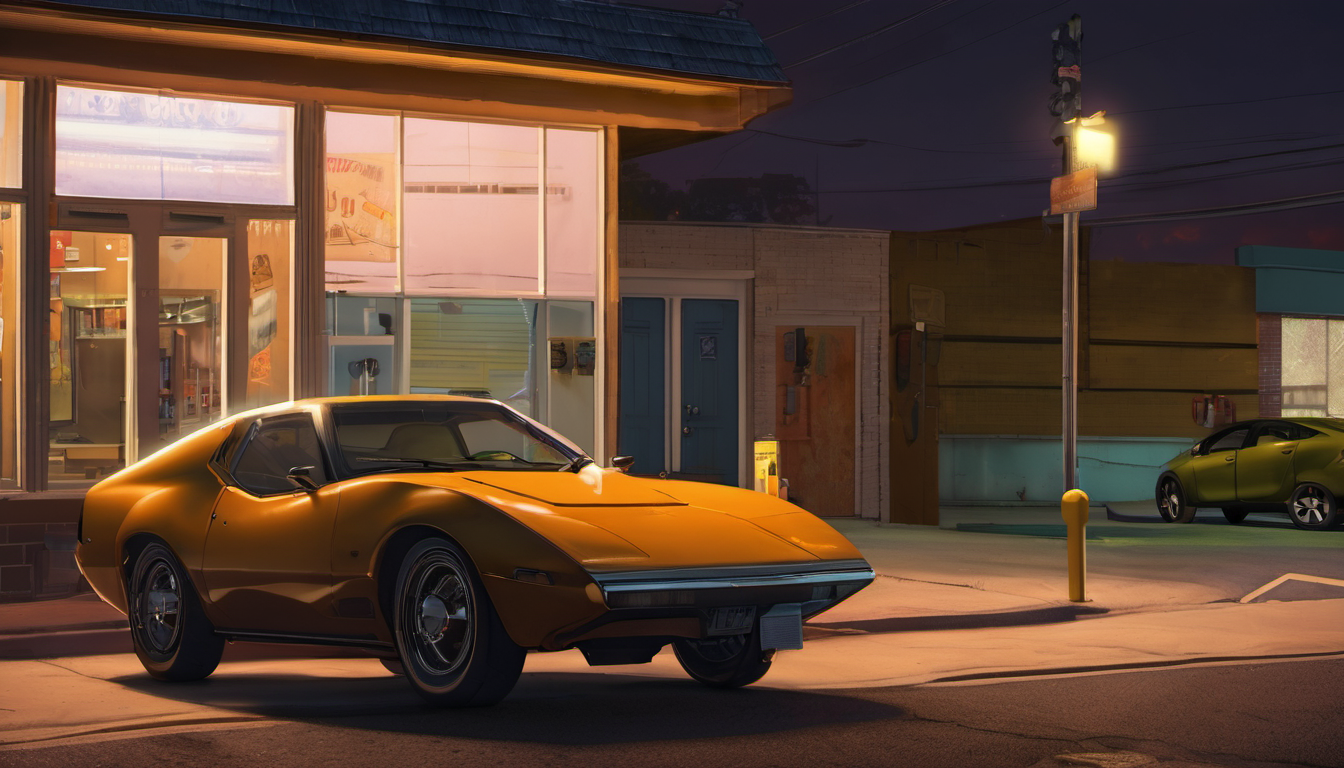
Tesla put the Cybercab on Austin streets on September 3. Two seats, gold body, no steering wheel, no pedals. Something can always go wrong inside: a software fault, a bad call by the model, a stalled intersection. When it does, the person riding along has no physical way to intervene.
The numbers Tesla didn’t put in the press release
The day of the launch, the Texas DMV’s automated-vehicle tracker counted 420 registered autonomous vehicles statewide, across every operator licensed in the state, not just Tesla. Tesla drove that number up: as of late August it had roughly 270 registered Model Y robotaxis in Texas, with a single-day jump of 79 new registrations logged in the weeks before the event.
Registration counts aren’t usage. Tesla told investors on its July earnings call that its cumulative unsupervised robotaxi mileage stood at 380,000 miles. In the same month, TechCrunch reported that Tesla’s paid robotaxi miles were moving in reverse: not slowing, shrinking. Independent trackers put the number of unsupervised vehicles actually operating at any given moment across all of Tesla’s markets at roughly 20 to 30, a figure that peaked near 25 in the spring and has drifted sideways since. Tesla’s own service has also carried a small tail of incidents along the way: a handful of low-speed crashes into stationary objects, and a few cases where a remote teleoperator had to step in and move a stuck vehicle by hand.
What Cybercab is actually betting on
The design logic is blunt: a smaller car, a smaller battery, fewer materials, a lower build cost, and a bet that volume covers for what efficiency doesn’t. Musk posted “A Storm of Cybercabs” on X days before the event, which is the thesis in five words: outnumber Waymo’s years of accumulated operating experience with sheer unit count.
Waymo’s numbers were sitting right next to Tesla’s the same week: 4,000 driverless vehicles, 14 cities, more than 500,000 paid rides a week, over 220 million rider-only miles logged. Tesla’s fleet doesn’t reach a rounding error of that scale. Musk himself said in 2024, in a line that keeps getting quoted back at him, “If you need a geofenced area, you don’t have real self-driving.” Cybercab still only runs inside a defined service area, the same constraint Waymo operates under. The difference is what each company is optimizing for: Tesla for build cost, Waymo for accumulated miles.
Tesla’s fans have run the comparison the other way: the money it costs to build a batch of Cybercabs is close to what Waymo pays to buy and outfit fewer than 10 of its newest Ojai vans. Musk reposted a version of that math and added that it “doesn’t even take into account the operational efficiency of Cybercab.” The math holds up on paper, provided the driving software can handle the edge cases at scale. That’s precisely what hasn’t been demonstrated yet. In August, a Model Y robotaxi running the same software drove through a row of bollards in Austin with no one in the driver’s seat to stop it.
This isn’t the first time Tesla’s autonomy story has swung between demo and scale. In April 2024, Musk approved a round of internal layoffs to go, in his words, “balls to the wall for autonomy.” Everything else, he wrote, is “variations on a horse carriage.” More than two years later, Cybercab is the first vehicle actually carrying paying passengers, and the mileage number two months before its launch was moving backward. That gap is the real cost of the bet.
Where the driver’s seat actually went
Austin’s robotaxi operating record already includes incidents of teleoperators remotely moving vehicles at low speed. Removing the steering wheel doesn’t remove the human from the loop. It moves that person from the driver’s seat to a screen somewhere else. That’s the labor signal underneath the launch: what’s being eliminated isn’t the driving job itself, it’s the physical requirement that the person doing it sit inside the car. The role compresses and concentrates: fewer people, each overseeing more vehicles remotely.
Waymo and Zoox keep a version of the same remote-assistance role, but their vehicles still carry a steering wheel as a last-resort physical option. Cybercab removes that option too, which means the entire bet now runs through software reliability and remote-response latency. If either one falls short, whoever is riding inside has no fallback at all. That single design choice is what separates this launch from every prior robotaxi rollout: Waymo scaled cautiously for years before trusting the software enough to remove the wheel from its plans entirely, and Zoox still hasn’t shipped its wheel-free Robotaxi outside a handful of markets. Tesla is doing it now, in Austin, with a fleet a fraction of either rival’s size.
We covered Nevada’s approval of an 8,000-vehicle robotaxi ceiling for Las Vegas, with Tesla holding a 5,000-vehicle allocation inside it. Cybercab is the vehicle meant to fill that allocation. We also covered California certifying a rideshare drivers’ union the same week the state’s utilities commission cleared Waymo to charge for rides across 18 counties. Put together, the pattern holds: driving jobs aren’t disappearing in one announcement, they’re being made structurally unnecessary one service area, one fleet cap, one regulatory approval at a time. Cybercab pushes that pattern to its physical endpoint — the vehicle no longer has the part a driver would have used.
The number to watch next isn’t the size of the launch-night crowd. It’s whether the fleet count is still 20 to 30 cars three months from now, or actually in the hundreds. Tesla has called “imminent scale” before while the operating numbers stayed flat or slid backward. If the fleet does catch up to the production line this time, the job category that expands first won’t be driving — it’ll be the remote operators, and how many vehicles each one can watch at once is the number that will actually decide whether this bet paid off.