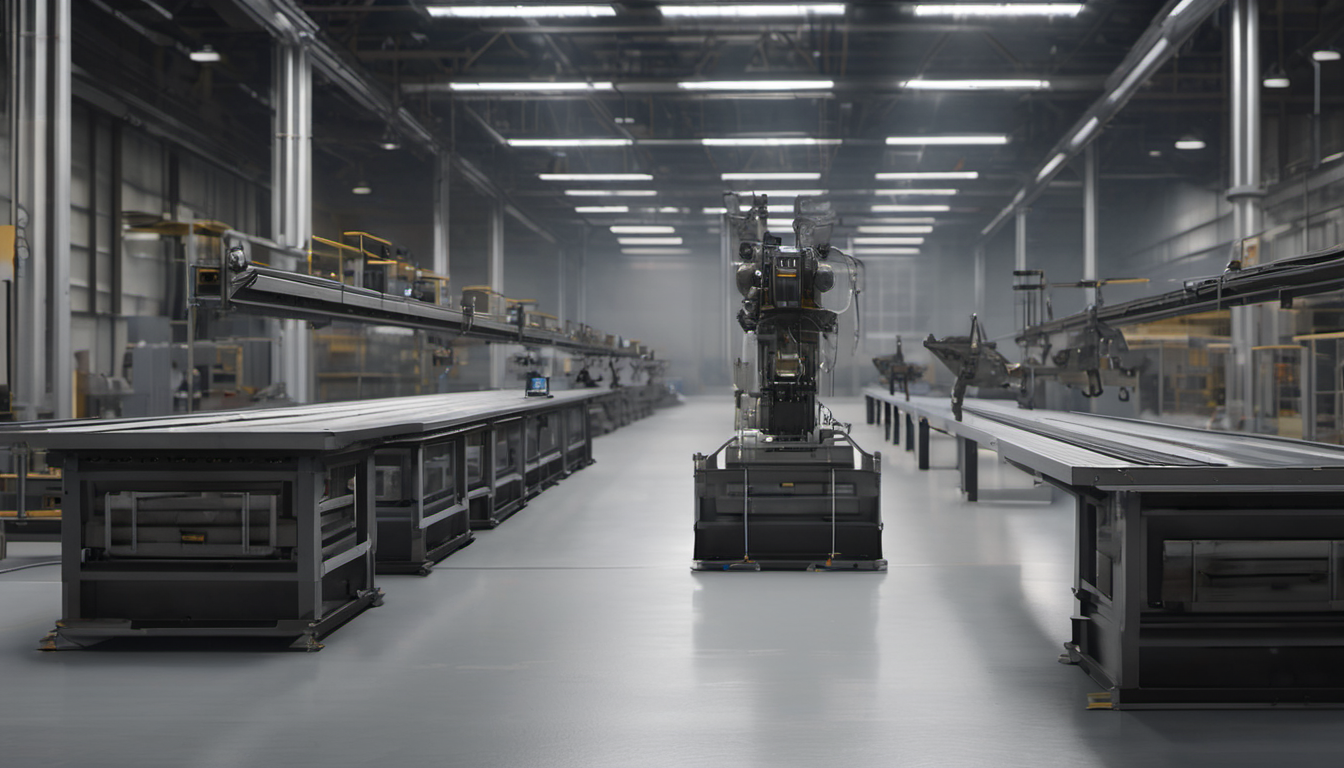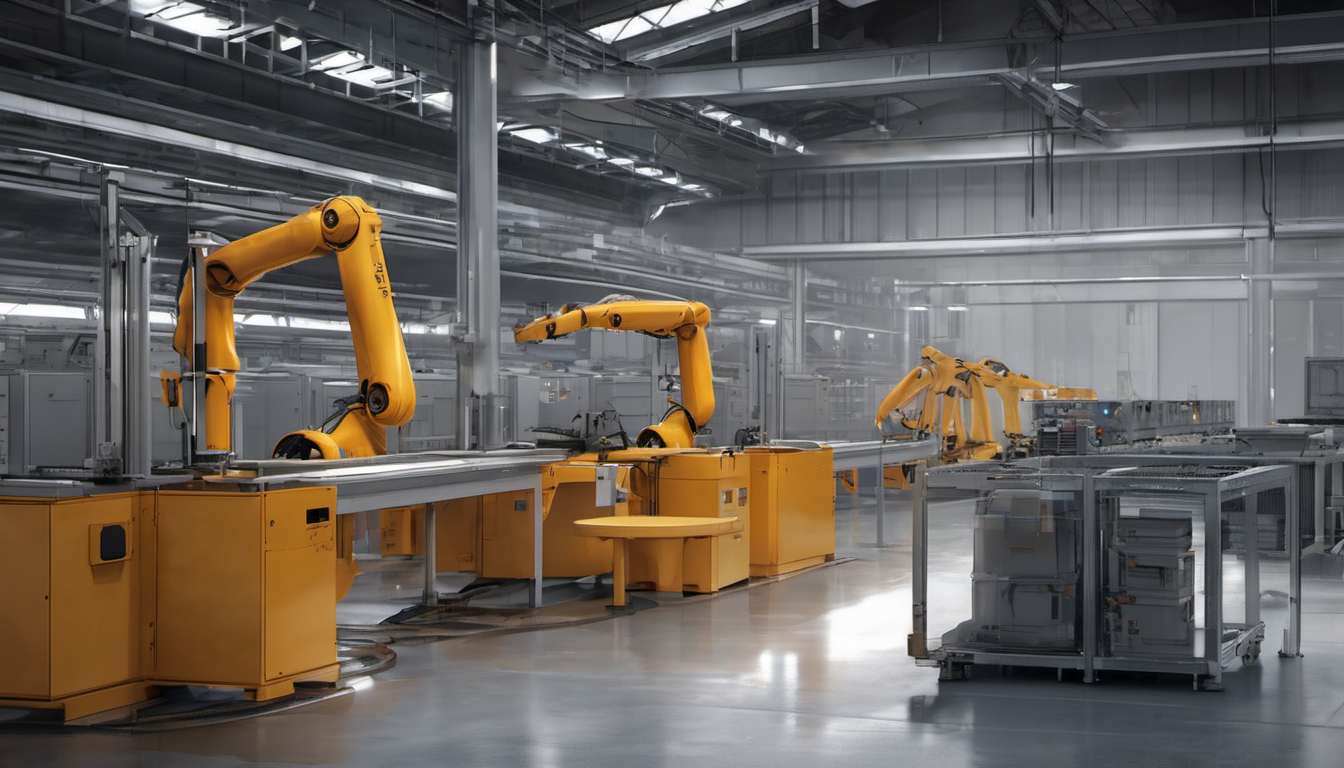
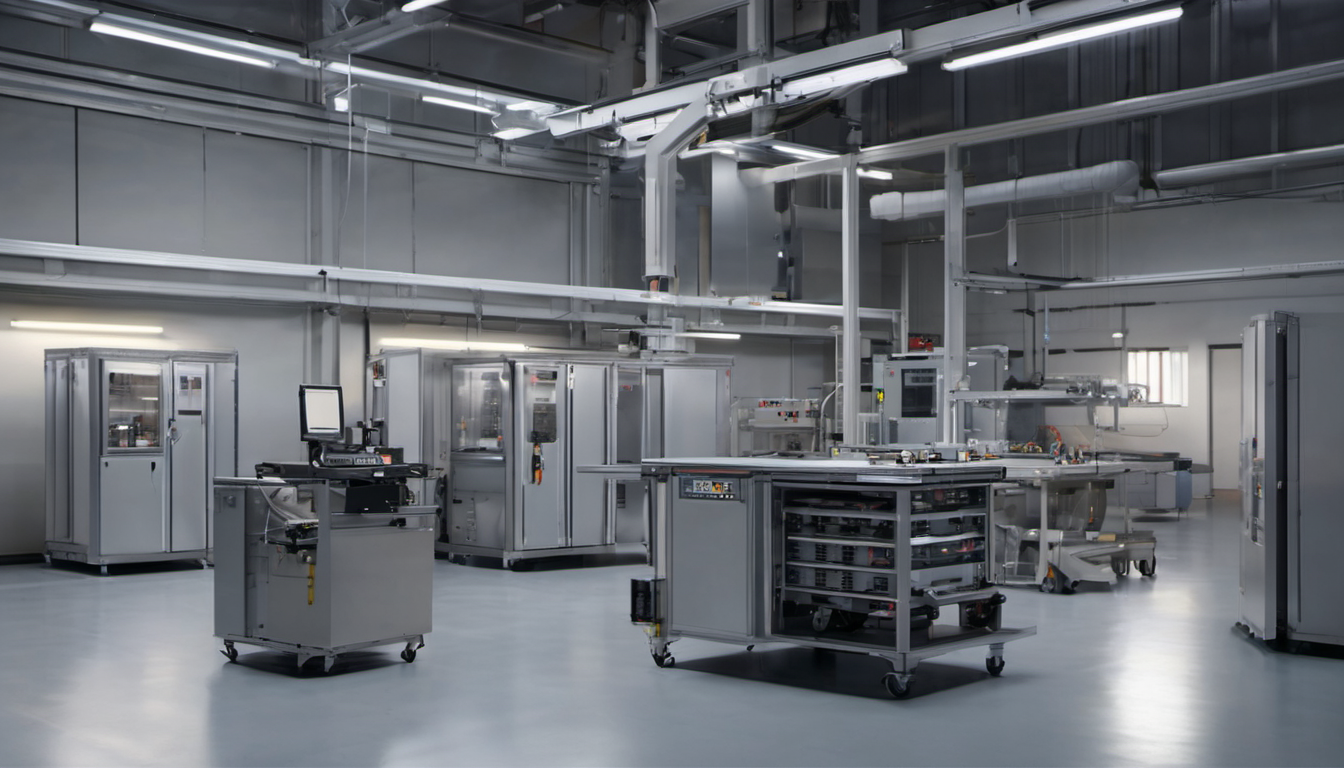
On September 1, Lumos Robotics launched the MOS 2: a wheeled dual-arm mobile manipulator, 1.65 m tall, 50 kg of combined payload across both arms, 0.5 square meters of chassis footprint.
The specs are not the story. The story is where the previous model has already been working and for how long. First-generation MOS units logged more than 1,000 hours of continuous, failure-free operation on a live PLC line at Mitsubishi Electric’s Changshu plant. Mitsubishi then led the funding round.
The pilot became the term sheet
The sequence is worth laying out, because it is the part most humanoid partnership announcements skip.
Lumos and Mitsubishi Electric stood up joint validation labs in Suzhou and Shanghai in 2025. First-generation MOS units went into Changshu on six-sided visual inspection of programmable logic controllers: the robot uses coordinated dual-arm motion to reorient each unit, checks all six faces for surface defects, and routes the passing parts downstream. The same machine also handles screwdriving, box pushing, and cart transport on the same shift.
After the 1,000 failure-free hours, Mitsubishi Electric Smart Manufacturing Technology (China) Group led Lumos’s Series A1 and A2 in May 2026. Cumulative funding now exceeds 1 billion yuan, roughly $140M.
A customer converting into a lead investor is rare in this sector. Most of the “partnerships” announced over the past year stop at the pilot: the vendor puts a robot in the customer’s plant, both sides post a video, both sides issue a release, nothing moves. Mitsubishi qualified the machine on its own line for a thousand hours and then put money behind the same judgment. Acceptance testing and diligence were the same exercise, run in two steps.
”Backflips do not prove industrial value”
Lumos founder and CEO Yu Chao named the four things industrial buyers actually price: task success rate, cycle time, deployment time, return on investment. Dancing, running, and backflips, he said, demonstrate a robot’s physical capability and prove nothing about its industrial value.
Those four words are procurement language, not engineering language. Success rate decides whether you still staff a human re-check. Cycle time decides whether the machine can hold the line’s beat. Deployment time decides how many days of production you lose installing it. ROI decides whether finance signs. The 1,000-hour figure is the hardest number in this announcement because it answers the first two at once. It is a pass mark in the buyer’s vocabulary.
We covered the same shift when Xiaomi put a workstation success rate of 98.0% into a quarterly filing (Xiaomi named the workstation, then named the success rate). Once vendors start reporting auditable operating metrics instead of demo runtimes, the sector has moved from exhibition to acceptance.
Wheels are beating legs on the purchase order
The MOS 2 does not walk. That is a selection, not a compromise.
Look at the shipment mix. Global humanoid shipments passed 22,000 units in H1 2026, and the volume came from tiered product lines rather than bipedal flagships (Two humanoid shipment counts for the same half-year). AGIBOT drove its industrial volume through the wheeled G-series. Unitree broke the R1 into wheeled and fixed dual-arm modular variants. Industrial automation advisor Georg Stieler, after site visits to leading Chinese manufacturers, put commercial demand for the next several years squarely on wheeled dual-arm platforms.
Plant managers rank the same four things every time: battery endurance, thermal stability, payload, failure rate. Dynamic bipedal balance adds nothing to any of those and costs something on each.
The 0.5 square meter footprint is where diffusion speed hides. It means the robot fits existing aisles and existing workstations, so nobody rips out a line or rebuilds a bay to install it. Low deployment cost drags the purchase down from strategic program to equipment buy. Shorter approval chain, faster rollout.
That tracks with what we found in The humanoid number that matters is 70%, not 97%: the units scaling are not the ones that look most human, they are the ones that clear factory acceptance first.
Which workstations get taken
Break the MOS 2’s task list apart and three job categories fall out.
Visual inspection. Six-sided defect checking has stayed human for a long time on the argument that defect morphology is irregular and the standard is hard to codify. Lumos standardized it with dual-arm reorientation plus multimodal vision. QC stations share three properties: single-point repetition, hard-to-staff night shifts, high turnover. Those three are exactly what automation eats first.
Screwdriving and load/unload. Fixed industrial arms have been taking this for a decade. The increment here is mobility: one machine covers several work cells instead of one machine bolted to each. That does not change per-station throughput, it changes fixture density. Same line, fewer machines, fewer people minding machines.
Intralogistics. Cart pushing and transfer was already AGV territory. Adding arms removes the human handoff at each end — the robot lifts material off the cart and sets it on the station itself.
The timeline is not alarming. Lumos is targeting consumer electronics, automotive components, and semiconductor packaging across the Yangtze River Delta, which is a line-by-line sales motion, not a one-year sweep. The direction is clear enough. What gets taken first is never the whole job, it is the two or three motions inside the job that were easiest to write down as a procedure. The QC inspector role does not vanish next year. What changes is how many inspectors one line needs — and whether the next person hired into that line is expected, from day one, to read the robot’s error log.
Sources
- Lumos Robotics Unveils MOS 2 Mobile Manipulator Backed by Mitsubishi Factory Deployment — Humanoids Daily, September 1, 2026