The humanoid robot has spent three years living on warehouse floors and conference stages. On June 30, in Shenzhen, one of them tried to move into your house.
The launch, and the price that matters
UBTECH used a global launch event to unveil the UWorld U1 Series, its first full-size consumer humanoid, under a new consumer brand called UWorld. Company founder Zhou Jian said the line had already taken more than 11,000 orders across all channels since pre-orders opened on JD.com on June 2, per TechNode. UBTECH bills it as the world’s first full-size, mass-produced “ultra-bionic” humanoid, according to the company’s own announcement. More than 50 body variants were shown, ranging from 1.60 to 1.85 meters — human heights, not toy heights.
The number that reframes the category is the price. The lineup splits into three tiers — Lite, Pro, and Ultra — running from 119,800 yuan, about $17,600, up to 990,000 yuan, roughly $145,000, per TechNode. The floor there is the part to sit with. Seventeen thousand dollars is not the price of a demo unit or a research platform. It is the price of a mid-range car, and it is the first time a full-size humanoid has carried a sticker a middle-class household could plausibly finance. First deliveries are promised for September 16.
What it is sold to do
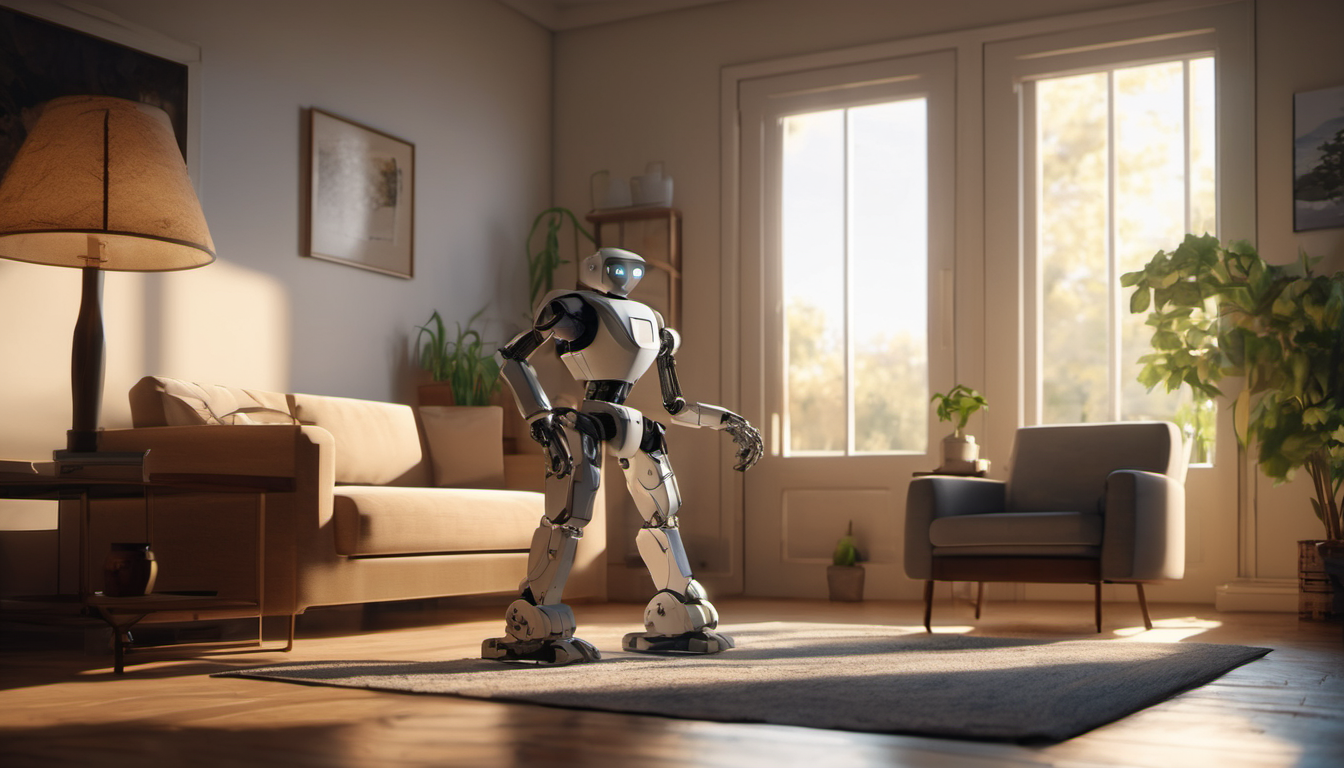
The U1 is not pitched as a warehouse worker. It is pitched as a companion — 88 high-degrees-of-freedom joints and an “emotional AI model” built for long-term interaction, with user data encrypted and stored locally by default rather than shipped to a cloud. Strip the marketing and the product thesis is that the next surface for humanoids is not the loading dock but the home: eldercare, company, the domestic tasks that never industrialized because they were done, unpaid or underpaid, by people.
That is a different labor story than the warehouse one, and a quieter one. When Agility’s Digit lifts a tote, it is visibly standing in for a paid job with a wage line attached. When a home humanoid keeps an elderly parent company or handles chores, it substitutes for work that mostly never showed up in any employment statistic — the care labor of families, the low-wage domestic help that only wealthier households ever bought. The displacement here is real but harder to count, because so much of the work being automated was never counted in the first place.
The skeptic’s column
Eleven thousand “orders” deserves an asterisk. These are JD.com pre-orders with deposits, taken before a single unit has shipped; the conversion from reservation to delivered, paid-for, actually-useful robot is exactly what September 16 will start to test. “Ultra-bionic” and “emotional AI” are marketing coinages, not capability specs, and a machine that can stand 1.75 meters tall and hold a conversation is not the same as a machine that can reliably do your dishes without breaking them. The history of consumer robotics is a graveyard of launch-day order books that met a wall at first contact with actual homes.
But the direction is unmistakable, and the price is the proof. For years the honest objection to home humanoids was that they cost more than a house. UBTECH just moved the entry point to the cost of a car and got five figures of people to put money down. Whether the U1 works as advertised in September is a separate question from whether the category is now real, and on the second question the answer changed on June 30. The humanoid stopped being a thing that comes to your workplace and started being a thing that comes to your door. For anyone whose work is care, companionship, or the domestic tasks that were supposed to be safe precisely because they were human, that is the address to watch.
Sources
- TechNode — UBTECH unveils consumer humanoid robot U1, says orders secure 11,000 ahead of first deliveries
- UBTECH / PR Newswire — UBTECH Launches UWORLD U1, the World’s First Full-Size Mass-Produced Ultra-Bionic Humanoid Robot
- Global Times — China’s humanoid robot industry accelerates commercialization