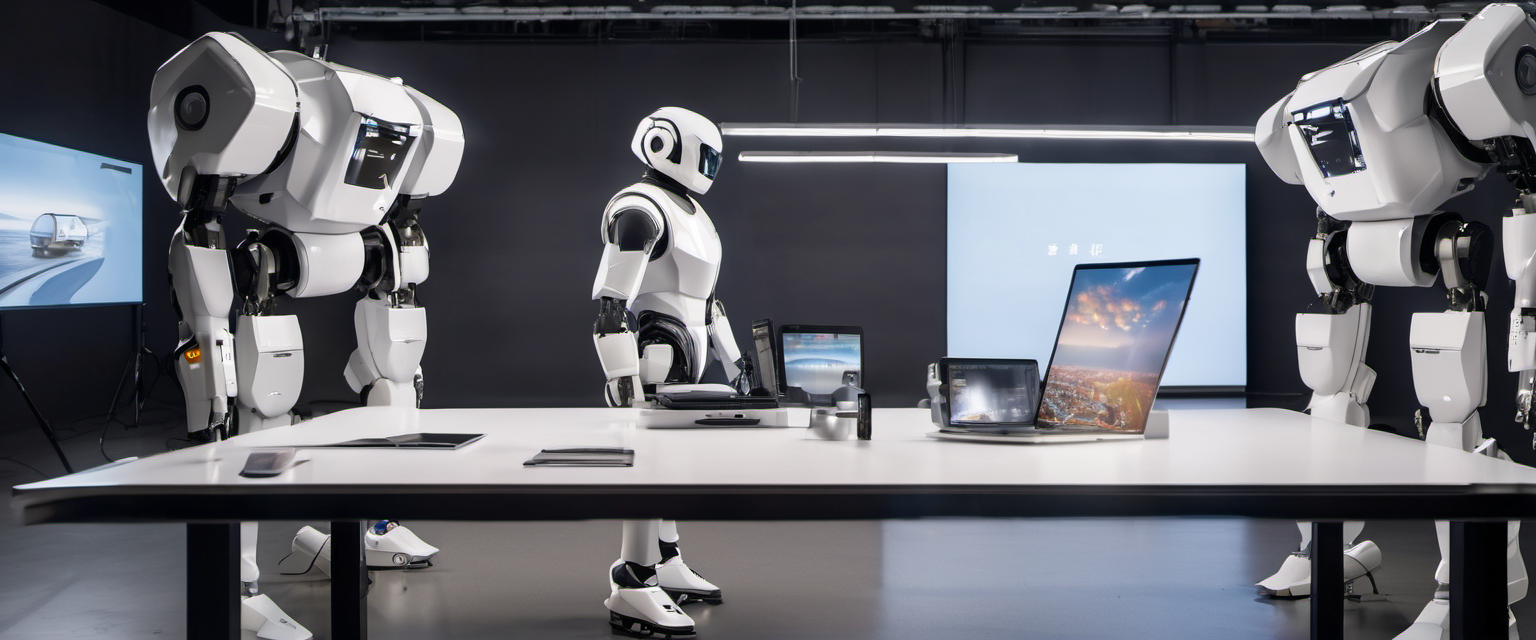
On June 2, UWORLD — the consumer-grade humanoid brand UBTech (HK:9880) launched last year — opened pre-sales on JD.com for what it bills as the world’s first full-size hyper-bionic humanoid robot, Gasgoo reports. The positioning, in the company’s own words, is “emotional companionship.” Official release: June 30. You can now add a humanoid to the same shopping cart as your phone case.
The spec sheet, read closely
Two SKUs: a male model at 183 cm and 42 kg, and a female model at 168 cm and 35.2 kg. Both have 88 degrees of freedom, Wi-Fi connectivity, and a battery that lasts two to four hours per charge. A 3,000 yuan deposit holds a first-batch slot until July 15, with shipping promised by September 15 at the latest.
Two details deserve more attention than the height and weight figures getting all the coverage. First, the battery: a companion that needs to lie down and recharge every two to four hours is less a replacement for human company than a very expensive pet with a cord. Second, the listing indicates no support for secondary development — you cannot program it, extend it, or repurpose it. UBTech is selling companionship as a closed appliance. The robot will keep you company on exactly the terms the manufacturer ships, which is an interesting definition of a relationship.
How a factory robot ends up in your living room
UWORLD is not a side project; it is the consumer-facing end of an industrial pipeline. UBTech’s Walker S series has spent two years accumulating real-world training in automotive plants — assembly workstations at NIO’s F2 factory, ZEEKR’s smart warehouses, inspection and electrolyte filling at Dongfeng Liuzhou and FAW-Volkswagen’s Qingdao pilot plant. The motion control, force interaction, and safety-boundary work done next to car chassis is the technical base now being repackaged for bedrooms.
The financial arc is steep. In 2025, UBTech’s full-size humanoid revenue hit 821 million yuan — a more than 22-fold year-on-year jump — going from 2.7% to 41.1% of total revenue and becoming the company’s largest business line, on 1,079 cumulative deliveries. For context on how fast China’s humanoid sector is commercializing, the Global Times notes first-quarter financing of 68.1 billion yuan exceeded all of 2025, and Unitree — whose IPO we covered on June 1 — opened Asia’s first “embodied intelligence experience store” in Shanghai’s Jing’an district the same week. The showroom era has begun.
38 pre-orders moved a stock
By the morning after the listing went live, JD.com showed 38 units pre-ordered. UBTech’s shares opened nearly 3% higher at HK$109.8 anyway. That is the state of humanoid-sector pricing in mid-2026: the market is no longer paying for demos, it says it is paying for deliveries — and then it pays a few percent for 38 deposits of 3,000 yuan each, roughly the revenue of a decent noodle shop’s weekend.
The more durable story is the category itself. Emotional companionship is not a gimmick market in China; it is adjacent to a real and growing eldercare labor gap, and caregiving is precisely the kind of work the robotics industry has long promised to address after the factory jobs. UBTech has run the sequence in the stated order — parcels and chassis first, company second. Whether a Wi-Fi appliance with a four-hour battery and a locked firmware can occupy even the edge of that labor category is the question the June 30 release will start answering. The deposits are refundable. The category shift isn’t.