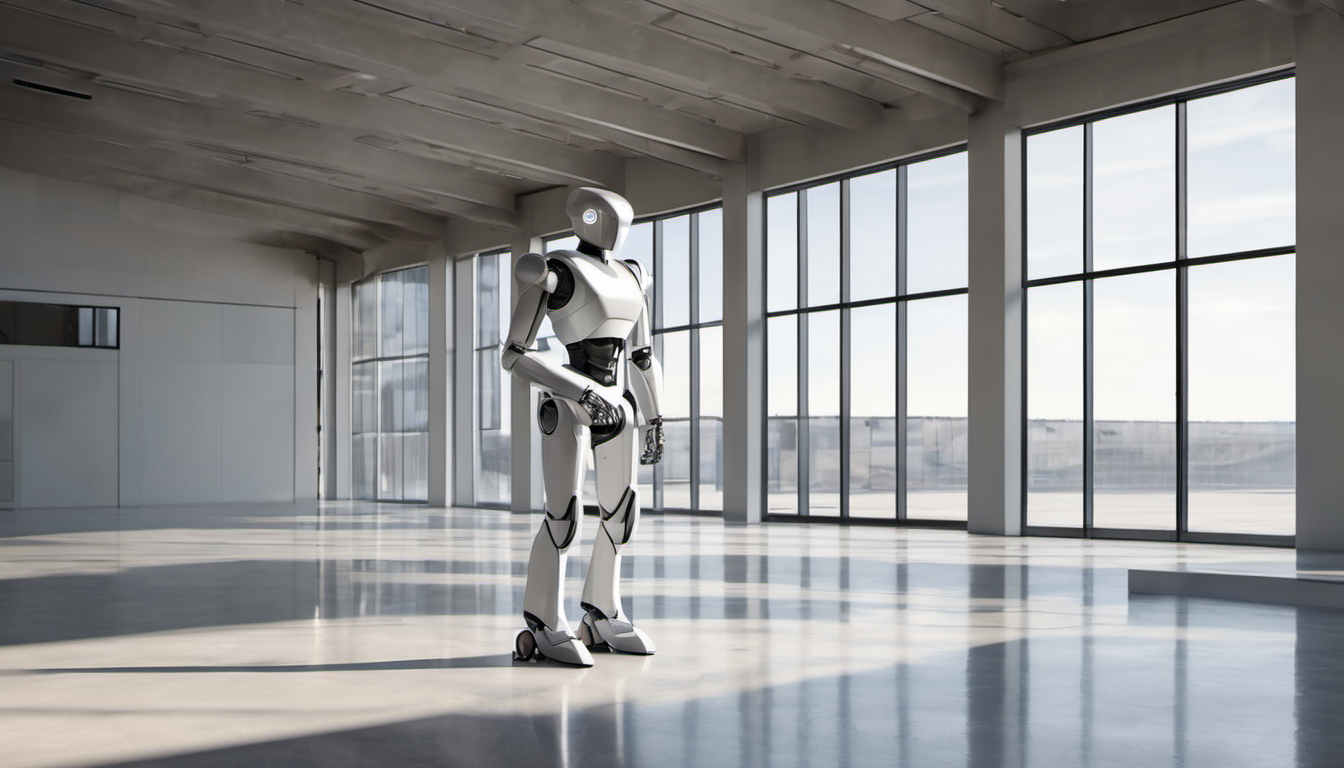
The humanoid robot business has a familiar plot by now: an ex-Tesla engineer leaves, raises a pile of money, and promises a machine that will fill the jobs nobody can staff. This week that engineer is Rémi Cadène, and the company is UMA — short for Universal Mechanical Assistant — which unveiled the design of a lightweight humanoid called Northstar. What makes it worth a look is less the robot, which does not exist as a shipping product yet, and more the résumé behind it and the market it’s aiming at.
Who’s building it
Cadène is not a random Optimus alumnus. Per The Next Web, he spent roughly three years at Tesla, from 2021 to 2024, working on the AI behind Autopilot and building the first neural networks for Optimus — the actual brain, not the marketing. He then went to Hugging Face to lead LeRobot, the open-source toolkit that a large chunk of the robot-learning world now builds on. If you were assembling a founder specifically to be credible on the software side of humanoids, you’d struggle to do better.
The rest of the roster follows the pattern. Chief science officer Pierre Sermanet is a veteran of Google DeepMind and NYU; CTO Simon Alibert co-founded LeRobot; chief robot officer Robert Knight designed the widely used open-source SO-100 arm. UMA emerged from stealth in December 2025 with backers including Greycroft, Red River West, Kima Ventures, and Factorial, plus advisers Yann LeCun and Hugging Face’s Thomas Wolf, as Bloomberg first reported. Cadène was reported to be seeking around $40 million in seed funding, though the closed figure remains unconfirmed. In humanoid terms, that is a modest war chest — a fraction of what Figure or 1X have raised.
The pitch, and the bet
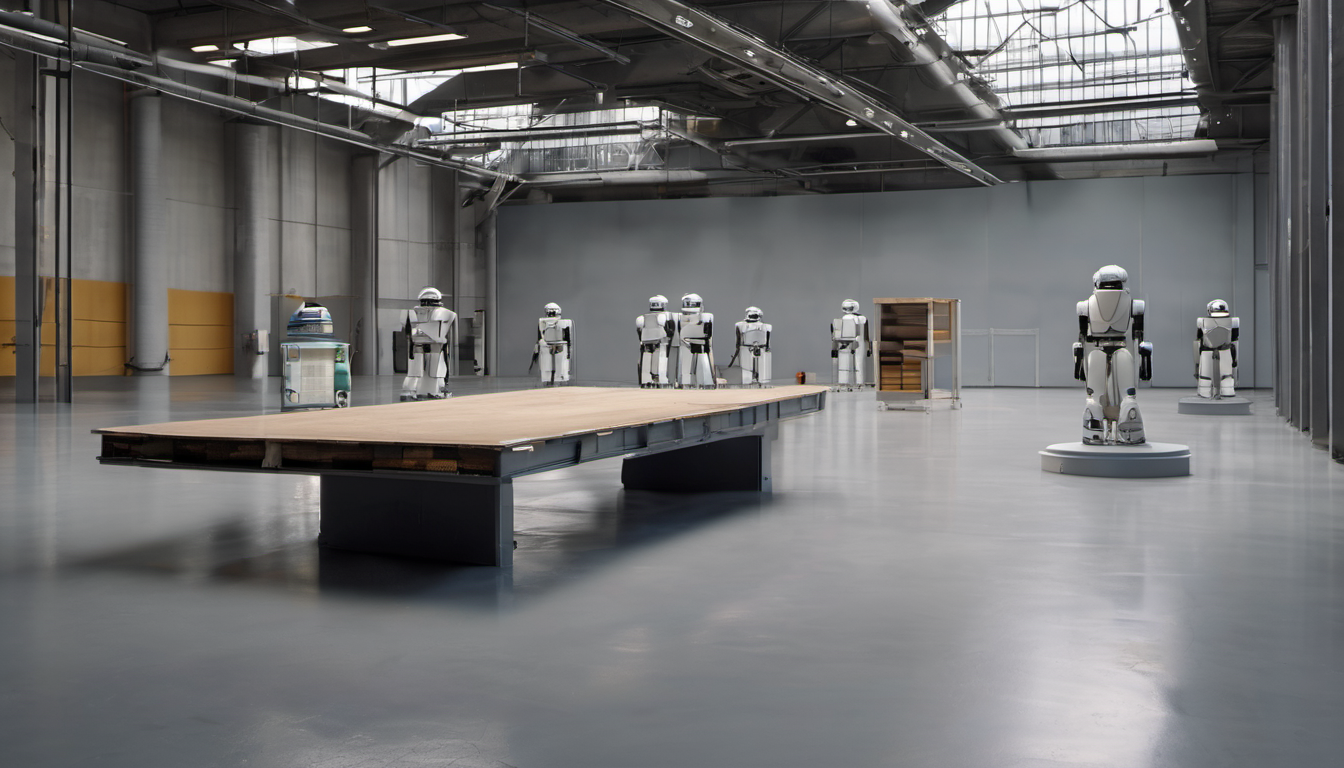
Northstar is designed to weigh about 40 kilograms — deliberately light, so a machine walking around humans is less likely to hurt one. It’s aimed at manufacturing plants, logistics warehouses, and eventually homes, and UMA says it’s already in conversations with about 50 potential customers. The product plan actually splits in two: a mobile dual-armed industrial robot for warehouses and assembly lines, and a more compact humanoid for human-oriented spaces like hospitals, labs, and homes. Pilots in logistics, manufacturing, and healthcare are promised for 2026.
The interesting move is the geography. Cadène says Europe comes first — before the U.S., before Asia. That is not a modest engineer being polite about his home continent; it’s a strategic read. Europe has spent the past year insisting it can compete in humanoids rather than surrender the category to American and Chinese firms, and it has the two ingredients a robot salesman loves: an industrial base to sell into, and acute labour shortages to point at. Warehouses with brutal turnover, healthcare systems short millions of workers — those are the gaps every humanoid startup pitches into, and UMA’s wager is that European buyers would rather purchase a robot built closer to home.
The part to keep your skepticism for
Strip away the CVs and you’re left with the same open question facing every humanoid company: can a supergroup of researchers turn a slide deck and a design into a machine that reliably does useful work in a messy real warehouse, not a stage-managed demo? Northstar has a name, a target market, a team studded with DeepMind and Tesla and LeRobot pedigree, and roughly $40 million — if that round even closed — against rivals spending multiples more. It does not yet have a robot you can buy, deploy, or measure.
For anyone tracking what these machines mean for actual jobs, UMA is a useful reminder that the labour-shortage framing is now the default sales script for the entire industry. Every humanoid is pitched as filling roles humans won’t or can’t take, never as displacing anyone — a framing that is convenient precisely because it is partly true and entirely unfalsifiable until the robots are actually on floors doing the work. Northstar’s real test isn’t its weight or its founder’s Tesla years. It’s whether, sometime in 2026, one of those 50 conversations turns into a warehouse where the robot shows up and the job it “filled” turns out to be a job a person used to do.
This is a developing story; specifications, customer counts, and funding figures are drawn from Bloomberg’s and The Next Web’s reporting and UMA’s own launch materials, and no independent deployment of Northstar has yet been demonstrated.