
Locus Origin
Made by Locus Robotics
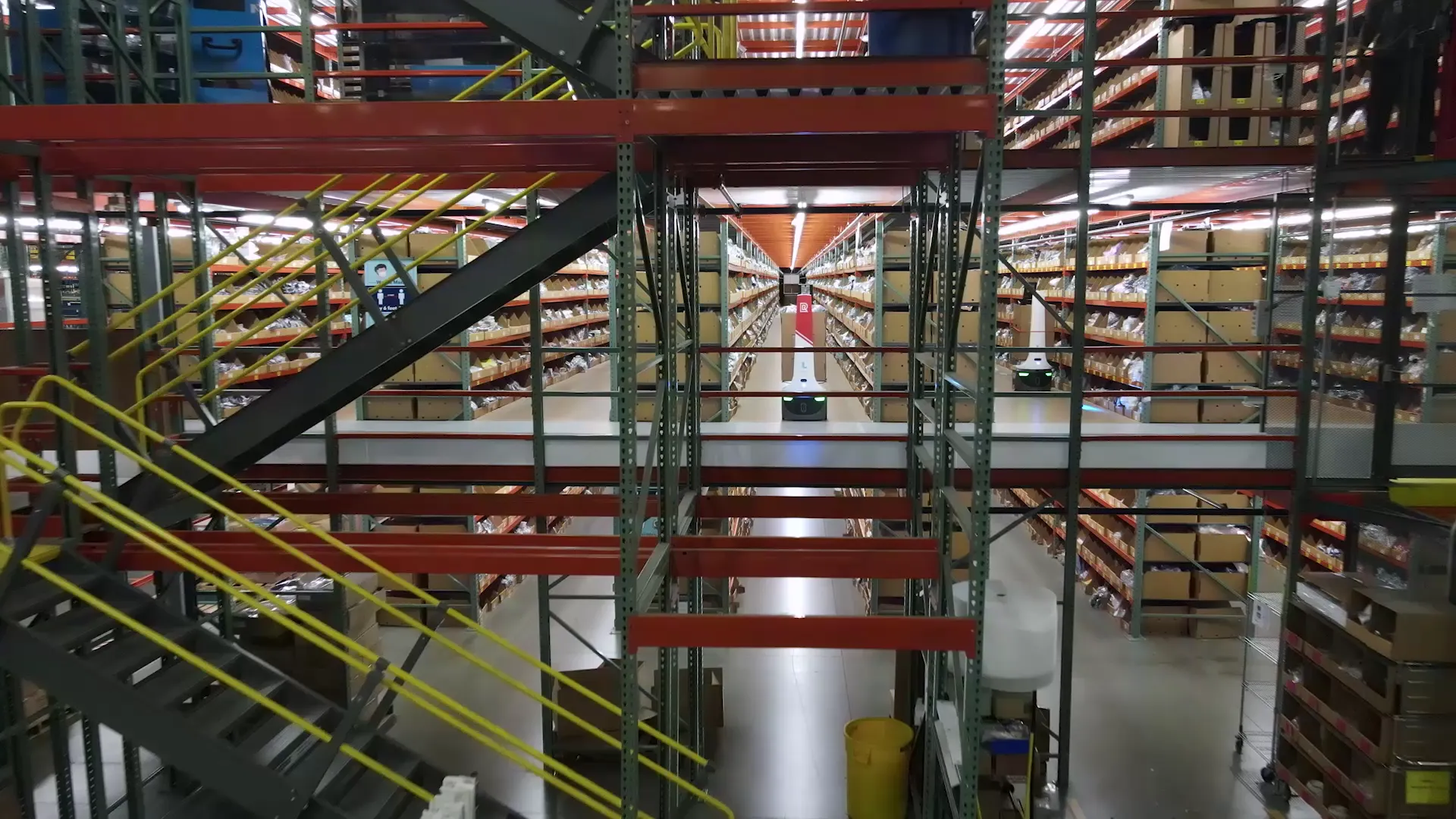
Photo: Locus Robotics
- spec note
- This pass re-verified volatile fields only (status, price, deployment and customer figures). Mechanical specifications carry forward from the previous entry; no manufacturer hardware revision was found.
- navigation
- On-board vision and lidar, orchestrated fleet-wide by LocusONE
- payload kg
- 36
- payload lbs
- 80
- business model
- Robots-as-a-Service subscription
- productivity lift
- 2-3x versus manual picking
- fleet orchestrator
- LocusONE
- deployment timeline
- 6-8 weeks from kickoff to go-live
Who's exposed
Jobs in the threat radius
- warehouse picker
- order picker
- fulfillment associate
- returns processor
- putaway clerk
Deployment status
Re-check result: Origin is still shipping, still a current fleet model, with no new scale figures — but three substantive changes at company level. The pick milestone remains 7 billion, reached 2026-03-02 and announced 2026-03-23. Worth noting the cadence: 6 billion to 7 billion took just 4.5 months, the shortest interval yet. We searched specifically for an 8-billion announcement and found none — at that pace it would have been due around mid-July 2026, so this figure may be superseded imminently and should always be cited with its date. The newest scale numbers remain 150-plus customers, 350-plus facilities and 20 countries (The Robot Report, 2026-04-13); Locus's own 7-billion post says only 'hundreds of fulfillment sites' and 'thousands of robots' without precise counts. DHL alone passed 1 billion picks with Locus in March 2026. The three changes: first, on 2026-05-19 Locus acquired Nexera Robotics and its patented NeuraGrasp manipulation technology, folding it into the Array platform — a signal that Locus is extending from carrying shelves and totes to a human toward doing the grasping itself. Second, a new named customer in July 2026: HelloFresh, in cold storage, raising temperature-controlled SKU capacity from 100 to 500, a fivefold increase. Third, Locus expanded its European headquarters in June 2026 with an automation demo and customer hub. One clarification: Locus Array, launched 2026-04-10, is not a replacement for Origin. Locus positions Array as complementary to Origin (2016) and Vector (2023), the three together covering '100% of SKUs within a single, unified system,' and Origin remains listed on the current fleet page. Array's first units shipped to DHL in Columbus, Ohio in November 2025, predating the last verification. No funding round, no acquisition of Locus, no CEO change and no 2026 layoffs were found; Rick Faulk remains CEO, and the last known small reduction in force was January 2024.
When this hits the labor market
The 'already happening' verdict stands, but this re-check adds a directional change worth writing into the timeline. The original assessment holds: a 2-3x productivity multiplier does not usually show up as layoffs in the short term. It shows up as the same headcount absorbing more volume during peak. The real long-run effect is the rate of new picker hiring falling, particularly for the contract 3PL roles that are the entry point into warehouse work. Over 1-3 years the compression is in picker-hours, especially seasonal hiring. Over 3-5 years, as Array scales, pick labour in the largest facilities moves from augmented-by-robots to mostly absent. The new variable is the May 2026 Nexera acquisition and its NeuraGrasp technology, which deserves its own flag because it moves the boundary of what gets displaced. Assistive picking AMRs like Origin have only ever eliminated walking and searching; the grasp itself stayed with the human, and that is the last technical reason warehouses still need people. Reliably pulling one specified item out of a tote full of mixed shapes, materials and weights remains unsolved. Once grasping is folded into the Array platform, that reason starts to erode. It will not happen in a year or two — general-purpose grasping has been persistently underestimated — but the acquisition is an unambiguous statement of direction, and readers should treat 'can a robot pull an arbitrary item out of a mixed tote at human success rates' as the single most informative indicator for the next three to five years.
Is this robot coming for your job?
Press releases speak in averages — LostJobs talks about your role. Find out which parts of your job hold up and which don't. Free.
Talk to LostJobs about my future
What the re-check found
Origin itself has not changed. Still shipping, still the workhorse assistive picking robot in the LocusONE fleet, no spec revisions, still 80 lbs (about 36 kg) of payload, still RaaS, still 6 to 8 weeks from kickoff to go-live.
What changed is around it.
The pick milestone has not moved, but it is overdue. The latest published figure is still 7 billion, reached 2 March 2026 and announced on 23 March. The cadence is the interesting part: 6 billion to 7 billion took only 4.5 months, the shortest gap yet. We searched specifically for an 8-billion announcement and found nothing — at that pace it should have landed around mid-July. Cite the 7 billion with its date; it may not survive the month.
Locus bought the hand. On 19 May 2026 Locus acquired Nexera Robotics and its patented NeuraGrasp manipulation technology, folding it into the Array platform. This is the most consequential item in the re-check, for reasons below.
One new named customer, in a telling setting. HelloFresh’s July 2026 cold-storage deployment raised its temperature-controlled SKU capacity from 100 to 500 — fivefold. Chilled warehousing is among the least hospitable environments in the industry for a human body, which is exactly why the automation economics land there first.
Locus also expanded its European headquarters in June 2026. Rick Faulk remains CEO; no funding, no acquisition, no 2026 layoffs.
One misreading worth heading off
Locus Array, launched April 2026, is not Origin’s successor.
Locus positions Array as complementary to Origin (2016) and Vector (2023), with the three together covering “100% of SKUs within a single, unified system,” and Origin remains on the current fleet page. Array’s first units shipped to DHL in Columbus, Ohio back in November 2025, also predating this entry’s last verification.
Treating a new product as a replacement for an old one is one of the more common ways a catalogue goes wrong. It does not apply here.
Whose work it takes
Warehouse pickers, order pickers, fulfillment associates, returns processors, putaway clerks — unchanged from the previous record.
On scale, the newest published figures are 150-plus customers, 350-plus facilities and 20 countries. Locus’s own 7-billion post gives only “hundreds of fulfillment sites” and “thousands of robots” with no precise count. The largest single-customer number available: DHL alone crossed 1 billion picks with Locus in March 2026.
Why we care for LostJobs
Because the Nexera acquisition moves the boundary of what can be displaced.
Until now, assistive picking AMRs like Origin have eliminated walking and searching. The robot brings the goods; the human picks the item up. Grasping stayed with people, and that is the last technical reason a warehouse still needs them. Reliably pulling one specified item out of a tote packed with mixed shapes, materials and weights is genuinely unsolved.
Buying NeuraGrasp and folding it into Array points directly at that boundary. It will not be crossed in a year or two — general-purpose grasping has humbled better-funded efforts than this one. But the direction is no longer ambiguous.
So the practical advice for a reader is this: to judge how long warehouse work lasts, do not watch robot speed and do not watch pick milestones. Those only tell you the transport half is solved. Watch grasping. The day the headline reads that a robot has matched human pick success rates in a mixed-SKU tote is the day this curve actually turns — and Locus has just paid for a ticket to it.