AgiBot put numbers on the G2 Max on October 26. The robot is rated for 40 kg across two arms, 50 kg at peak, and its arm repeats to within 0.5 mm. In an e-commerce warehouse it depalletizes 80 cases an hour and palletizes 75, at a success rate above 99%, the company says. On a mixed-feed line at a daily-chemicals maker, material recognition runs at 100%.
The robot is not new. It debuted in July, alongside JD Logistics, and we covered that launch then. The July spec sheet had no results from a working line. This one does, but every figure is the company’s, the customers are unnamed, and nothing here has an outside check.
What moved since July
By our July count the G2 Max was an 18 kg single arm, a 38 kg standard dual-arm load and a 50 kg peak. The October release says 20 kg, 40 kg and 50 kg. Two kilograms is a rounding exercise, not an upgrade, and AgiBot did not say why the figures changed.
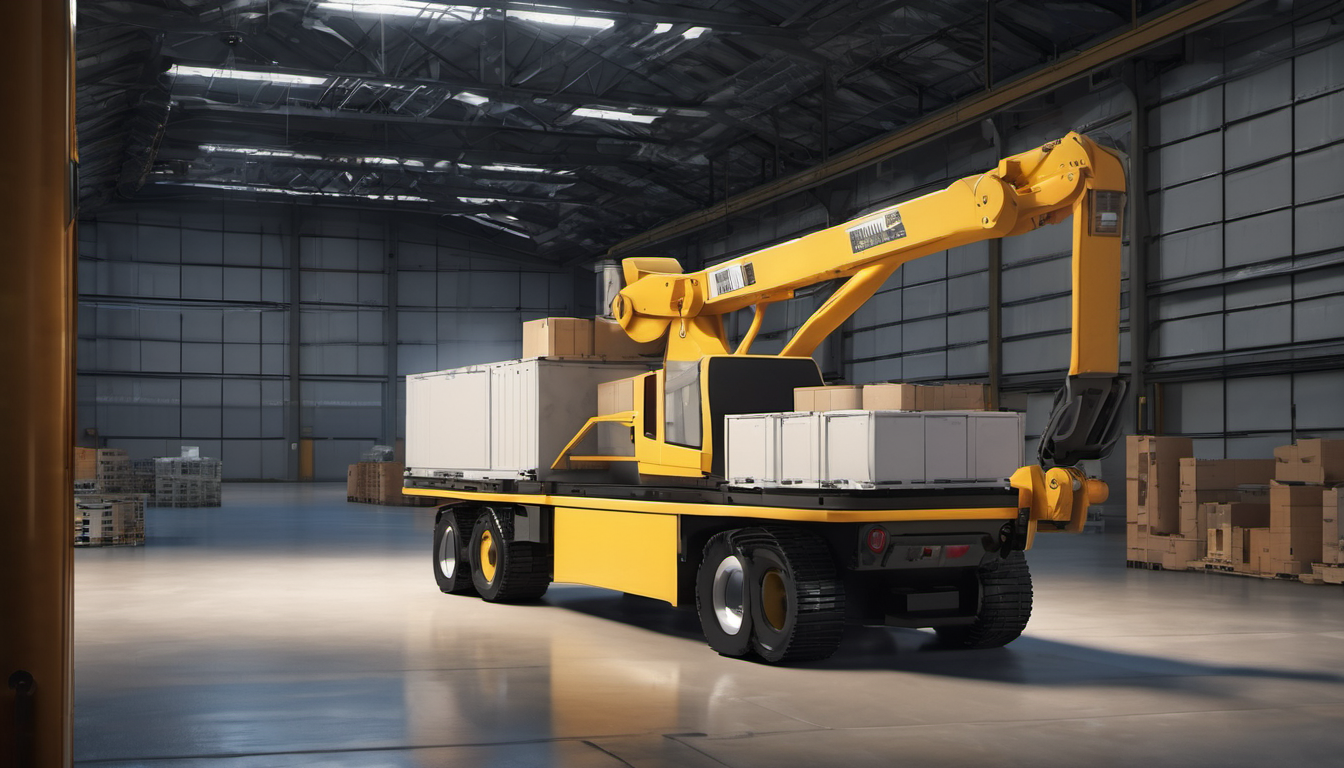
The rest, per Shanghai Securities News: two seven-axis force-controlled arms with vision guidance, working from 0.1 m to 2.5 m high with a 1.2 m reach. It handles cartons, European-standard totes and irregular parts without heavy re-teaching. It can palletize from one side, so a pallet can sit flush against a wall instead of needing 1.5 m of turning room. Dual hot-swappable batteries and autonomous recharging are meant to cover 24/7 running.
What the release leaves out is longer. No price, no delivery date, no unit count, and no explanation of what “safety-regulation grade” certifies.
The cycle math
Eighty cases an hour is one every 45 seconds. Seventy-five is one every 48. That is our arithmetic. AgiBot gave no case size or weight, so treat the two cycles as an order of magnitude. At 24 hours a day, the depalletizing figure comes to roughly 1,900 cases per machine per day.
On an eight-hour shift the same arithmetic gives about 640 cases depalletized. JD Logistics announced a G2 Max deployment in its Zhilang warehouse in July, which Sina Tech reported as the first humanoid-class robot in a real warehouse production setting. AgiBot has not said whether the 80-an-hour figure comes from that site.
To compare that with a person you need a human baseline, and the release does not offer one. We will not invent it. What can be said: 45 seconds a case is enough for a line-feeding station and may not be enough for a peak-season outbound dock.
The daily-chemicals result is the more interesting one. Depalletizing, box opening, feeding and empty-box recovery run as one chain, which means the robot is being used as a workstation, not as a single-motion box mover. But 100% is a recognition rate, not a shift’s yield. Don’t read one as the other.
Robots hauling parts for robots
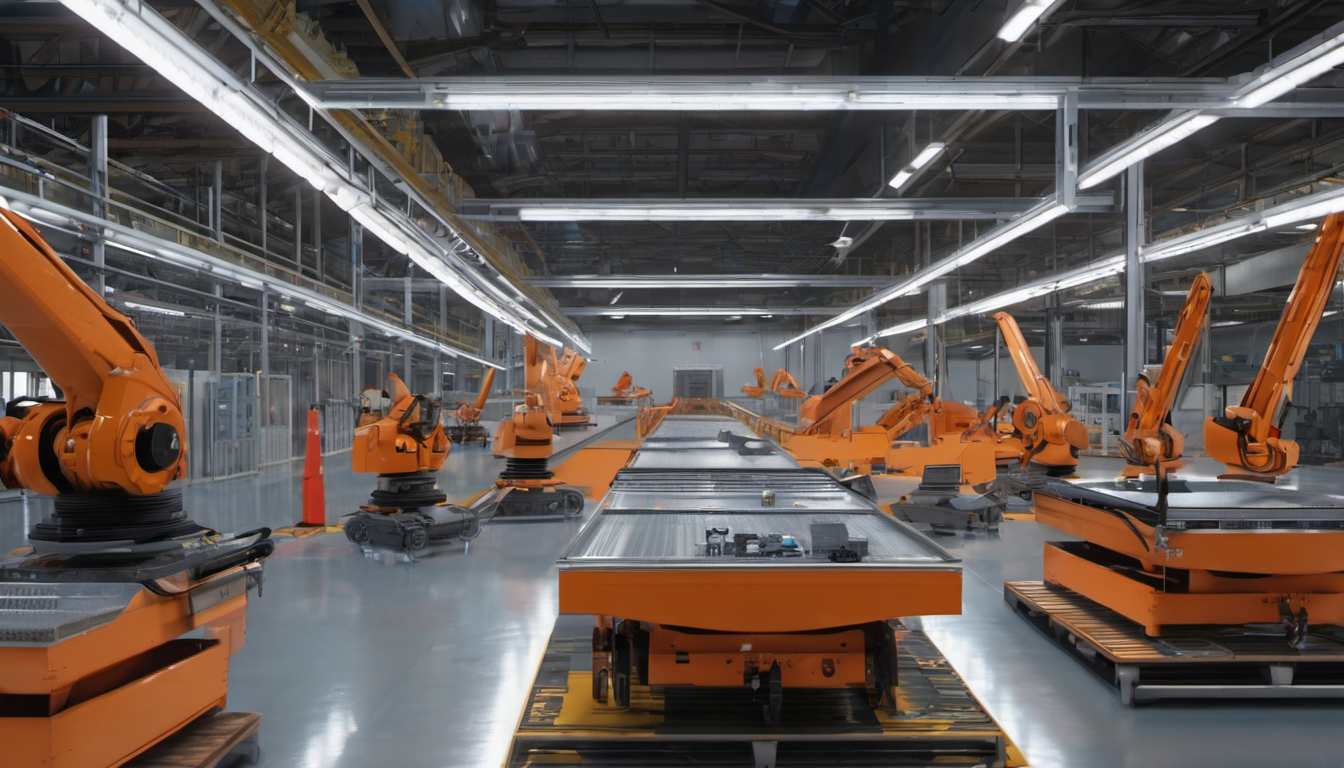
The detail we would flag sits in AgiBot’s own plant. A 163.com report says the G2 Max now carries heavy parts, shoulder housings and hip-joint assemblies, to final assembly on the Qiyuan T1 joint line. Workers used to push them by cart, and a knock could mark a precision mounting surface. The line turns out a unit every 2.5 minutes, the report says, and the robot keeps that pace.
Two and a half minutes is the same cadence Qiyuan claimed in our October 25 piece on its 5,000th personal robot. The two reports do not cite each other, so we cannot say it is the same line. The numbers match. If it is, material handling on the line behind a 200-plus-a-day claim now belongs to a machine.
It also rhymes with September. UBTech’s Liuzhou plant already hands its depalletizing and loading to its own Cruzr units, one humanoid every 10 minutes. First work for a robot factory’s robots is moving things inside the robot factory.
Against the cohort
On payload, Agility’s Digit 5 lifts 50 lb repeatedly, about 22.7 kg, the band it ties to single-person lifts in OSHA-regulated sites. The G2 Max’s 40 kg rated dual-arm load is well above that. But its 20 kg single arm is below the 30 kg per arm quoted by Maven. One whole-body lift, one two-arm total, one per arm. No ranking comes out of that.
On proof, Maven’s CEO named a duty cycle: up to eight robots, 16 hours a day, 99% or better uptime, in one consumer-goods customer, for two years. AgiBot offers an hourly rate and a success percentage, with no running time. That is the gap. We have a tempo, not a track record.
On the humanoid side, the nearest number is Leju’s 15 humanoids feeding auto parts at 98%. A point of success rate apart, but cartons and 80 to 120 mm parts are different problems.
The career read
No verified displacement here. No customer is named and no unit count exists. What follows is who the product points at, not who has lost work.
Pallet breakdown and build at warehouses and factory logistics docks. The one-sided, wall-flush palletizing and 24/7 battery swap are aimed at the costly overnight and peak-season labor. Line-feeding stations are next, and the daily-chemicals chain is the example. Third, the cart-pushing logistics crews inside assembly plants, where AgiBot’s own T1 joint line is the live case.
October 29 is the next date. AgiBot holds its Innovation Day at the Shanghai Expo Center, and the G2 Max will be on stage. Listen for a named customer, a price, and a cumulative running-hours figure. With all three, this moves from launch to purchase order.
Watch whether the 80 and 75 hold up under someone else’s measurement over several weeks.
Sources
- Shanghai Securities News via Sina Finance: AgiBot launches safety-grade heavy-duty robot Genie G2 Max (Oct 26)
- ITHome: AgiBot launches heavy-duty embodied robot Genie G2 Max, 40 kg dual-arm rated load (Oct 26)
- 163.com: AgiBot launches Genie G2 Max, enters the factory to make robots (Oct 26)
- Sina Tech: AgiBot and JD Logistics launch Genie G2 Max humanoid (Jul 17)