There is a particular kind of confidence in pointing a camera at your own machine for six days and refusing to cut away. Chinese embodied-AI firm AGIBOT is about to do exactly that. Starting June 23 and running through June 28, it will livestream — unedited, around the clock — a fleet of its G2 humanoid robots running a full quality-inspection section of a live tablet mass-production line at Longcheer Technology’s factory in Nanchang. Not a stage. Not a curated loop in a corporate lab. A third-party contract manufacturer’s real assembly line, with the robots working alongside the human operators they are auditioning to replace.
The point is the venue, not the robot
Humanoids doing factory work is no longer the news. The news is whose factory. For the last year, the genre has been the lab demo: a robotics startup films its own machines, in its own building, doing a task it chose, for as long as the marketing department needs. In mid-May, Figure AI did the maximalist version — a 200-hour continuous autonomous livestream at its Sunnyvale headquarters, processing nearly 250,000 packages without a hardware failure. Genuinely impressive engineering. Also a single-workstation sorting loop, in a building Figure owns, tuned by the people who built the robot.
AGIBOT’s pitch is a direct shot at the obvious objection. By broadcasting from inside Longcheer’s plant, it is trying to skip the “yes, but that’s a lab” critique entirely. A real electronics line has lighting that shifts, fixtures that drift, defective units that arrive in the wrong orientation, and human workers who do unpredictable human things. If the robots hold their cadence in that environment, for six days, with the stream running, the demo stops being a demo and starts being a reference customer.
What the robots are actually doing
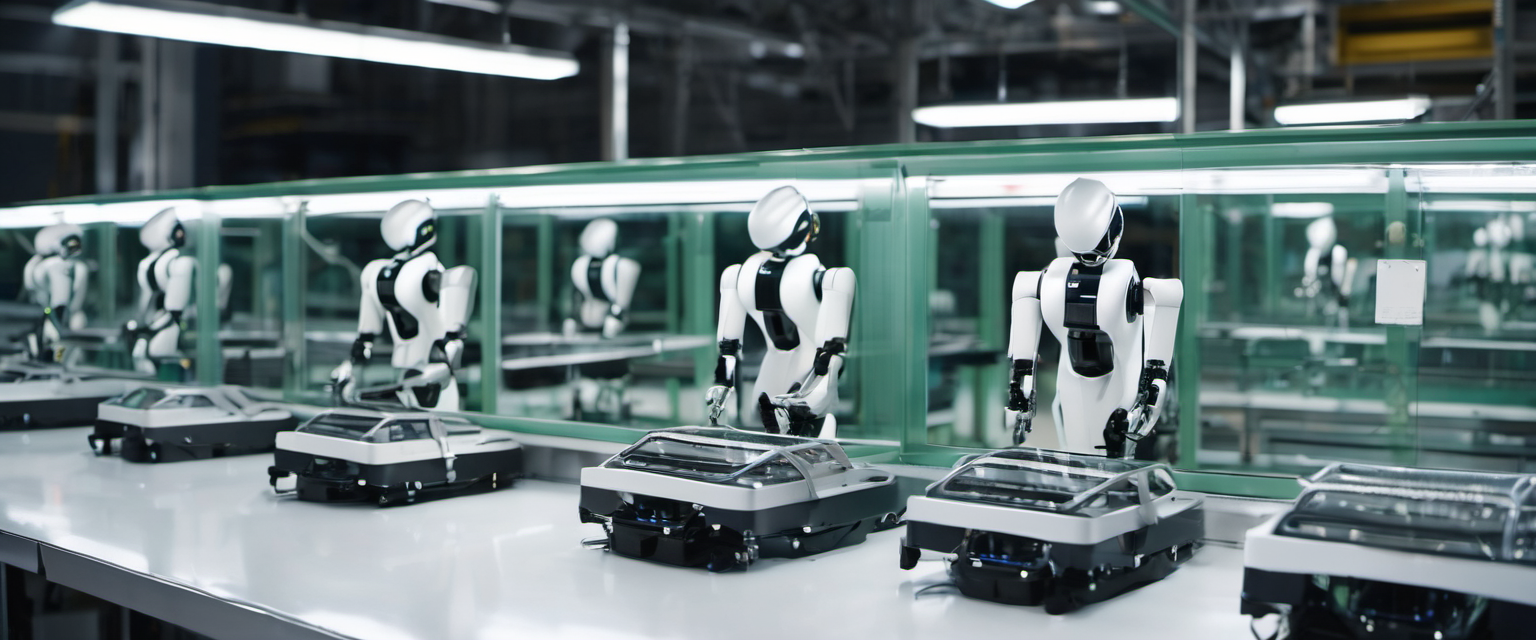
The task isn’t glamorous, which is the entire point — glamorous isn’t a job. The G2 units work the Multimedia Integrated Testing (MMIT) stations: pick up a tablet, seat it in a test fixture, wait, sort it as pass or fail, repeat. This is the quality-control labor that sits at the end of every consumer-electronics line, and it has historically been done by rows of people because it requires hands, eyes, and judgment about whether a device is seated right.
AGIBOT’s numbers from the initial April deployment at the same plant: roughly 310 units per hour, cycle times around 19 to 20 seconds per task, and an operational success rate the company puts above 99% across a multi-day trial. It also claims it dropped the robots into the existing line in about 36 hours, without redesigning the line or building custom tooling around them — a quiet flex, because the historical cost of factory automation was never the robot, it was the months of re-engineering the factory to suit it. “Embodied AI is no longer experimental,” said AGIBOT’s Yao Maoqing. Longcheer’s robotics chief Li Long put the timeline plainly: four months from integration to meeting every production target.
The bar just moved, and so did the workers
Read the competitive framing for what it actually is. The robotics industry has spent a year proving its machines can run in a controlled box. AGIBOT is proving they can run in someone else’s box, on someone else’s clock, doing someone else’s job — and inviting the world to watch for flaws in real time. That confidence is the story, because confidence at this stage tends to precede orders.
The honest ceiling still applies. A six-day livestream of one inspection section is not a lights-out factory, the robots still need charging and human babysitting, and a stream is still a thing a company chooses to run when it expects to look good. AGIBOT has its own pressure to perform: it has branded 2026 “Deployment Year One,” says its 10,000th robot rolled off the line in March, and now has to show that volume means competence. But the direction is unmistakable. The job being livestreamed — quality inspection on a tablet line — employs a lot of people in exactly the manufacturing economy AGIBOT is broadcasting from. The robots aren’t asking those workers to imagine being replaced. They’re inviting them to tune in and watch the audition.
Sources
- Humanoids Daily — Factory Floor vs. Corporate Lab: AGIBOT to Livestream Humanoid Fleet from Active Mass-Production Line
- Interesting Engineering — AGIBOT G2 humanoid robots run tablet testing on live factory line
- AGIBOT — Global Livestream of Humanoid Robots Operating on a Real Factory Production Line