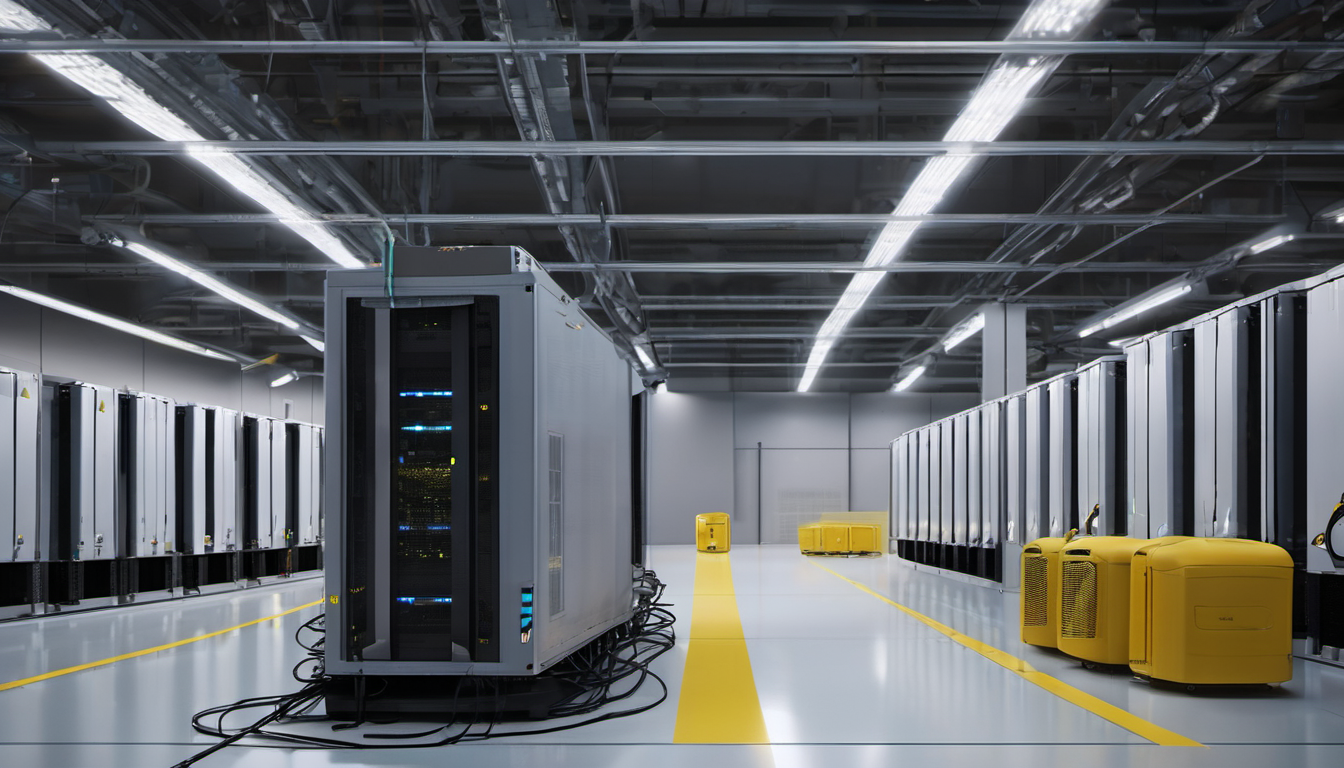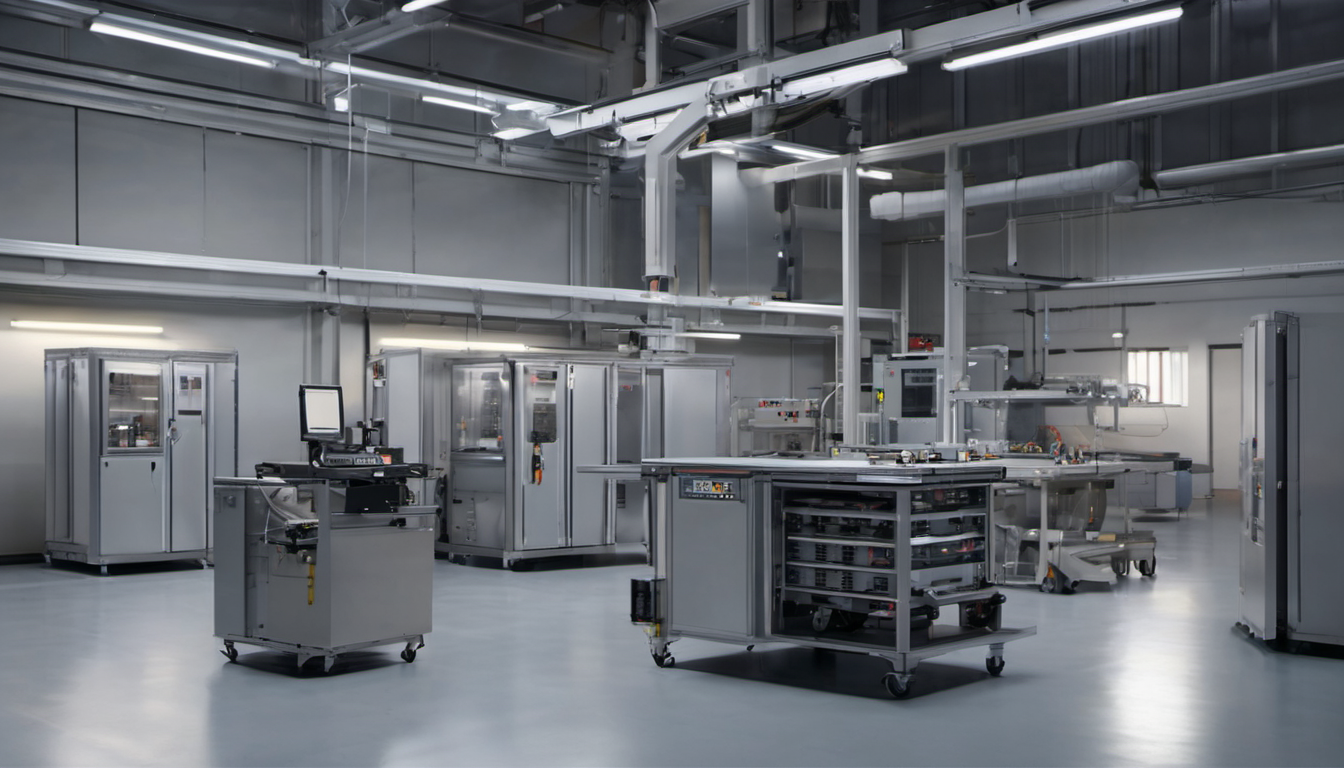
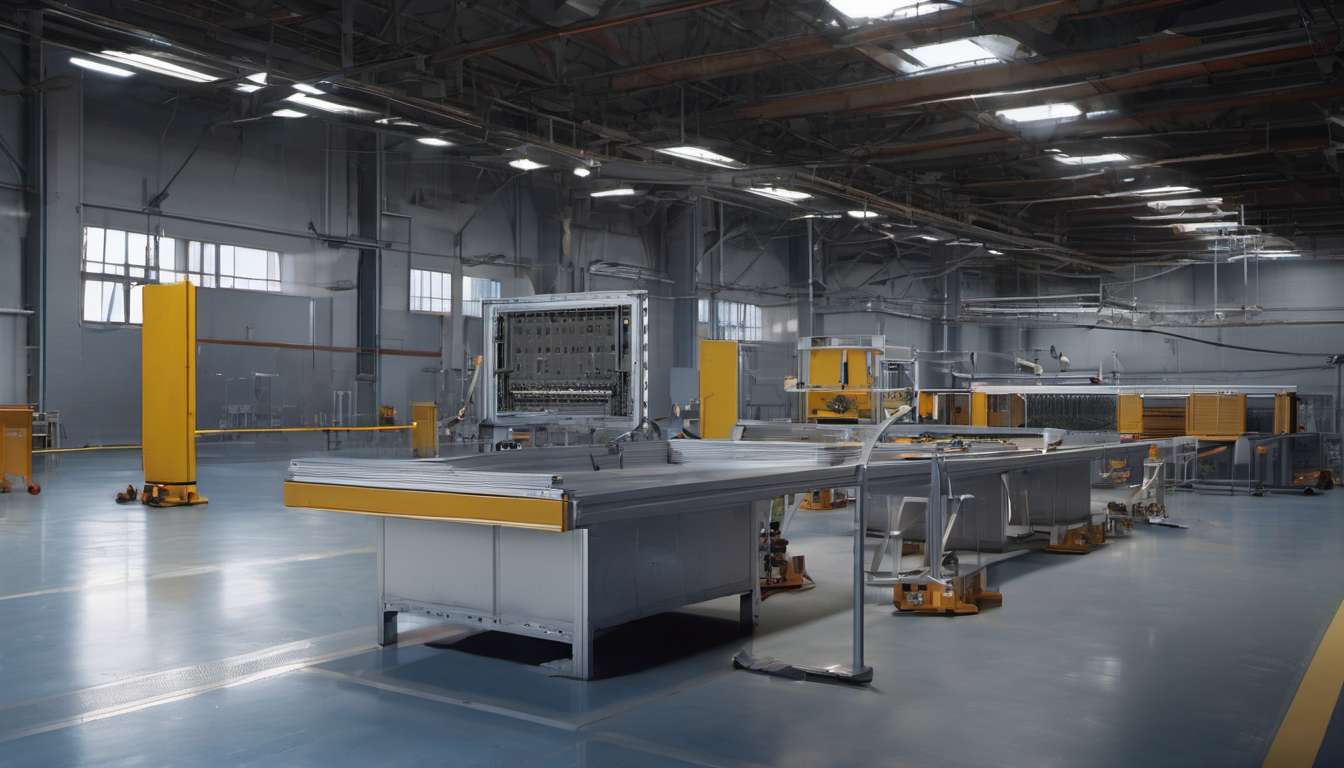
A 2026 report from the China Academy of Information and Communications Technology surfaced on August 21 with a count worth writing down. By the end of June, more than 70 embodied-AI training grounds had been built and put into operation across China. Another 46 sit under construction or in planning, spread across more than half of the country’s provincial-level regions, clustered in the Yangtze River Delta, Beijing-Tianjin-Hebei and the Pearl River Delta (TechNode, citing the CAICT report).
The number that carries the load is not 70. Industrial manufacturing appears in 86% of the facilities.
What a training ground is
Start with the definition, because the name suggests a lab and it is not one. A training ground is a physical space built to replicate a real working environment, used to collect real-machine data, train models and test robotic systems. A robot runs the same task over and over inside it, and the captured data goes back to the model.
In practice that means a workcell rebuilt at 1:1. To train assembly you have to reproduce the bench, the kitting tray, the torque tool and the cadence of incoming parts. To train sorting you reproduce the conveyor and the mix of package shapes. The closer the copy, the more the data is worth.
So 86% is not a reporting artefact. It is a purchase order. Somebody paid to rebuild a specific kind of workplace, and that is the kind of work whose motion data gets captured first.
Where 116 sits
The autonomous-vehicle buildout is the right cohort to measure against.
Before robotaxis carried passengers, the industry spent roughly a decade building closed test tracks: intersections, on-ramps and construction barriers moved inside a fenced campus so vehicles could log miles. That construction was spread across those years. This one is not. China has more than 70 embodied-AI grounds already running, 46 more in the pipeline, and a category that barely had scale two or three years ago.
Two things we have already covered sit on the same curve. In June, MIIT and SASAC launched a joint programme targeting ten-thousand-unit deployment capability by year end. Last week an industry report put Chinese humanoid shipments past 40,000 units in the first half. The gap between the shipment number and the policy target has always been the same missing input. Robots get built and robots get sold, but before one does a shift in a real plant, somebody has to give it a place to rehearse.
That place now has 116 coordinates.
The geography is not incidental either. The Yangtze River Delta, Beijing-Tianjin-Hebei and the Pearl River Delta are the three belts that hold the bulk of China’s electronics, appliance and auto-parts employment. The grounds were built inside the labour markets they are being trained to change, not at a research campus somewhere else. That siting decision is what makes the data useful and also what makes the exposure local: the workers whose motions get captured and the workers whose stations the resulting models arrive at are, in a lot of cases, in the same industrial park.
What gets captured is tenure
There is an uncomfortable property to what a training ground actually harvests.
It is not abstract “manufacturing data.” It is the feel a specific worker developed at a specific station over several years: how hard to drive the fastener before it seats, how to correct a part that came in crooked, whether the hand stops or the eye moves first when the sound changes. That judgement lived only in a body. It had no documentation and no handover procedure, which is exactly why it stayed out of reach of automation for so long. A training ground converts it into a reproducible dataset.
When we covered what Chinese humanoids are actually doing on factory floors in July, the constraint was never the hardware. It was task generalisation: move the same machine one station down the line and it cannot do the job. The grounds are built at that bottleneck. With 86% of them laid out as industrial manufacturing, the fastest capability gains over the next year or two land on assembly, machine tending, sorting and inspection, not on domestic service or commercial reception.
Who works inside one
There is a job category forming here that has not been named cleanly yet.
To produce data, someone has to wear the motion-capture rig and perform the task, someone has to teleoperate demonstrations, and someone has to label the captures, mark pass and fail, and clean the bad samples. Most of those people are experienced line workers pulled off production, because having the skill in their hands is precisely what makes the capture valuable.
Last week JD.com said it wants to hire 100,000 robot service engineers. That is the maintenance role automation grows after it deploys. The training-ground role is a different animal. It exists before deployment, and the work itself consists of handing over the experience. Both jobs are real and both pay, but they run on opposite clocks. Service headcount scales with the installed base. Capture headcount ends when the dataset is complete.
The schedule this publishes
For anyone working in manufacturing, this infrastructure reads as a timetable.
A training ground takes roughly a year from first concrete to usable data. Getting from a dataset to stable performance on a live production line has been running another one to two years on current industry experience. The 70-plus already operating broke ground from 2025 onward, which puts the first window for capability arriving in real plants around 2027, concentrated in the same three manufacturing belts. The 46 under construction map to 2028 and 2029.
None of that is a forecast. It is poured concrete. A capital expenditure list is more honest than any technology roadmap, and this one already names which stations are having their motions written down.