In June we covered Faraday Future pricing a full-size Futurist humanoid at $89,900 on a trade-show stage, and called it a punchline with a real spec sheet attached. On September 19, the punchline got a checkout button. At its annual 「919」 launch event, FF put nine robot configurations on sale, not preordered, not demoed, but purchasable through FF.com, Amazon, and RobotShop, with delivery starting the same day.
The headline number is the cheapest one. The Master Mini, a 95-centimeter, 19.5-kilogram humanoid built for classrooms and robot-soccer competitions, starts at $9,990. FF calls it North America’s first compact EAI humanoid priced under $10,000. Two step-up configurations, Pro and Ultra, run $12,990 and $17,990, adding computing power from 48 up to 200 TOPS.
The price ladder, rung by rung
The Master Mini is the cheap end of a five-model lineup that now spans four figures to six:
- FF Master Mini: $9,990 to $17,990. Education and competition humanoid, three configurations.
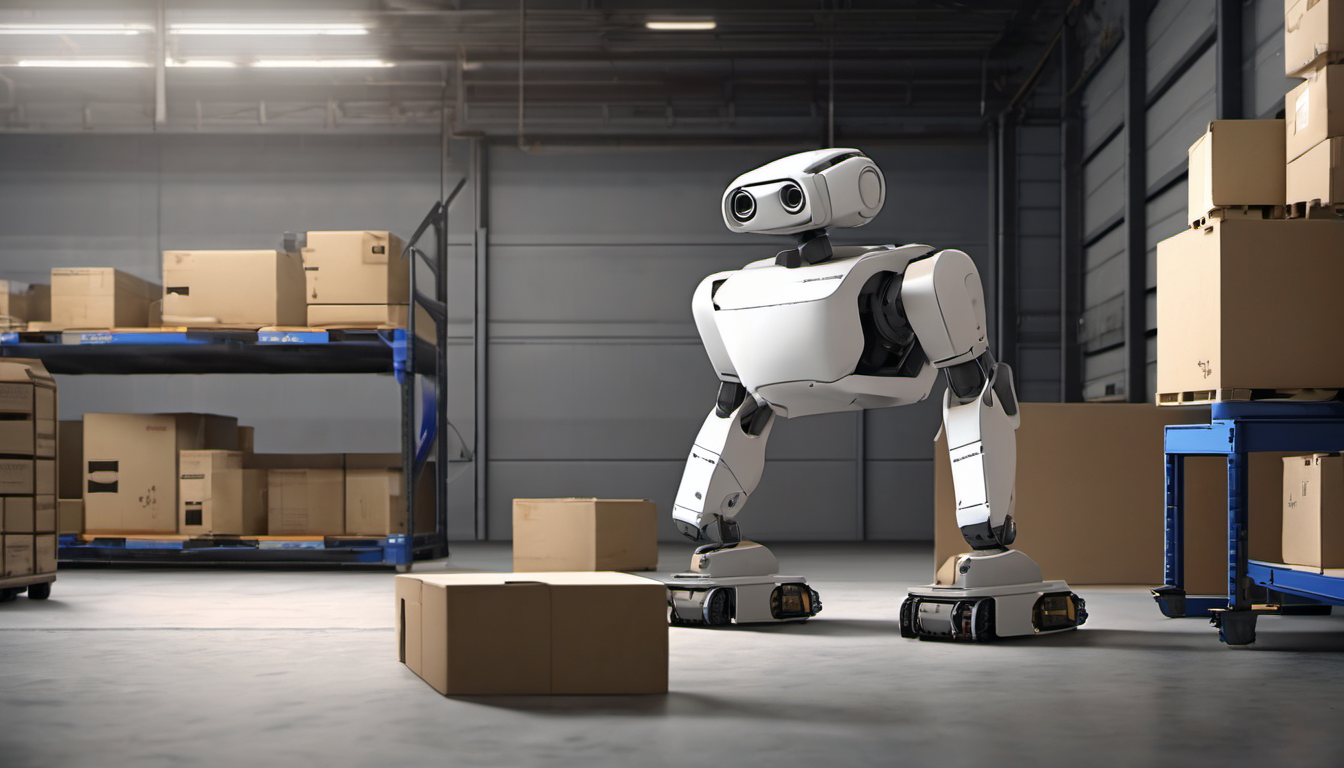
- FX Aegis Classic Ultra-W: $12,990. A 22-kilogram wheel-legged quadruped FF markets for “security and companionship,” aimed at indoor and building patrol.
- FX Aegis Mega: $74,990, two configurations. Mid-size industrial wheel-legged robot, 50-kilogram payload, climbs 25-centimeter stairs, clears 80-centimeter obstacles, five-plus hours on hot-swappable batteries. Built for high-frequency inspection at power stations, factories, and industrial parks.
- FX Aegis Hyper: $137,900. The extreme-environment version, with thermal imaging, gas detection, 3D scanning, and communications relay, for mines and tunnels.
- FF All-New Futurist: $89,900 (Standard) to $129,900 (Ultra). The flagship full-size humanoid, 51 active degrees of freedom rising to 71 with a dexterous-hand upgrade, Jetson Thor-powered at 700 TOPS in the Ultra trim.
Four of the five models did not exist in June. The Futurist did, at the same $89,900. What changed is that FF says it is now actually shipping units, not booking preorders.
Why the channel matters more than the price
None of these prices would be news on their own. Skepticism about FF specifically is earned. This is a company with a decade-long record of announcing more than it ships, a $6.79 million market cap, and a risk disclosure that names dependence on a single, Chinese OEM for every robotics product it sells. A price tag is not a shipped unit.
What is new is the retail step. FF’s own release calls it a “6+1” sales network: six routes to market plus a rental arm, RoboShare, which has now signed a rental agreement with Hifivebot, a US robot-rental platform. Two of those six routes are FF.com and Amazon. That is the detail worth sitting with. A security patrol robot and an industrial inspection robot are now purchasable the way a vacuum cleaner is, by any buyer with a credit card and no procurement department.
Every humanoid and quadruped covered in this publication so far has moved through a different channel: a named pilot, a plant contract, a multi-year order, an integrator relationship. Toyota’s 400,000-unit commitment runs through renovation contracts tied to specific plants. Hyundai’s 25,000 Atlas units run through a JPMorgan-disclosed capital plan. Those are large-buyer channels, gated by capital budgets and procurement cycles that take quarters to clear. Amazon checkout takes minutes. The buyer pool for a $12,990 security robot is not “companies with a robotics integrator on staff.” It is any landlord, HOA, warehouse manager, or small-business owner who has priced out a night-shift guard.
The number FF wants you to notice: 30%
FF says its robotics business is now running an average contribution margin of roughly 30%, based on Q2 financials, on cumulative yearly sales and shipments FF put at 552 units as of a September 17 filing. That is a small base. 552 units is a rounding error against Toyota’s planned 400,000 or UBTECH’s 10,000-unit-a-year Liuzhou line, but it is a positive number from a company whose entire public history has been negative ones. Whether the margin claim holds as volume scales past a few hundred units is the thing to track next.
Worth a caveat on the flagship price: IDTechEx’s May forecast put the industry average selling price for a full-size humanoid at roughly $37,000 by 2030. FF’s Futurist Standard, at $89,900 today, is still 2.4 times that number. The compact and quadruped tiers reached an affordable price point first, through a different mechanism than the cost curve IDTechEx modeled: a smaller, lighter form factor and a consumer retail channel, not the industrial manufacturing scale that curve assumes.
The labor angle: two named job categories
FF’s own marketing names the exposed roles directly. Of the four “Industry Productivity Solutions” launched alongside the hardware (K-12 education, research, security, and inspection), the last two describe existing paid jobs. Security is indoor and outdoor patrol: “autonomous patrols, multimodal sensing, AI event recognition, alarm integration.” That reads like a night-shift guard’s task list. Inspection is “high-frequency inspections” at power stations, mines, and tunnels with thermal imaging and gas detection. That reads like a plant inspector’s task list, in the exact hazardous environments where staffing has always been hardest and most expensive.
Neither role disappears at 552 cumulative units sold. What changes is who can now afford to try. A large industrial buyer weighing a robotics pilot already had the capital and the integrator relationships to order one, at any price. A small warehouse or a mid-size property manager did not, until the order form became the same one they use for a printer. That is the part of this story that outlasts Faraday Future’s own track record for shipping what it announces.
There is also a supply chain detail buried in FF’s own risk disclosures worth naming plainly: every one of these robots is built by a single Chinese OEM, and the company warns explicitly that a federal ban on Chinese robotics imports would upend its retail plan overnight. FF is not an outlier here. Most of the affordable humanoid and quadruped hardware reaching a US buyer this year traces back to the same manufacturing base, whatever brand name sits on the invoice. Opening a retail channel widens who can buy. It does nothing to change where the hardware actually comes from, or how exposed that supply line is to a policy decision neither FF nor its customers control.