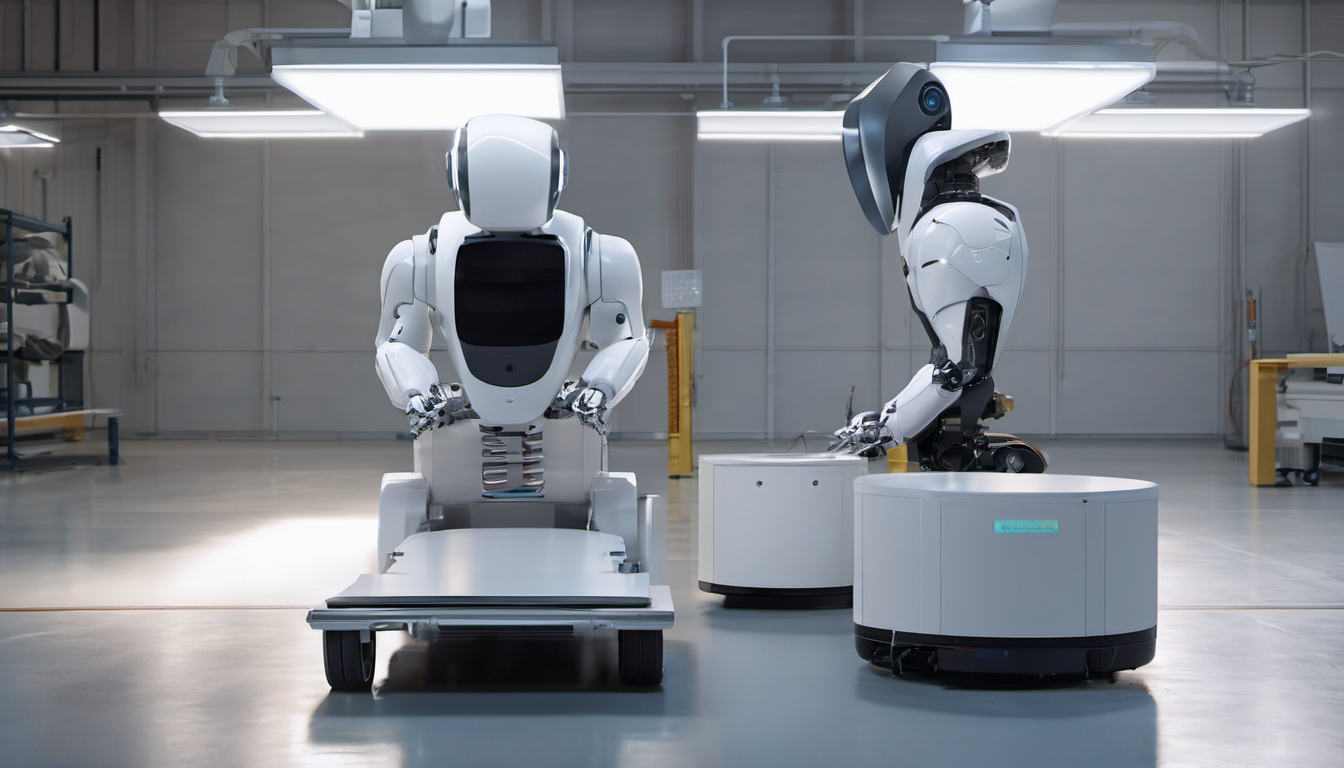
On Sunday, at Dongfeng’s tenth science and technology innovation week, the automaker named a date. Zhang Zhenlin, Dongfeng’s chief engineer for intelligent technology, said the company’s humanoid robot, Xiaodong, enters factories in October to handle sorting and quality inspection. Small-batch trial production starts by the end of this year. The target for matching human-level work capability: the end of 2027.
Xiaodong is built for material-sorting scenarios on the automotive line, and Dongfeng says the robot is moving from single repetitive actions toward fully autonomous flexible operations. The company’s quadruped, Yuanzai, reaches commercial use sooner, starting with customer guidance at dealerships, then campus patrol and service scenarios, with the same push toward autonomous operation. Both machines debuted at the 2026 World Robot Conference in August.
Zhang’s framing matters as much as the timeline. His argument: an automaker’s strengths in supply chains, manufacturing and AI transfer directly into robotics, so the same automotive large models get reused across robot products, which speeds up commercialization and mass production. In his view, embodied intelligence will not stay confined to humanoids or robots generally. The vehicle itself becomes a form of embodied intelligence product. Dongfeng deputy general manager Zhou Feng used the same event to lay out an overseas expansion plan, 50 billion yuan ($7.4B) across more than 50 models and 10 production bases, which puts the robotics timeline inside a company that is scaling on multiple fronts at once, not making a single speculative bet.
Dongfeng is late to a race already underway
Xpeng put its Iron production line into operation on September 8, with 80% of core processes already automated and mass production slated for year-end. UBTech’s Liuzhou plant started production on September 12 at a pace of one humanoid every 10 minutes, more than 10,000 units a year. Chery-backed Aimoga has delivered more than 3,000 robots globally, over 2,000 of them overseas, and is reportedly preparing an IPO. Li Auto, Seres and Leapmotor have each disclosed embodied-intelligence plans of their own this year.
The cohort number is what puts Dongfeng’s announcement in context: Chinese manufacturers shipped more than 18,500 humanoid robots in the first half of 2026, over 97% of the roughly 19,100 units shipped worldwide. AgiBot led with about 8,400 units, a 44% share; Unitree followed with roughly 5,900. Against that backdrop, an October factory entry and year-end trial production are not aggressive. UBTech is already at volume, and Xpeng’s line is running. What Dongfeng added instead is the harder commitment: a named date for human-level performance. That is a claim the market can check in about 15 months, not a vague promise to keep pace with rivals.
The timing also lines up with a broader shift already underway: as China’s EV market cools, automakers are redirecting the manufacturing and AI capacity they built for cars toward humanoid robots. Dongfeng is the fifth or sixth major Chinese automaker to formalize a production timeline this year, not the first.
The jobs the deadline points at
Sorting and quality inspection are the first tasks Dongfeng assigned to Xiaodong, and they are also the most standardized, highest-turnover roles on an automotive line — the jobs new hires and contract workers fill first, and the ones automation reaches first. Dongfeng’s October date opens a transition period inside its own plants, with humans and robots working the same stations. If the 2027 human-parity target holds, hiring for sorting and inspection roles contracts first, and fastest, among the job categories on the line.
This is not a one-company problem. Xpeng, UBTech and AgiBot are running comparable production timelines in the same window, which means sorting, quality-inspection and material-handling roles across Chinese auto manufacturing are converging on the same two-year clock — not because one automaker moved, but because four did, simultaneously.
Sources: