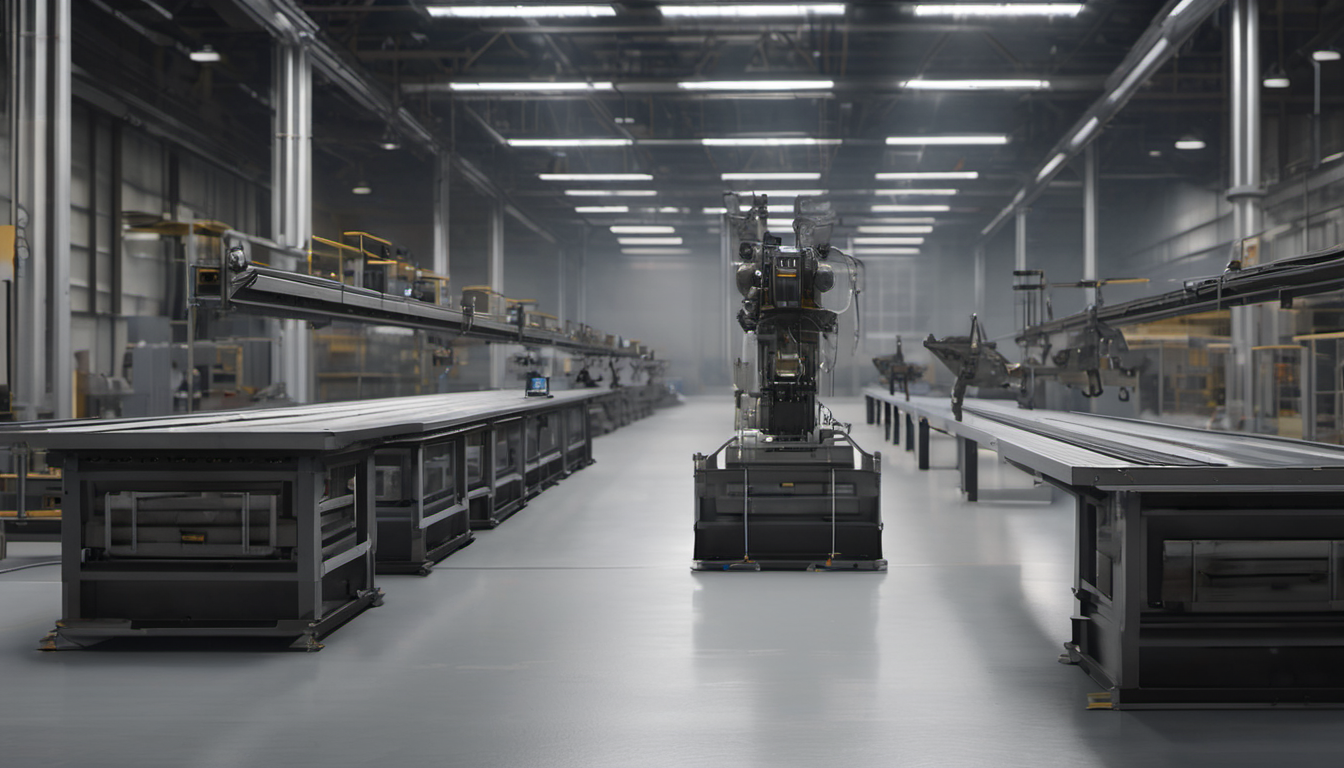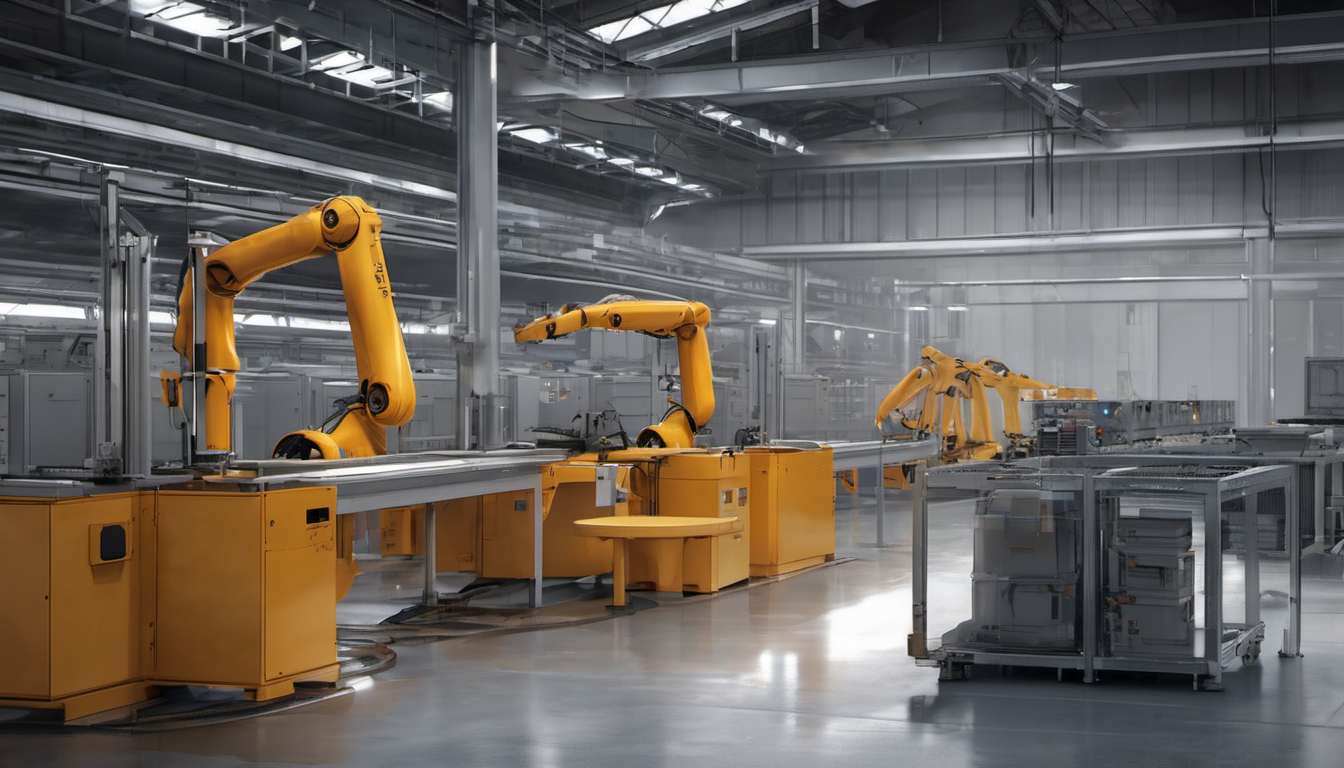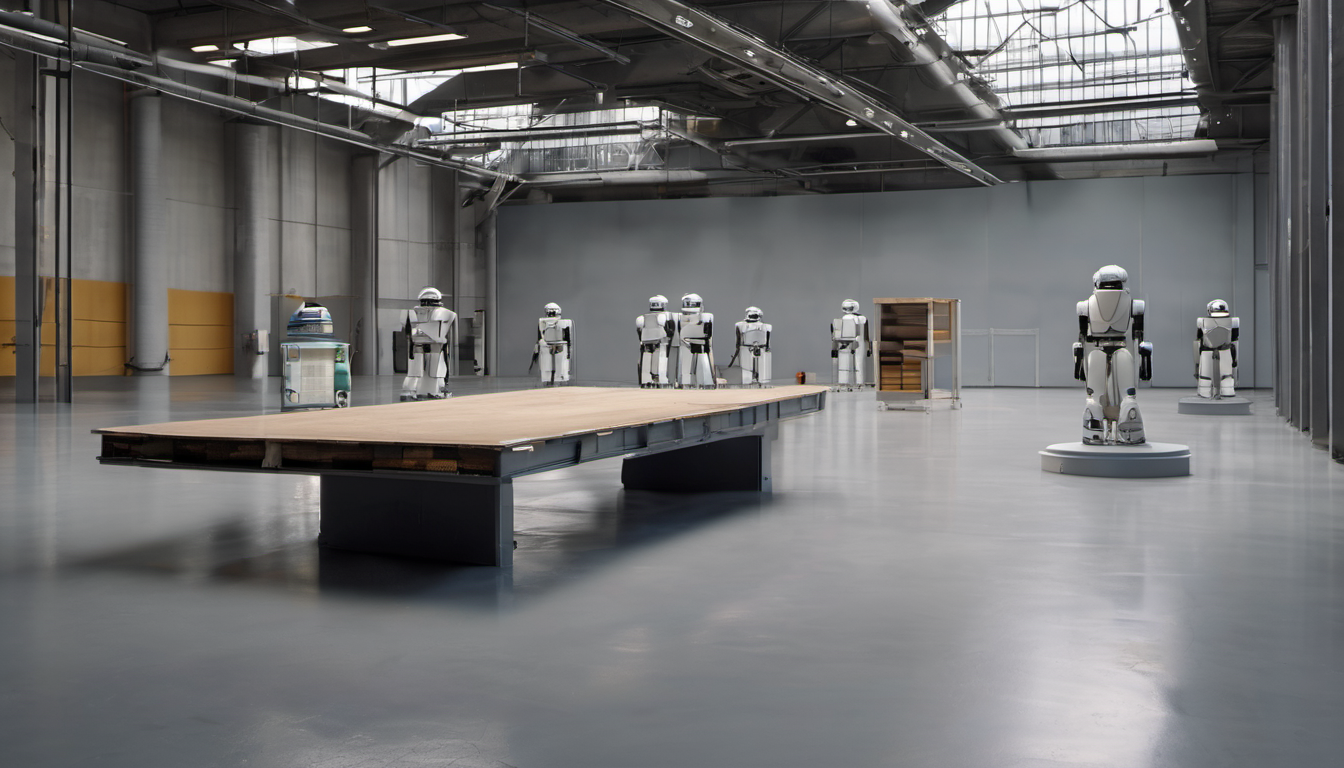
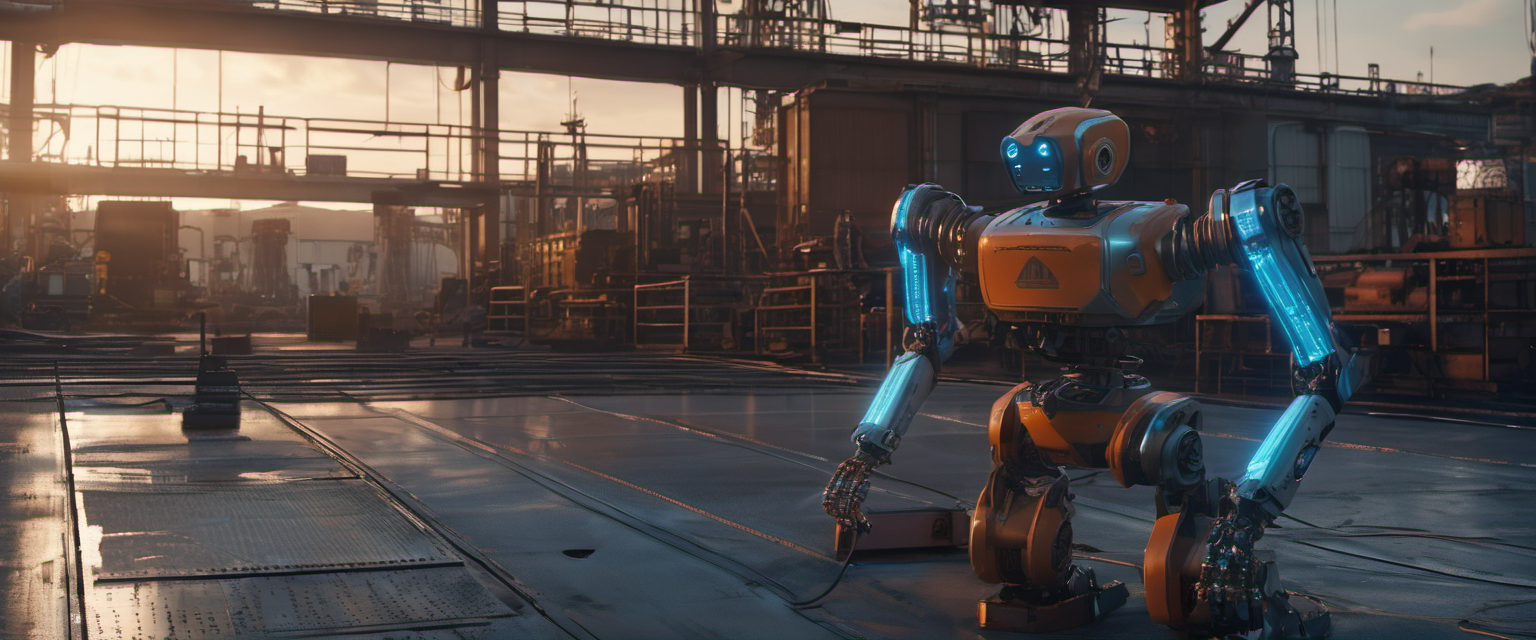
Most humanoid pilots so far have picked the easy room. Warehouses are flat, climate-controlled, and laid out on a grid; assembly lines repeat the same motion at the same spot all day. A shipyard is the opposite of all of that, which is exactly why Hanwha Ocean’s new pilot is worth more than the average “robot does a demo” headline. On June 8 the Korean shipbuilder said it will trial AeiROBOT’s humanoid, Alice, at its Geoje yard, in a project aimed at labor shortages and safety in one of the least robot-friendly industrial settings that exists.
Why a shipyard is the hard mode
The reason fixed automation never colonized shipbuilding is that ships are too big and too bespoke to bring to a robot arm. The work comes to the metal instead: across uneven decks, around temporary scaffolding, through cluttered zones whose layout changes week to week. Hanwha wants Alice evaluated on heavy-load transport, autonomous navigation, walking across uneven terrain, obstacle avoidance, and tool handling — which is to say, every hard problem in mobile manipulation stacked into the same environment at once. Any one of those is a respectable research milestone. A shipyard demands all five simultaneously, near people, near hazards, on terrain that punishes a wheeled base and humbles a legged one.
That is the actual bet behind the humanoid form factor. The pitch was never that a bipedal robot is the best shape for any single task — a forklift moves loads better, a fixed arm welds better. The pitch is that a human-shaped machine can be dropped into spaces built for humans without rebuilding the space. A shipyard is the most expensive possible place to test that claim, and the most honest one.
Simulation first, steel later
The detail that separates this from a publicity reel is where it starts: not on the production floor, but in a copy of it. Partner NdotLight, a 3D AI company, will build a digital twin of the shipyard using Nvidia Omniverse and Nvidia Isaac Sim, giving Alice a simulated yard to train and fail in before it touches a real one. This is the same sim-to-real playbook now standard across the industry — the Nvidia Isaac and GR00T stack has become the default substrate for exactly this kind of pre-deployment rehearsal.
Treating the yard as a high-variability environment that has to be modeled before it’s entered is the tell that the partners — Hanwha Ocean, AeiROBOT, and NdotLight — know how hard this is. A digital twin lets you test navigation paths, obstacle interactions, and task sequencing under realistic conditions without a quarter-million-dollar robot tripping over a gas line on day one. It is also, conveniently, where most of these pilots quietly discover that the demo and the deployment are very different animals.
The numbers that aren’t here yet
Alice is not a stranger to a podium. Nvidia CEO Jensen Huang featured it at his CES keynote as an example of physical AI doing shipyard welding — the demo-value stage. This pilot is the move from that stage to site-specific validation, with the partners targeting validation of the technology within a year. What the announcement pointedly does not contain is the part that would make it a deployment story: unit counts, a price, hours per shift, a date when human welders or transporters get a robot colleague rather than a research subject. “Validate within a year” is a careful phrase, and it should be read as carefully as it was written.
The honest framing is that this is news about an intention to test, not a labor event. Nobody at Geoje is being replaced by Alice this year. But the direction matters: shipbuilders are a hard-up, safety-pressured, chronically short-staffed industry, and they are now the ones inviting humanoids into the worst rooms in the building. If a general-purpose machine can earn its keep amid uneven steel and live hazards — the same logic behind airport ground-handling pilots — the warehouse was never the ceiling. It was the warm-up.