JD.com posted second quarter results from Beijing on the morning of August 13. Revenue of RMB346.4B (US$51.1B), down 2.9% year over year. Income from operations of RMB4.5B, against a loss of RMB0.9B in the same quarter last year. Operating margin moved from negative 0.2% to positive 1.3%. Non-GAAP net income attributable to shareholders rose from RMB7.4B to RMB8.9B.
Revenue shrinking, profit expanding. That combination means the cost structure was worked on.
JD wrote down where, in the same document.
Thousands of vehicles, 20+ provinces, and a night shift in Shenzhen
The JD Logistics paragraph in the business highlights runs three sentences. Each one carries a number.
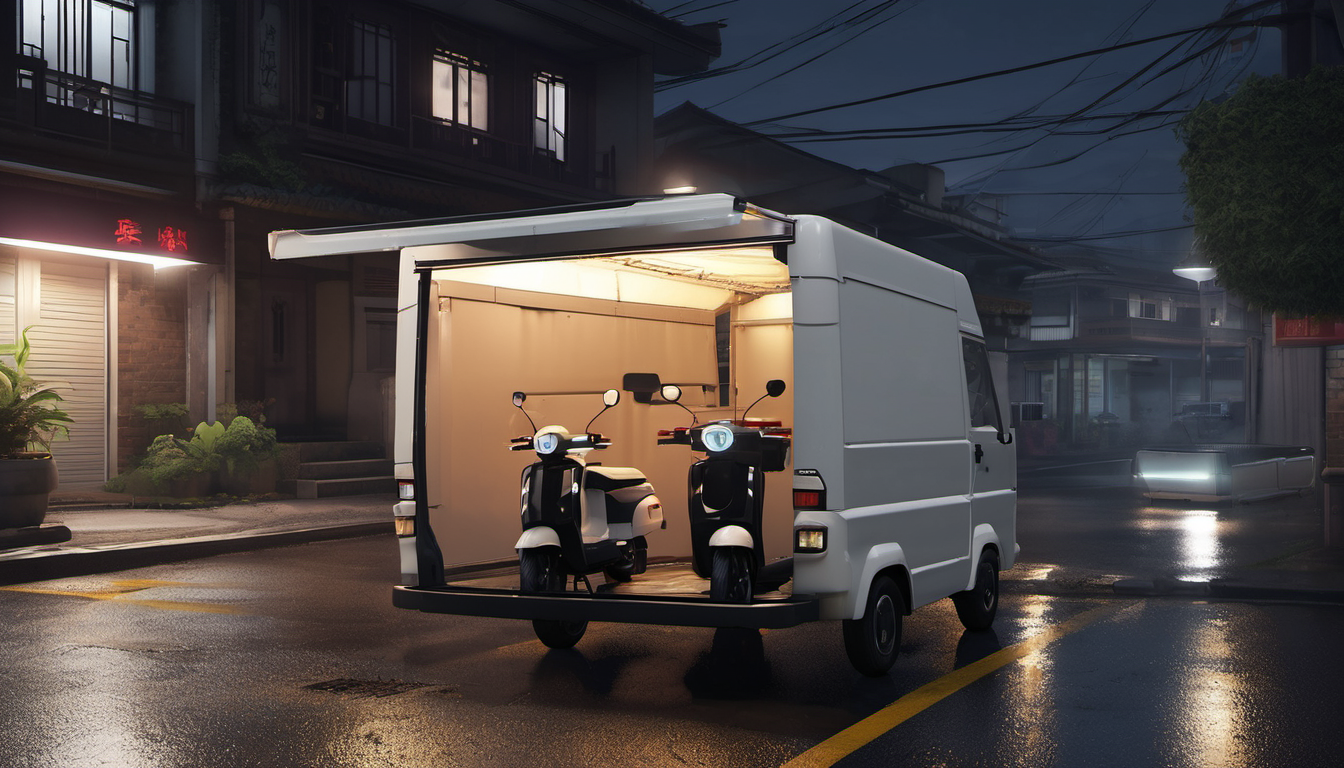
As of Q2 2026, JD Logistics had put thousands of unmanned vehicles into regular operations across more than 20 provinces nationwide. During the quarter it launched its first night-time autonomous delivery routes in Shenzhen, enabling 24-hour uninterrupted vehicle operation. JD’s own framing: this expands the geographical and operating-time boundaries for unmanned vehicles while unlocking further efficiency in last-mile fulfillment.
「Regular operations」 and 「pilot」 are different words with an accounting difference behind them. A pilot fleet sits in R&D. A fleet in regular operation sits in fulfillment cost, on the same line the labor sits on. JD chose the first phrase without being asked.
The night shift is the more interesting of the two disclosures. In daylight, an unmanned van competes with a courier for the same road, the same building, the same elevator, and the efficiency edge is thin. Night is different. Overnight delivery in China has always been the hardest shift to staff and the most expensive to bid for, because the supply of people willing to run it is small. What the Shenzhen routes take out is not a day courier’s workload. It is the shift that was never fully staffed to begin with. Automation lands first where labor supply is tightest, not where labor is dearest.
The five-year plan finally has an operating number
In May we covered JD’s humanoid robot auction during the 618 festival, and with it a figure nobody could test at the time: JD Logistics intends to deploy 3 million robots within five years.
An auction is a launch event. 「Thousands in regular operation」 is a duty roster. Measured against 3 million, thousands is under a tenth of a percent. But the constraint this quarter removed was not unit count. It was operating scope. More than 20 provinces means right-of-way and regulatory approval cleared in multiple provincial jurisdictions. Twenty-four hours means vehicle depreciation amortizes across three shifts instead of one. Volume comes later; those two locks had to open first for the per-vehicle economics to work at all.
A year later, the headcount line has not moved
The last section of every JD release is an ESG disclosure, and the wording barely changes quarter to quarter.
This time it reads: as of June 30, 2026, total personnel under the JD Ecosystem was over 900,000, including employees, part-time staff and interns as well as personnel of affiliates in the ecosystem. Human-resources expenditure for that group, plus external personnel working for the ecosystem, totaled RMB171.7B for the trailing twelve months.
The same paragraph a year earlier read: as of June 30, 2025, total personnel was approximately 900,000.
JD publishes this line to show it creates jobs, and by Chinese e-commerce standards the claim holds up better than most. JD puts front-line couriers on payroll with social insurance and a base wage, which makes labor a hard fixed cost rather than a variable take-rate. Set the two disclosures side by side, though, and in twelve months the number walked from 「approximately 900,000」 to 「over 900,000.」 The precision does not go past the round number, so there is no layoff to read here and no hiring surge either. There is only this: for a year, JD’s headcount stood still.
Over the same year, revenue fell 2.9%, income from operations improved by RMB5.4B, and thousands of driverless vehicles went into service.
RMB171.7B is the denominator
Pull the human-resources total out on its own and the scale automation is measured against becomes obvious.
One percent of a RMB171.7B annual labor bill is RMB1.7B. JD Logistics earned RMB2.26B in operating income for the entire second quarter. Take 1.3 points out of the labor line and you have manufactured another JD Logistics quarter. At this size, somebody inside the company has run that arithmetic.
JD Logistics revenue was RMB64.1B this quarter against RMB51.6B a year ago, with operating income of RMB2.26B against RMB1.96B. Revenue grew more than 24%; operating income grew 15%. Logistics is the most labor-dense part of JD and the first part where the vehicles landed. When both are true at once, the efficiency tool gets spent holding the margin up before it gets spent taking people out. The substitution arrives on the next move, when the margin stops holding or when the marginal cost of a vehicle drops clearly below the cost of a staffed shift.
What it means for specific jobs
Three job families, three different clocks.
Night-shift last-mile delivery. Shortest clock. The Shenzhen routes are a template, and once right-of-way clears in one city the next one is a paperwork exercise. These roles are hard to fill and turn over fast, which means the substitution will not arrive as a layoff announcement. It arrives as a vacancy nobody refills. That is the hardest form to count and the hardest form to notice from inside.
Day couriers and station sortation. Medium clock. During daylight the van still loses to a person on complex buildings and the final hundred meters. The variable to watch is the station layer: once fleets run continuously, loading, dispatch and exception handling consolidate into fewer stations, and the shrinking station count will say more than the growing vehicle count.
Procurement, customer service and fulfillment back office. Already underway. The same release discloses that JD Industrials deployed more than 70 AI agents across the value chain from procurement to fulfillment in the first half of 2026, with JD’s own phrasing being improved workforce efficiency. JD Health’s consultation agent, 「Dr. Da Wei,」 served nearly four times as many users during 618 as a year earlier. Neither of those waits on a fleet. The white-collar path is far shorter than the one with wheels on it.
For cohort context: on August 11, North American robot orders showed non-auto buyers at 56%, and on August 6, HII moved to route up to $900M of shipyard work to robots. Those are Western industrial buyers replacing scarce skilled labor. JD is the consumer-logistics version of the same trade, at a scale where the labor line alone is RMB171.7B a year.
The useful thing about this filing is not any single figure. It is that three facts arrived in one document: revenue contracting, profit expanding, headcount flat. When those three land together, a layoff announcement is not usually required to confirm what is happening.
Primary source: JD.com, Second Quarter and Interim 2026 Results, August 13, 2026.