Reuters spent months on China’s humanoid sector and published the result on August 31: nearly 1,000 fulfilled procurement tenders reviewed, 40 people interviewed, factories and training halls visited. The number that came out of the tender pile is the one to keep.
Chinese national, provincial and local governments bought at least $230M of humanoids and related equipment in the first half of this year. A year earlier the same figure was $62M. In the corresponding 2024 period it was $6M.
One in 300
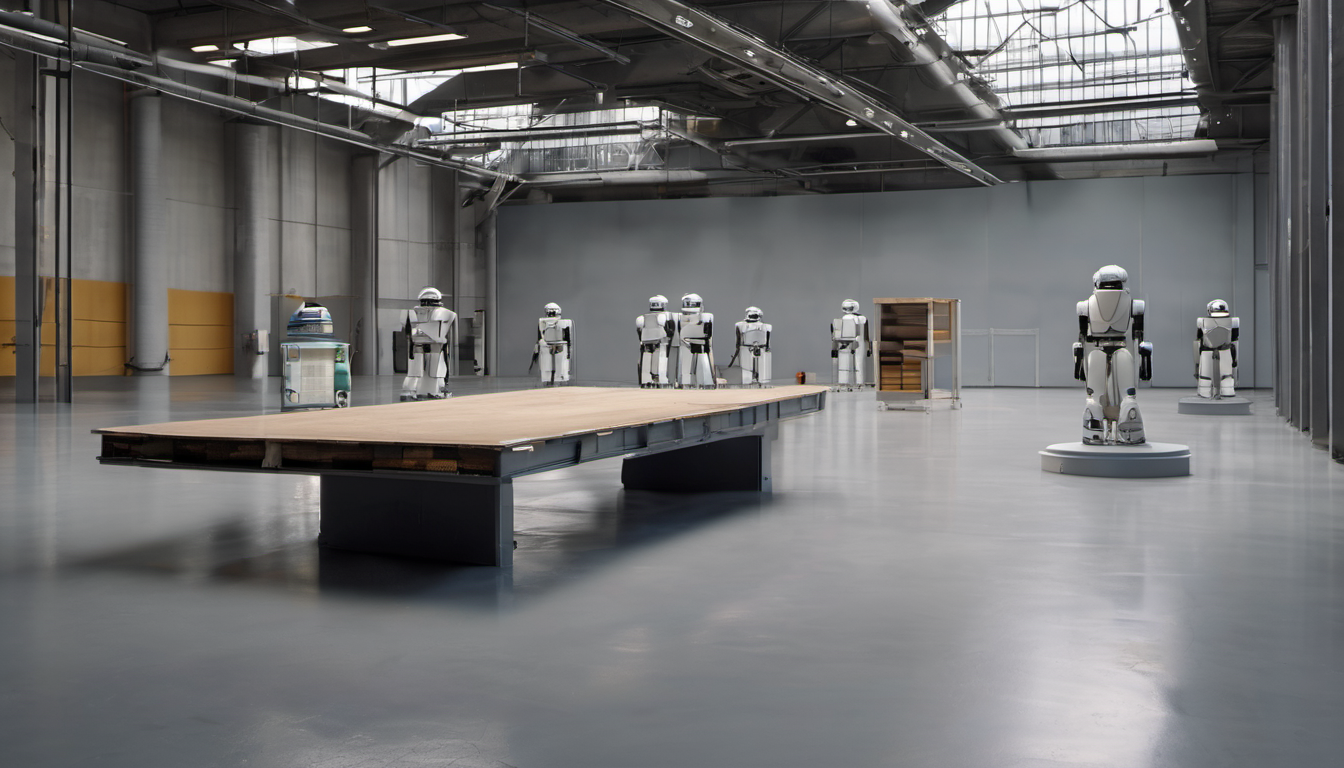
Inside the Liuzhou training center in Guangxi, more than 100 humanoids stand in rows while a dozen trainers in headsets drive them through sorting crates, packaging noodles and making coffee. The trainers wear the robots’ viewpoint and hold sensor-fitted controllers that map their own motion onto the machine.
A novice trainer produces roughly one usable movement per 300 attempts. An experienced trainer gets one per 50.
UBTech won an $18M tender from the Guangxi government last October to equip the facility, which was set up to sell robot-training data to factories. Three staffers told Reuters the project has no clear path to profitability: operating costs are high and data prices in this market are low. One of them also gave the cleanest capability number in the piece. On simple tasks the robots run at about 20% of a human’s speed and output. He thinks they close that in two to three years.
The order book is the subsidy
Run the disclosures and the demand side resolves into policy, not customers.
Deep Robotics, the Hangzhou maker of industrial quadrupeds, took about 42% of last year’s $4.2M net profit from subsidies. It sold four humanoids across all of 2024 and 2025.
UBTech is the sharper case. Its fourth-quarter contracts with state-owned enterprises came to at least $123M. Its total humanoid revenue for 2025 was $122M. One quarter of new state paper booked more than the prior full year of product sales, against 1,079 full-size humanoids shipped.
The buyers keep arriving on schedule. State Grid announced a $1B program in April for AI-enabled humanoids, dual-arm robots and robot dogs on grid maintenance and substation inspection, with state media putting per-unit labor savings at $74,000 to $119,000 a year. We covered the earlier $995M, 8,500-robot tranche in May, when the story was five suppliers queuing for the same year’s IPO window. In June the industry ministry and the state-assets regulator told 10 provinces to name at least 20 real-world training sites each. Shenzhen wants a $15B cluster of more than 1,200 embodied-intelligence firms by next year. In August we counted more than 70 embodied-AI training grounds, 86% of them built as industrial manufacturing cells. Those halls now carry provincial quotas.
Prices fall faster than capability rises
Morgan Stanley expects average humanoid prices to drop 15% this year. Leju’s full-size Kuavo fell 26% year-on-year in 2025, to about $46,000. On the rental side, Sharebot’s Kevin Li says an event-floor dancing robot now goes for $440 to $600 a day, down from roughly $1,500 last year.
None of that is the constraint. The constraint is hours. Analyst Poe Zhao, citing industry estimates, puts the sector’s stock of high-quality training data at about 500,000 hours against the 100 million hours needed for real physical intelligence. That is a 200x deficit, and Zhao’s point is that neither capital nor unit volume closes it quickly.
Jia Baoxiong at the Beijing Institute for General Artificial Intelligence named the failure mode: the problem moves from the last 10 centimeters to the last centimeter, even the last millimeter. A vision-language-action model trained on one workstation breaks when the object, the lighting, the angle or the timing changes.
What actually works
Unitree listed in Shanghai on August 19 and ran up more than five-fold on debut, near a $50B valuation, before pulling back. We wrote that day about 85% first-day turnover: the float changed hands, the line did not move.
Shipment counts still disagree with each other. The industry report released at the World Robot Conference claimed more than 40,000 Chinese units in the first half; a tracker had put global shipments at 19,100 ten days before, and we laid the two counts side by side. BofA Global Research counts about 20,000 humanoids shipped globally last year, 95% of them Chinese. MIIT’s Gan Xiaobin said in July that China expects to build more than 100,000 this year.
The commercial cases that clear have one shape. Galbot has robots in pharmacies across more than two dozen cities, picking from shelves against digital orders: about a minute per item, a success rate above 95%, and most failures are a bad grasp rather than a wrong product. Chief strategy officer Zhao Yuli describes the setting as 5,000 to 6,000 products in 30 to 50 square meters, which is a bounded selection problem with a forgiving error cost.
Compare that with an auto plant. Xiaomi’s Beijing EV factory runs 91% assembly automation with more than 700 industrial robots in the body shop doing spot welding, riveting and bonding. Geely tested UBTech humanoids at Zeekr’s Ningbo plant on sorting and box-moving, then told Reuters that robotic arms and automated vehicles still handle all key tasks on the active line. In July we reported that China’s factory humanoids can’t finish a shirt without a human. Five weeks on, nothing in the Reuters reporting overturns it.
The jobs this cycle actually touches
Start with what is not exposed. At 20% of human throughput, one worker’s output takes five humanoids before anyone accounts for uptime, maintenance or changeover. General manufacturing labor in China is not losing headcount to this procurement wave in 2026 through 2028. What is displacing those workers is robotic arms and AGVs, and that has been running for a decade with no relationship to the current subsidy line.
Three groups do carry exposure.
The trainers are the first. Teleoperating a humanoid for data is the one job this cycle created at scale, and it exists precisely because the machines cannot learn unaided. Its lifespan is therefore the lifespan of the 200x data gap. Liuzhou adds the second half of that sentence: the payroll runs on regional subsidy, not on what the data sells for.
Structured picking is the second. Pharmacy retrieval, warehouse sorting, substation inspection, hazardous-environment work. None of it vanishes at once; it splits, with the machine taking the 95% that is routine and a human staying on for the exceptions. We saw the same split in Locus’s warehouse numbers three days ago.
The third group is the one nobody counts as exposed: the robotics workforce itself. The NDRC counts more than 150 Chinese humanoid companies, over half of them startups or cross-industry entrants. Investor Kevin Xu expects consolidation with certainty and only questions who and how ugly; founders and investors quoted by Reuters put the start at late 2026 or 2027, triggered by subsidies narrowing to the credible players. When that happens, the first people out of work will not be factory workers. They will be the engineers and salespeople inside those 150 companies.
Lizzi Lee of the Asia Society Policy Institute described the model exactly: waste is not an accident in it, waste is the discovery mechanism. The cost of discovery lands on identifiable payrolls.
Sources
- Reuters, via Insurance Journal, August 31, 2026: China’s Humanoid Robots Aren’t Smart Enough to Take Your Job – Yet
- Global Times, August 28, 2026: NDRC on tailoring robotics development to local conditions