On August 26 the U.S. National Science Foundation named three new Science and Technology Centers and put $90M behind them over five years. Each center draws about $6M a year, with the option to compete for up to five more years after that. One studies turbulence. One studies the 3D organization of DNA. The third studies how people and robots adapt to each other.
The next day UT Austin named its share: a five-year, $30M award to stand up the Center for Human and Robot Co-Adaptation, 39 researchers, six universities.
What the money buys
Joydeep Biswas, an associate professor of computer science at UT Austin, directs it. He frames the problem as the inverse of the usual robotics pitch: the next step is not getting robots to perform more tasks, it is getting them to understand the people around them — needs, preferences, values, constraints — while acknowledging that people also change their own behavior once a robot is in the room.
NSF’s language is blunter about where this lands. Service and assistive robots are becoming more common in homes, hospitals, workplaces and public spaces.
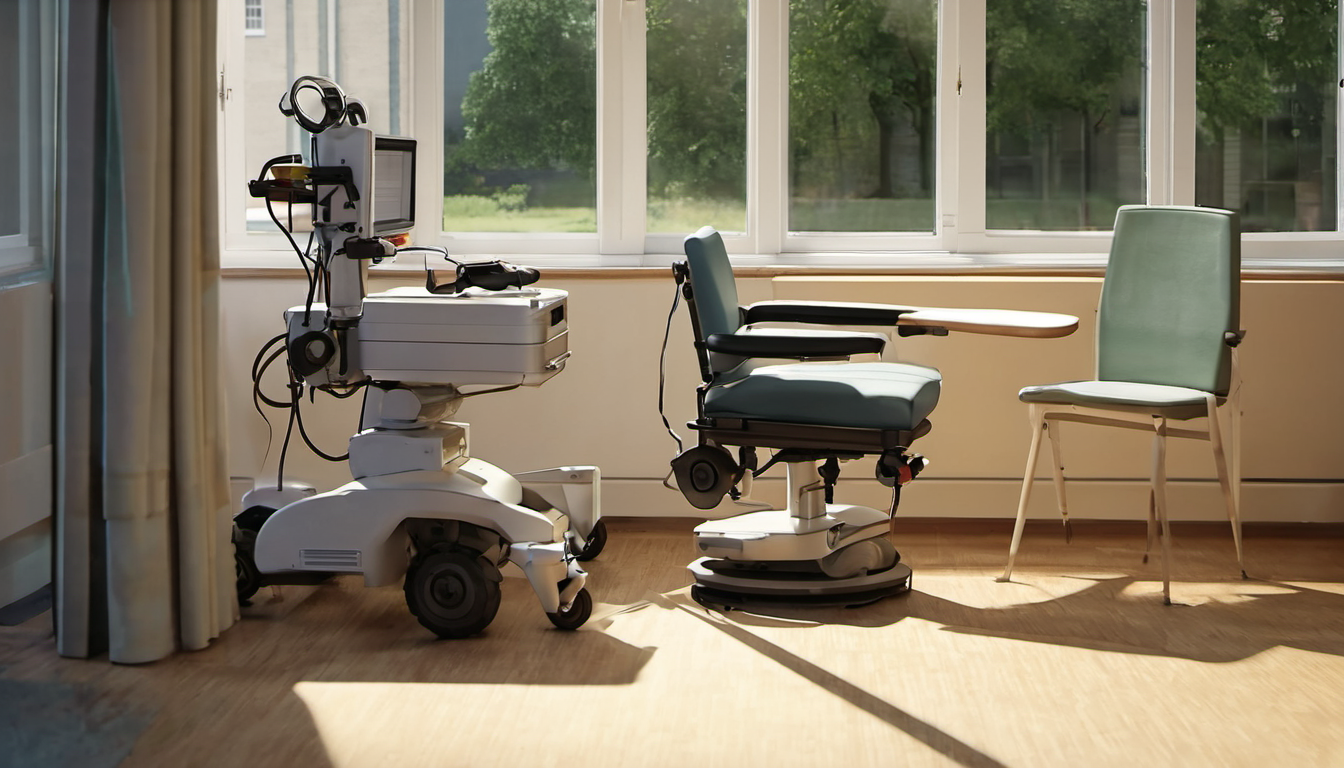
The work runs through the HERO Facility Network, a set of real deployment sites: houses, dorms, cafés, a public museum, a rehabilitation hospital, and elder-care and assisted-living residences. Partner universities are MIT, Yale, Indiana University Bloomington, Utah and Tufts. The industry list is the one to read twice: Amazon, Apptronik, Diligent Robotics, Google DeepMind, Hello Robot, MassRobotics, NVIDIA and Robust AI.
The companies putting robots into hospitals and warehouses are co-authors on the study of how people adapt to robots in hospitals and warehouses.
What $6M a year is worth this August
On August 24, XPeng’s robotics unit raised over $900M at a post-money valuation above $6.3B. Three days later SoftBank was reported to be in talks for majority control of 1X at $6B.
Line the three up. One private round in one Chinese automaker’s robot subsidiary: $900M+. One Norwegian company, whole: $6B. The entire U.S. federal research program on how humans and robots share space, across five years: $30M. That is 3.3% of the round and half a percent of the takeout.
This is not NSF being cheap. The STC program has run at roughly this scale since 1987. What the comparison shows is a clock mismatch. The speed at which robots move toward people is set by private capital in quarters. The science of how people adapt to them is funded at $6M a year on a five-year plan.
We ran the automaker humanoid inventory on August 11 and the honest answer was kitting. The factory side is already running. The hospital and elder-care side is still being scoped.
The clause buried in the press release
Here is the new thing. The center will stand up an internal ethics board to develop consent and opt-out procedures, and community members will get a say in how, when and where robots are deployed.
Set that next to what is happening at the bargaining table. On August 25 we covered what the Hyundai union actually got: information sharing, not consent. The company has to tell workers before robots go in. Workers cannot say no.
The federally funded research program is handing people inside its study sites the right the union did not win. A resident in assisted living, a patient in a rehab hospital, a student in a dorm can refuse a robot, and the mechanism for refusing gets written into the protocol.
Run that for five years across accredited deployment sites and the output is not only papers. It is a citable procedure: before a robot enters a space with people in it, who gets asked, what they get asked, and how they get out. No U.S. federal labor law today requires an employer to obtain worker consent before deploying a robot. Norms first, statute later, is the usual order.
The labor read
Care work is the first exposure. Read the HERO site list again: rehabilitation hospital, elder care, assisted living. Those sit precisely on the U.S. occupations with the widest staffing gap and the worst automation economics. The tasks are fragmented, the settings change, the work involves physical contact with a person. Co-adaptation is aimed at exactly that: a robot that adjusts its reach to someone’s mobility limits while that person learns how to ask for the next thing.
Workplace governance is the second. NSF’s own framing names workplaces. If a consent-and-opt-out procedure holds in a hospital ward, it is hard to argue why it should not hold on a warehouse floor. That argument will reach a bargaining table before the technology does.
The third is the gap. The research cycle is five years. The industry partners’ deployment cycle is measured in quarters. Apptronik and Diligent Robotics are shipping into hospitals and plants now; the center studying how those robots get along with people posts its first full results around 2031. Who writes the rules during those five years, and at whose tempo, is open.
Two things to watch: when the first HERO site list is published, and whether the consent-and-opt-out language is released in full. Nobody can copy a procedure they cannot read.