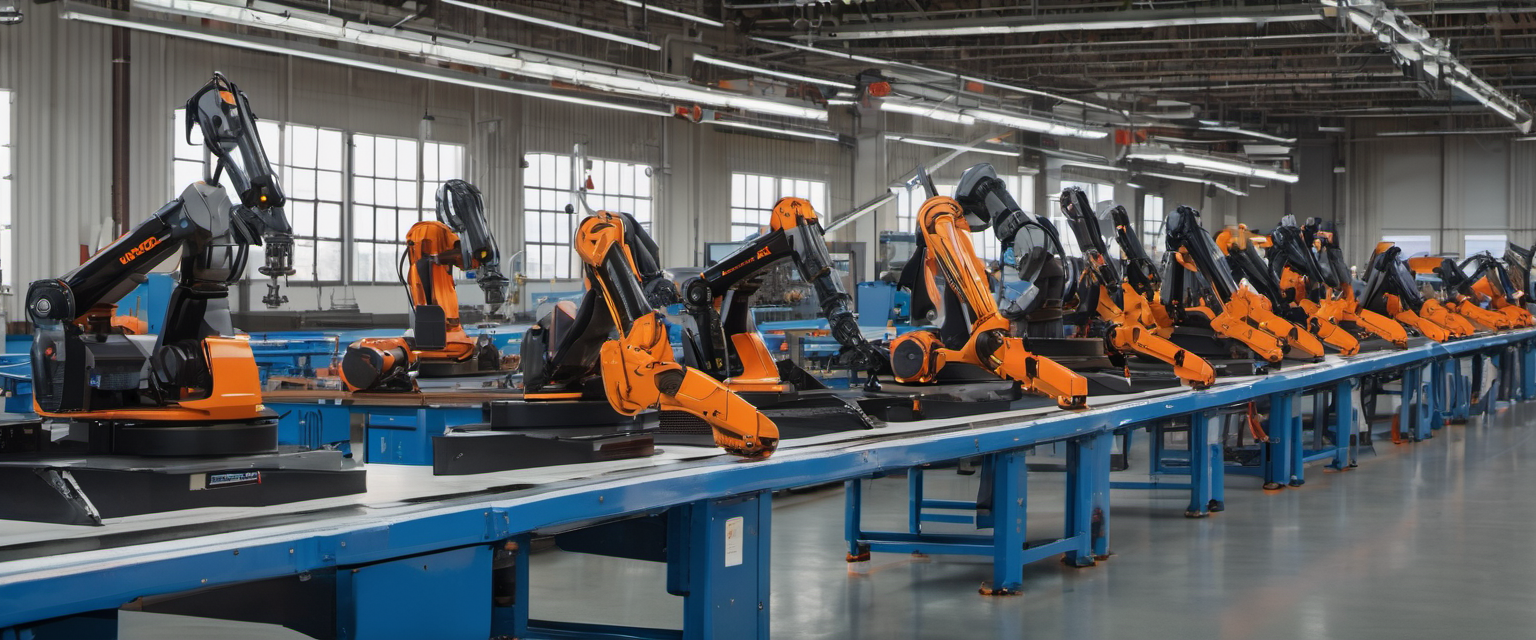
Standard Bots, the New York company selling “AI-native” robot arms and industrial humanoids, announced a $200 million Series C on June 9, lifting its valuation to $1 billion. RoboStrategy and existing investors led the round. The money goes into expanding the company’s Glen Cove, New York facility to 70,000 square feet, and the company claims it’s on pace to deliver 10% of all new U.S. industrial robot deployments by next year.
That last number deserves a pause. A single Long Island startup supplying one in ten new industrial robots in America says less about Standard Bots’ scale than about how few robots America installs.
The patriotic pitch
Standard Bots has wrapped its fundraise in the most effective sales language of 2026: national revival. By the company’s own framing, manufacturing plus its suppliers accounts for roughly a third of the U.S. economy and a third of American jobs, and every factory worker supports five jobs elsewhere. The U.S. had 20 million manufacturing workers in 1979; it has 13 million today. Sourcing from China runs five to ten times cheaper — not just on labor, the company argues, but because China installed nine times more industrial robots than America last year, more than the rest of the world combined.
The conclusion the pitch wants you to reach: robots aren’t the threat to American workers — the absence of robots is. CEO Evan Beard calls AI-native robots “the essential power tool of the 21st century,” one that will “help every worker to be a force at work.” His robots need no code: “You just show your robot how it’s done, and it learns through demonstration.”
Read that sentence twice. It is also, word for word, a description of training your replacement.
The policy ask behind the funding round
Standard Bots isn’t just selling robots; it’s writing the rules for the market it sells into. The company is a leading advisor to the White House and Congress on a National Robotics Strategy, with testimony before the Joint Economic Committee. Its two headline recommendations: federal financial support for American manufacturers buying robots, and a ban on Chinese-made industrial robots and components.
Subsidies for what we sell, a ban on what undercuts us — as lobbying agendas go, it’s at least refreshingly legible. RoboStrategy CEO Andrew Kang praised the company for solving “one of the hardest problems in industrial automation: making robots that are not only powerful, but actually usable on the factory floor without specialized programming.”
What “usable without programming” means for the people on the floor
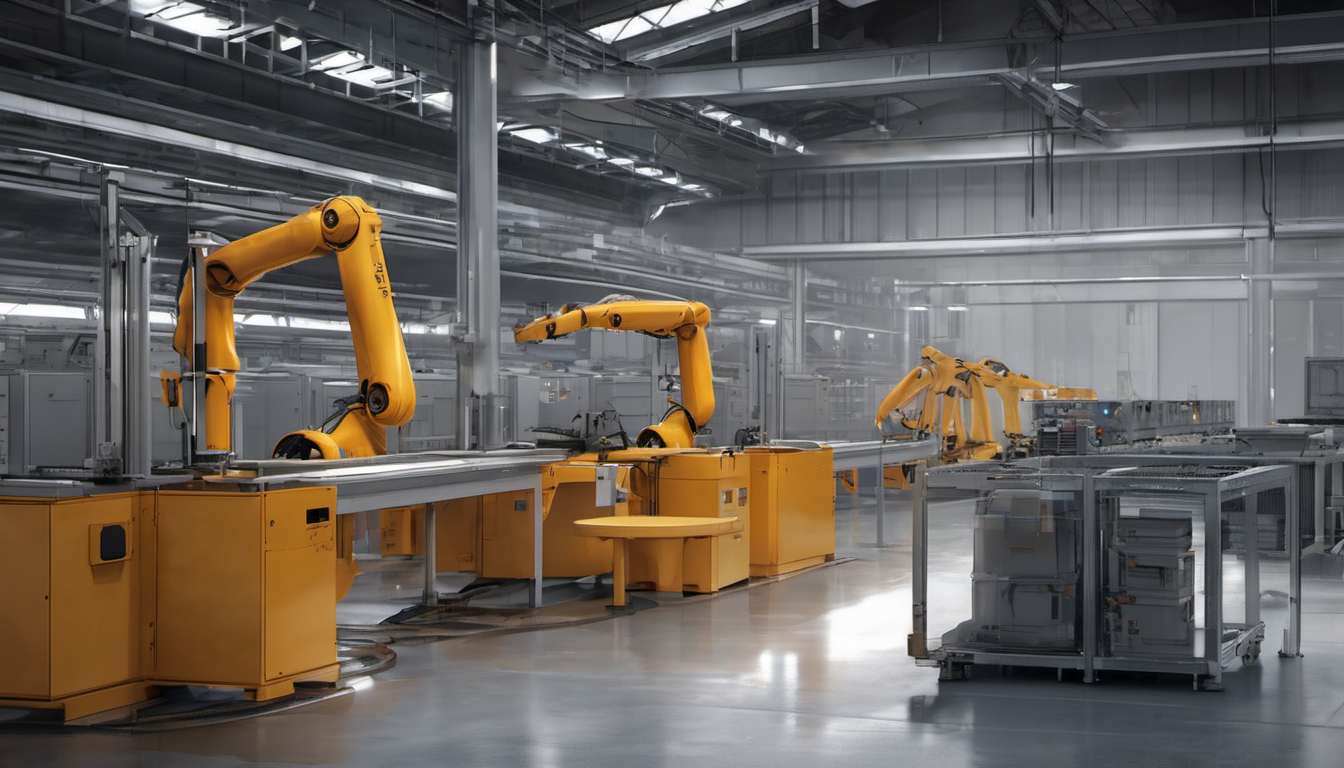
Here’s the part the press release doesn’t dwell on. Standard Bots’ arms handle welding, palletizing, machining, grinding, fastening, assembly, and inspection — the exact mid-skill trades that anchored what’s left of American factory work. The no-code, learn-by-watching design isn’t aimed at the Fortune 100, which already automates; it’s aimed at the small and midsize shops that until now couldn’t afford a robotics integrator. Automation is coming down-market, to the employers of last resort for skilled trade work.
The reshoring argument is real: a robot in a New York factory genuinely beats a robot in a Shenzhen factory for the U.S. economy, and Standard Bots cites research showing manufacturers that automate become more competitive. But the jobs that come back to an automated factory are not the jobs that left it. The five-to-one multiplier the company loves cuts both ways — it counted on the way down from 20 million, too. For the individual welder watching a demonstration-trained arm learn the bead pattern, the flag on the robot is a detail.
We’ve covered what happens when the robots are mostly for show. These aren’t. That’s rather the point.