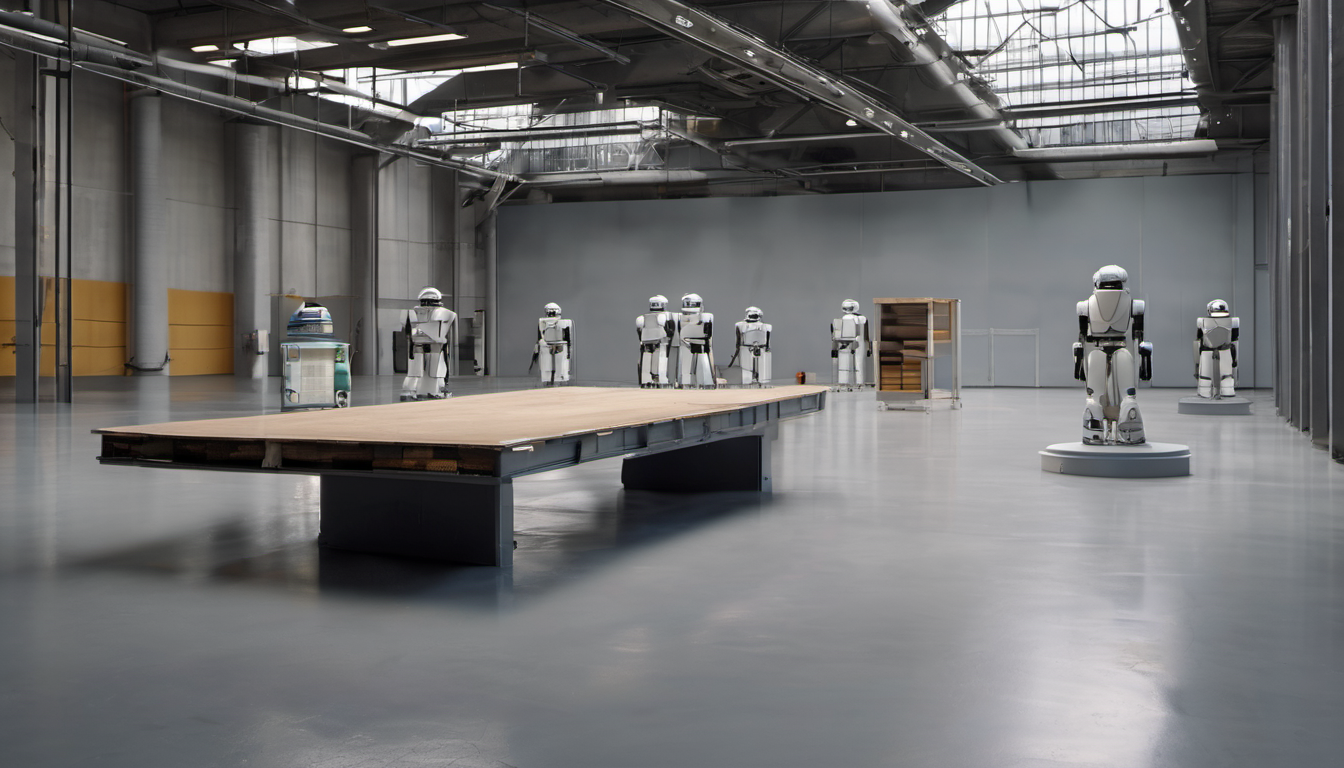
The World Artificial Intelligence Conference opened in Shanghai on Friday with the numbers it always opens with: 1,100-plus exhibitors, 3,000-plus exhibits, 300-plus global product debuts, 100,000 square metres of floor for the first time. Those numbers tell you nothing. Trade shows grow every year; that’s what trade shows do.
The number worth reading is a different one. Over at the Zhangjiang venue, WAIC is running a live procurement session with a buying pool worth tens of billions of yuan, single compute orders of up to 1 billion yuan, 60-plus real deployment scenarios, and 150-plus buyer delegations. Not a demo stage. A purchase-order desk.
The store that opens tomorrow
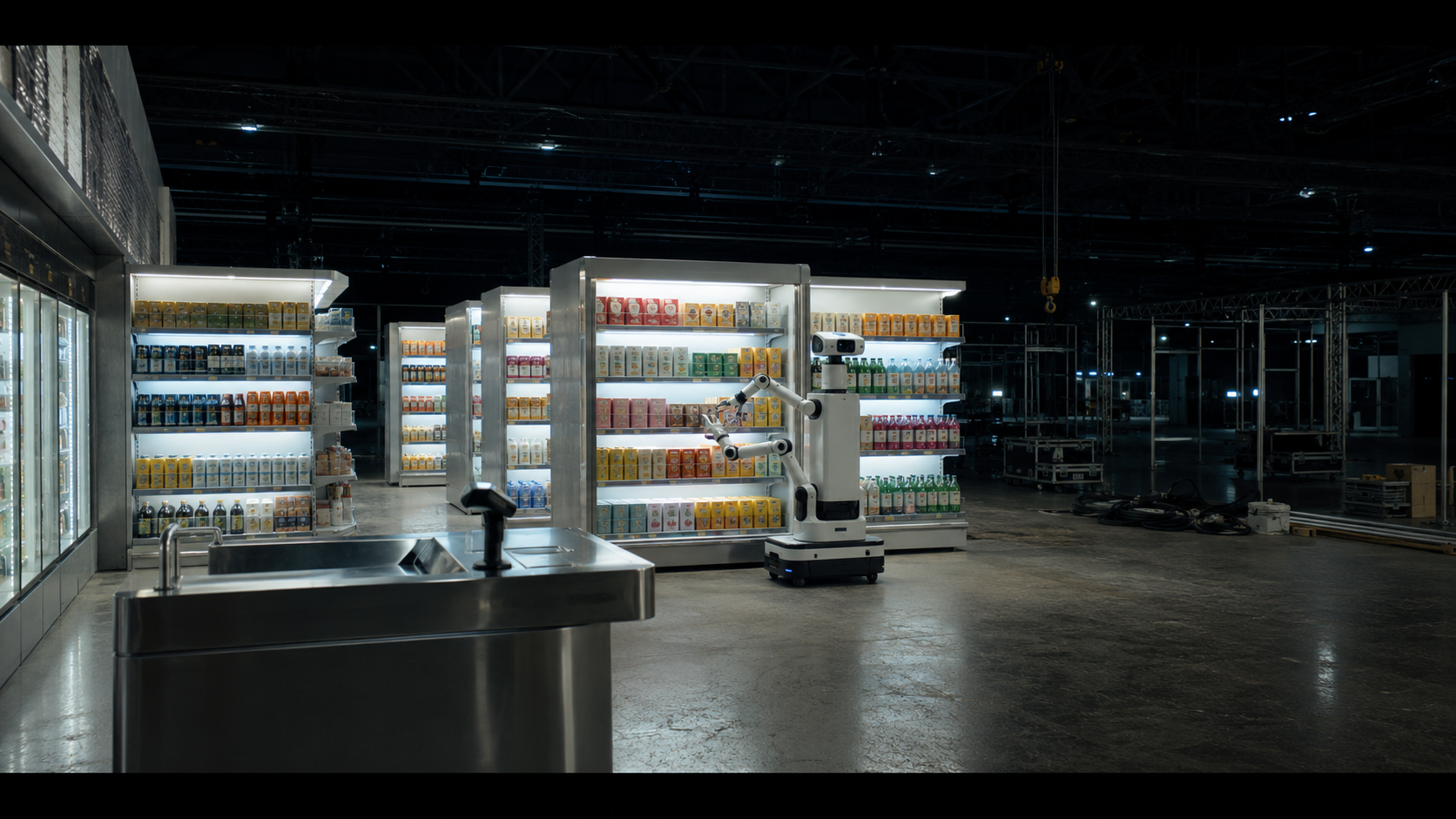
The most legible exhibit at WAIC 2026 is SenseTime’s SenseMart Go — an “embodied intelligent robotic store” where humanoid robots handle retail operations. Visitors scan a QR code and shop through the whole process. The robots pick and place products, organise shelves, run inventory checks, and handle basic exceptions, according to the company’s statement to the Global Times.
Read that task list again, because it’s not a capability list. It’s a job description. Picking, restocking, facing shelves, counting stock, dealing with the thing that went wrong — that is, more or less exhaustively, what a convenience-store clerk is paid to do between customers. The word doing the heaviest lifting is “exceptions.” Handling exceptions is the last defensible line in almost every retail job, and SenseTime is showing it as a bullet point.
The store is a demo. The checkout counter, in every sense that matters, is real.
Elsewhere on the floor, Agibot and JD Logistics debuted Genie G2 Max, a safety-certified heavy-duty machine with an 18kg single-arm payload, 38kg standard dual-arm payload and a 50kg peak — one of the strongest in the industry, the company says. It also does sub-millimetre precision work and supports autonomous charging and battery swapping for uninterrupted 24/7 operation.
That last clause is the whole product. A robot that swaps its own battery is not competing with a warehouse worker’s strength. It is competing with the fact that the worker goes home. Fifty kilos is a good spec. Never clocking out is a business model.
Nobody’s doing backflips this year
The theme this year is “Intelligent Partners, Co-create the Future,” and the organisers told the Global Times that the conference’s most prominent feature is a strong focus on practical applications. That is corporate for: we’ve stopped filming the robot dancing.
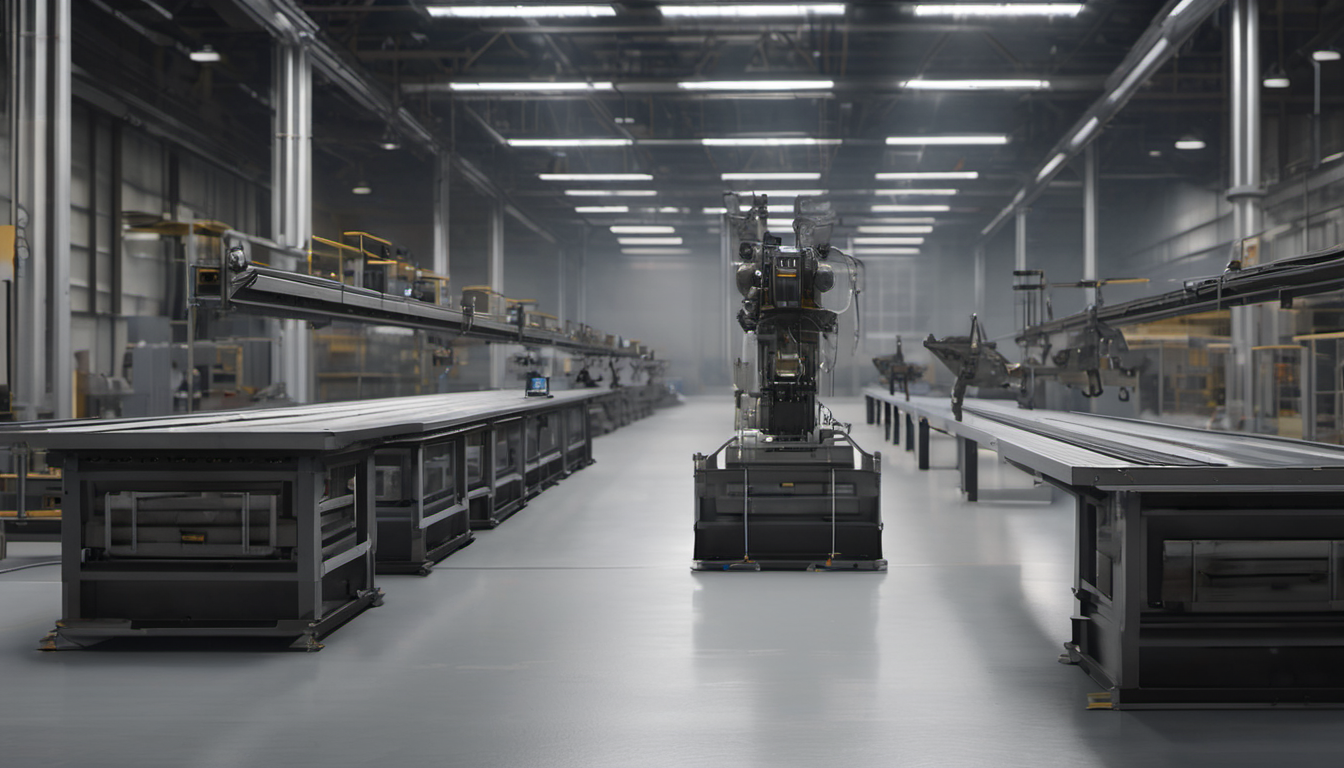
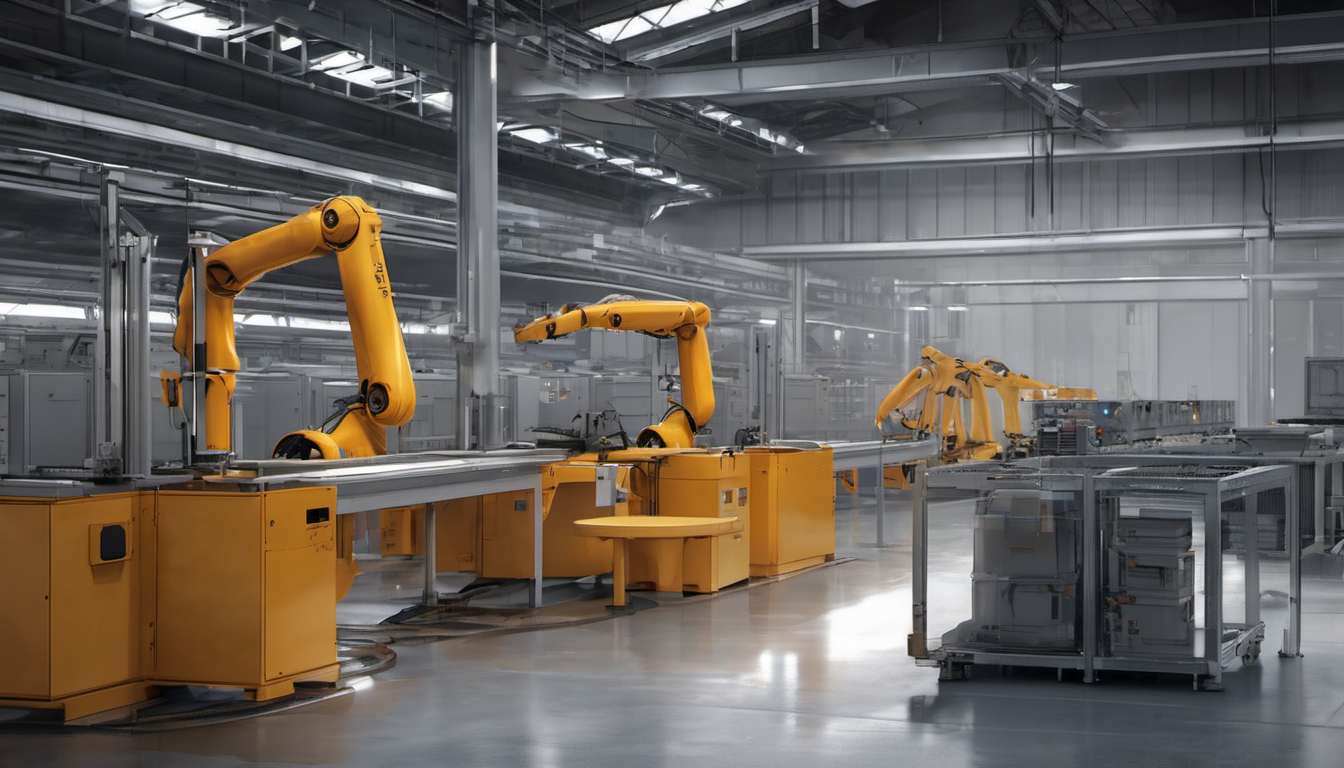
The evidence backs the framing. The Expo exhibition is showing 108 chips, 261 foundation models, 208 embodied-intelligence terminals and more than 300 working machines. WAIC has built an actual humanoid robot manufacturing workshop on the show floor, running a fully automated new-energy-vehicle production line in real time across five processes, from battery module assembly to interior speaker installation — picking, screw fastening, power connection, lamp assembly and lighting tests. Not a mock-up of a factory. A factory, in a hall, with a ticket price.
AGILINK is debuting the OmniHand 3 Ultra-M, a dexterous hand sized to match a human hand: 20 degrees of freedom, visual-tactile sensors in all five fingertips, distributed 3D tactile sensing across the palm. Its showcase demo is folding a balloon dog with two hands. That sounds like a party trick until you notice that folding a balloon animal is a soft, deformable, high-friction, two-handed manipulation problem — the exact class of thing that has kept robots out of kitchens, laundries, packing benches and hospital wards for forty years.
Meanwhile 29 countries signed an agreement in Shanghai on Thursday to establish the World Artificial Intelligence Cooperation Organization, an intergovernmental body headquartered in the city. So the conference where robots are being sold by the pallet is also the conference where the governance framework is being founded. Both floors of that building are worth watching.
What the show is actually selling
There’s a temptation to file WAIC as a Chinese state showcase and move on. That reading isn’t wrong about the politics — the 15th Five-Year Plan names AI as a key technology, the 2026 Government Work Report explicitly pushes the “AI Plus Initiative” and large-scale commercial application in key sectors — but it makes you miss the mechanism.
For two years, the humanoid industry sold futures: watch this thing walk, imagine what it could do. WAIC 2026 is selling present tense to buyers with budgets. Sixty-plus deployment scenarios and 150-plus buyer delegations is not an audience, it’s a pipeline. The exhibits have been rewritten to match: not “look what it can do” but “here is the shift it can cover.”
The honest caveat is that a trade-show store is not a real store. Real retail has spilled drinks, a queue, a kid pulling a box off a shelf, and a supplier who sent the wrong pallet. Real logistics has damaged cartons and someone’s dog. WAIC floors are clean, and clean is the oldest lie in this industry — as Chinese developers themselves pointed out about Figure’s package-sorting livestream in May.
But the direction of the lie has changed, and that’s the news. A demo that overstates a backflip costs a worker nothing. A demo that overstates a shift is a sales document. Somewhere in Shanghai this week, a procurement officer is standing in front of a store with no staff, holding a budget, doing arithmetic. That’s the exhibit.
Sources
- Global Times — 300 plus AI products set to make their global debuts at WAIC with strong focus on practical applications
- CGTN — AI conference opens in Shanghai with over 300 global product debuts
- EqualOcean — WAIC 2026 Guide: AI Partnership for a Brighter Future
- People’s Daily Online — 2026 WAIC set for July 17 with over 300 global product debuts in Shanghai