
On October 7 UPS put a number on its holiday hiring. The press release says “more than 100,000” seasonal employees across hundreds of U.S. locations. It gives no comparison to prior years. Reuters, as relayed by PYMNTS, put the target about 9% below last year. Quartz supplies the base: roughly 110,000 in 2025 and 125,000 in 2024.
Run the two steps together. 125,000 to 110,000 to 100,000 is 25,000 fewer peak-season slots in two years, a 20% drop. It is the second straight year UPS has cut the target.
What the release says, and what it leaves out
The release is mostly about service. UPS says it is chasing a ninth consecutive peak season of industry-leading on-time performance. Hiring gets a few lines: many applicants can get an offer in under 7 minutes, shifts are flexible, and there is a path to a permanent job. No wage figure appears.
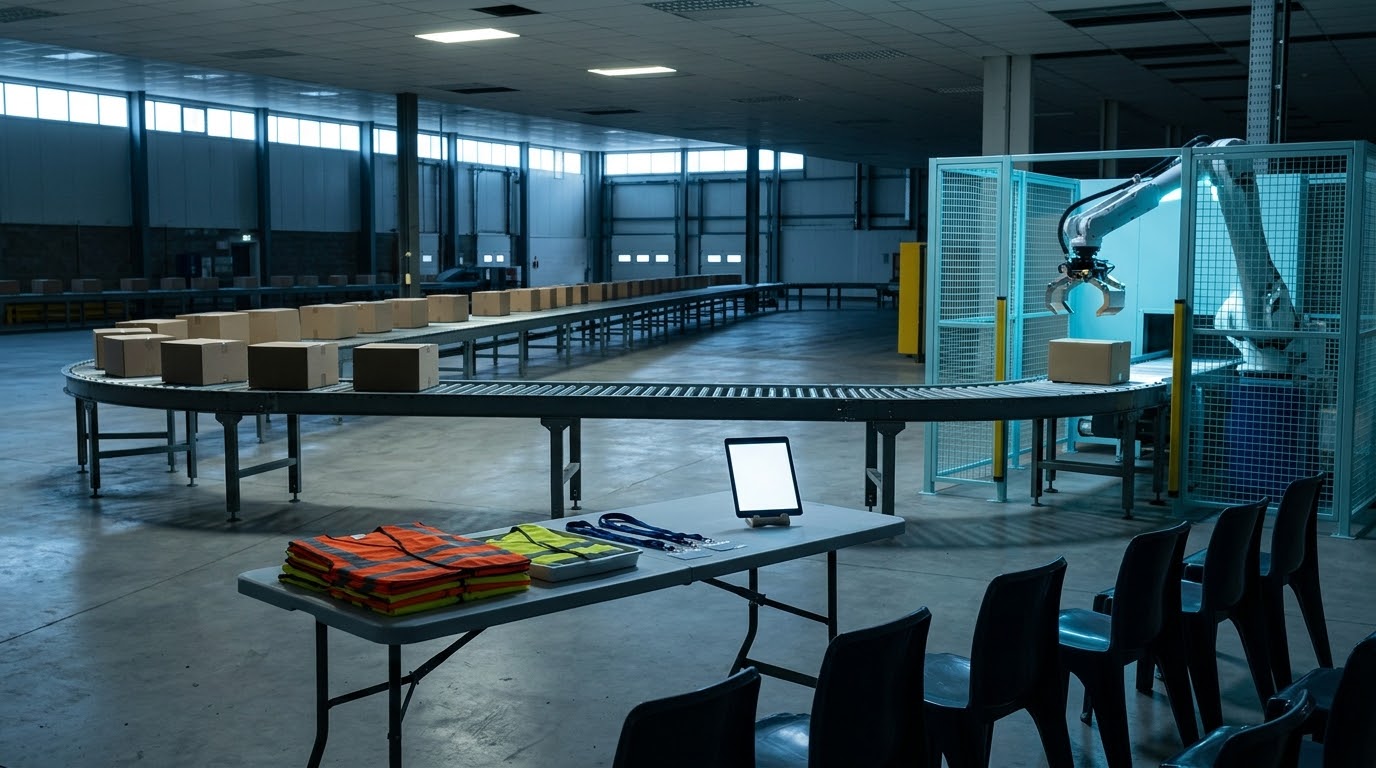
The equipment gets more space. New or enhanced automated facilities are coming online in Denver, St. Paul, Syracuse and Portland. UPS expects to deliver more than 4 billion RFID-tagged packages by the end of 2026. A new Protected Delivery service makes a recipient give the driver a PIN before a package is handed over.
The release never says why the hiring number fell, and it never links the automated sites to it. The link is the reporters’. We keep that boundary: the automation is stated, the causation is not.
Two reasons UPS has given elsewhere
The first is volume. In the second quarter, U.S. average daily package volume fell 3.3% from a year earlier as UPS finished a planned pullback from lower-yielding Amazon business, while revenue per package rose 9.3%. Fewer packages need fewer hands, and that was the point of the pullback.
The second is automation. According to the same Reuters-based report, CEO Carol Tomé said on the July earnings call that UPS is rebuilding its parcel economics around less low-return volume, more automation and a technology layer for real-time tracking. Restructuring produced about $1.2B in benefits in the first half, toward a target of roughly $3B for the year.
UPS has not split the seasonal cut between the two. We cannot either. What we can say is that both are on the record and both point the same way. In January UPS said it would cut up to 30,000 operational jobs in 2026, which is about 6.5% of a workforce of roughly 460,000 (the percentage is our arithmetic). We flagged that plan in April, in our piece on Robot Era’s customs-inspection deployment, as the automated-hub program that humanoid vendors would target next.
The cohort: retail is cutting 2.5%, UPS 9%
Challenger, Gray & Christmas forecasts that retailers will add about 450,000 seasonal jobs in the fourth quarter, down 2.5% from 461,500 a year earlier and well under the 543,100 of 2024, per Retail Dive. UPS’s 9% cut is about 3.6 times the retail forecast cut (our arithmetic).
Demand is not the explanation. The Mastercard Economics Institute expects U.S. retail sales excluding autos and gasoline to grow 5.5% from November 1 to December 24, the strongest holiday growth since 2022, as The Epoch Times reported. Sales are forecast up while the carrier moving them is hiring fewer people to do it. Our September Challenger write-up showed a related split: announced cuts hit their lowest September since 2022, yet AI still led the year-to-date reasons.
DHL is the nearest peer on record. Its supply-chain CIO told Fortune in May that robots do reduce the company’s dependence on labor, with 8,000 robots across 2,800 sites. We covered it in DHL’s 8,000 robots. UPS has made no statement that blunt.
What this means for the jobs
Seasonal package handlers, sorters and driver helpers are the lowest rung at UPS, and the release itself advertises the permanent-job path from that rung. Take away 25,000 slots in two years while up to 30,000 permanent operational roles are also being cut, and the entry points narrow from both ends.
The exposure mechanism is the hub. Automated sortation does the repetitive handling that seasonal workers were hired to absorb at peak. The four named sites are where to watch it first. Denver, St. Paul, Syracuse and Portland tell us where the seasonal roster shrinks next.
Three things to track. UPS’s third-quarter report, for headcount and package volume. Whether the 2027 seasonal target falls a third year. And whether the roughly 100,000 who are hired get the same conversion rate into permanent roles, which UPS has not disclosed for 2026.