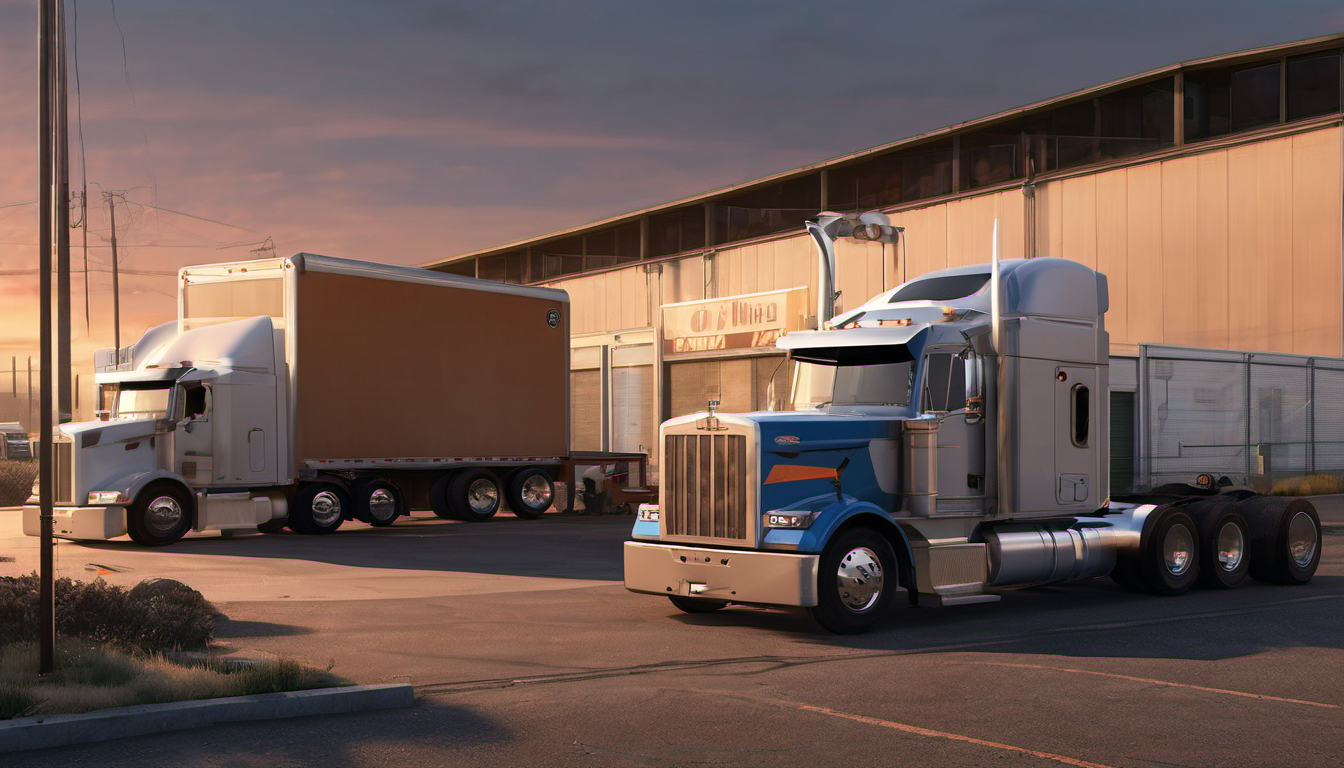
Kodiak AI announced on August 14 that it had received an autonomous vehicle testing permit from the California DMV, issued the previous day. Aurora Innovation received one in the same batch.
The permits only read as news against what changed four months ago. On April 28, the DMV approved rules allowing heavy-duty autonomous vehicles, meaning anything over 10,000 lbs, to apply for permits and operate on California public roads for the first time. Before that, heavy autonomous truck testing was closed in California, and Kodiak and Aurora ran their fleets largely out of Texas.
The wall now has an opening, and the width of it is written down.
Three stages. This is stage one.
The DMV split heavy-duty autonomy into a phased permit ladder:
Stage one, drivered testing. A safety operator sits behind the wheel. This is what Kodiak holds.
Stage two, driver-out testing. The seat empties, and the vehicle is still classed as testing.
Stage three, driver-out deployment. Only here does the word “replacement” apply.
The permit carries road conditions: no operation on roads posted at 25 mph or below, except where such a segment falls on a direct route. Kodiak says it is starting with a handful of trucks, mostly around its Mountain View office.
So the count of autonomous trucks added to California highways on August 14 runs to single digits, and every one of them has a person in the driver’s seat.
The union is not suing over the technology
The date worth writing down is August 5.
That day, Teamsters California filed suit against the DMV in Alameda County Superior Court. The safety claim is in there. The filing argues heavy-duty autonomous vehicles have not been tested enough to justify broad public-road use. But the load-bearing claim is procedural. The union alleges the agency circumvented laws requiring it to study and publicly disclose the economic impacts of opening the roads to these vehicles.
The union puts more than 200,000 commercial truck drivers in California on the other side of that study. The DMV’s own assessment concluded the rules would not eliminate jobs. The union’s position is that the conclusion understates the impact and that the process producing it did not meet the legal standard.
Not the technology, the economic-impact study. That is what a court in Alameda County will now rule on.
The same day, Nevada did the opposite
Set the other August 14 disclosure beside it.
Axios reported that Tesla had applied to operate up to 5,000 robotaxis in Clark County, Nevada. The Nevada Transportation Authority approved 10. The order, issued July 27, caps speed at 45 mph, confines operation to the Las Vegas Strip corridor, bars pickups at Harry Reid International Airport, requires the vehicles be marked as robotaxis, and mandates a per-trip passenger notification. It gives no reason for the reduction.
Asked for 5,000, granted 10. That is a 500:1 ratio.
Read together, these are not a story about regulators opening up or clamping down. They are a story about permits becoming granular — by stage, by unit count, by corridor. The granularity is now the binding constraint on deployment speed, ahead of the technology and ahead of manufacturing.
That is also why Uber and Pony.ai could name 2,000 robotaxis across five European cities on August 14 while Tesla got 10 in one Nevada county. Fleet size is a function of the permitting regime first and production capacity second.
For drivers, nothing changed. The clock started.
Start with what did not happen. A stage-one permit eliminates no driving job. The safety operator is a driver, in the same seat, doing supervision instead of steering. California’s 200,000-plus commercial drivers are all still employed this week.
Three things are worth tracking.
When the first name appears on the DMV’s driver-out testing list. Moving from drivered to driver-out is the single moment on this ladder where a person leaves the seat. Everything said about displacement before that step is rehearsal. After it, the question becomes one of volume.
How Alameda County rules. If the court accepts the procedural argument and orders the DMV to complete an economic-impact study, California becomes the first state to make “count the jobs before you issue the deployment permit” an actual requirement. The precedent would matter more than the case, because rulemaking in other states would have to route around it.
Which segment of freight moves first. Long-haul line-haul is the opening front: uniform road conditions, high mileage, the worst driver shortage, and the highest labor share of cost per mile. Regional distribution and final-mile come later, because loading, proof of delivery and same-day route changes have not been automated away. That ordering means long-haul drivers are exposed first, not all truck drivers at once.
For a cohort point, look at China. JD disclosed on August 13 that its unmanned delivery vans now run across 20 provinces while total headcount stayed flat — years of lag between fleet expansion and any visible headcount effect. The U.S. side has not reached the start of that lag. The permit ladder is on rung one.
If you drive for a living, this is not a next-year problem. It has also stopped being a someday problem. That is what a stage-one permit does: it converts a vague future into an administrative form with a number, a stage, and a defined next step.
External sources:
- Kodiak AI, Kodiak AI Receives DMV Permit to Test Autonomous Trucks in California (August 14, 2026)
- TechCrunch, Self-driving trucks are officially testing on California highways (August 14, 2026)
- California DMV, Autonomous Vehicle Testing Permit Holders
- Axios, Tesla sought a permit for 5,000 robotaxis in Las Vegas. It got 10. (August 14, 2026)
- Truck News, Kodiak AI receives California permit for autonomous truck testing