Here is a sentence that should give the “humanoids are about to replace factory workers” crowd a moment of pause. On July 30, a company best known for selling omni-directional VR treadmills to gamers announced that its newest enterprise customer is Tesla’s Optimus program — and the thing Tesla bought is a rig for a human to walk on so they can pilot the robot.
What actually got sold
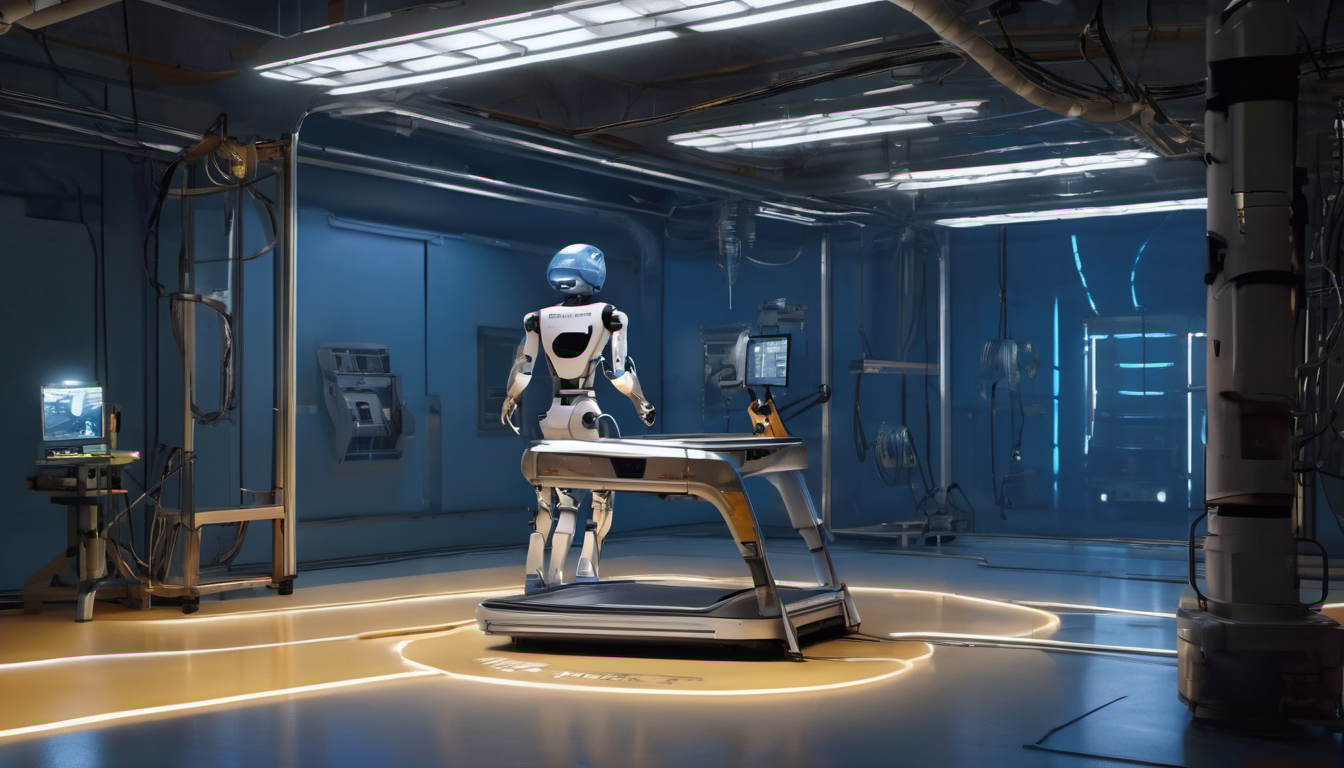
Virtuix Holdings (NASDAQ: VTIX) confirmed the sale of an Omni One Enterprise system to Tesla’s Optimus humanoid robot division — its first confirmed enterprise sale into a marquee robotics program. The Omni One is a compact treadmill that lets a person walk, run, and turn 360 degrees while staying in one spot. Inside Optimus, per Virtuix, it provides “a low-latency, human-in-the-loop interface for robotic teleoperation,” translating a human operator’s real movement into the robot’s remote action to “accelerate robot training, motion calibration, and human-robot collaboration.”
Read that in plain English. The robot Elon Musk has repeatedly described as an autonomous humanoid worker — the one that’s supposed to make labor a “choice” — is being trained and operated by a person walking on a treadmill in a lab. The autonomy isn’t a shipped feature. It’s the thing this equipment exists to help build, someday.
The tell isn’t the robot — it’s the vendor
What makes this newsworthy for LostJobs isn’t that teleoperation exists; every serious humanoid program leans on it. It’s who’s selling the shovel. Virtuix spent a decade as a consumer-VR curiosity, hawking treadmills so gamers could physically run around inside shooters. In the past few months it has rebranded, essentially overnight, into “humanoid robotics infrastructure” — and its stock rides the same wave. Last week the same company announced a counter-drone training deal with the U.S. Marine Corps at Quantico. A gaming-peripheral maker is now positioned as connective tissue for both the humanoid boom and the defense-simulation boom, off the back of pilots and single-unit sales.
That’s the shape of a hype cycle you should recognize by now. When the picks-and-shovels vendors start reclassifying themselves as AI-robotics plays and the market rewards it, it usually means the top-line story — general-purpose robots doing real jobs unsupervised — is further out than the valuations imply. The money is flowing into the plumbing of teleoperation because the robots can’t yet do the work on their own.
Why teleoperation matters for jobs — in both directions
There’s a genuine two-sided story here, and it’s worth being honest about both.
The pessimist’s read: teleoperation is the bridge to replacement. Every hour a human spends piloting Optimus on a Virtuix rig is an hour of labeled motion data teaching the model to eventually do it without a pilot. The human on the treadmill is, functionally, training their own obsolescence — the same pattern we flagged with warehouse-robot vendors hiring people to demonstrate tasks. Labor doesn’t vanish; it moves upstream into the training loop, gets more specialized, and shrinks.
The optimist’s read: for now, the humanoid economy is creating a strange new job category — robot teleoperator, motion-capture pilot, “physical-AI operator” — and these jobs are real, paid, and expanding. If your factory job is at risk from Optimus, the nearer-term reality is that Optimus needs someone to pilot and babysit it, and that someone might be you, re-skilled.
Both can be true at once, and which one wins is a question of timing. But the single most useful fact from this announcement is the one buried in the corporate cheer: as of mid-2026, the flagship humanoid still ships with a human on a treadmill attached. The “autonomous worker” is, today, a very expensive puppet — and the puppeteer still has a paycheck.