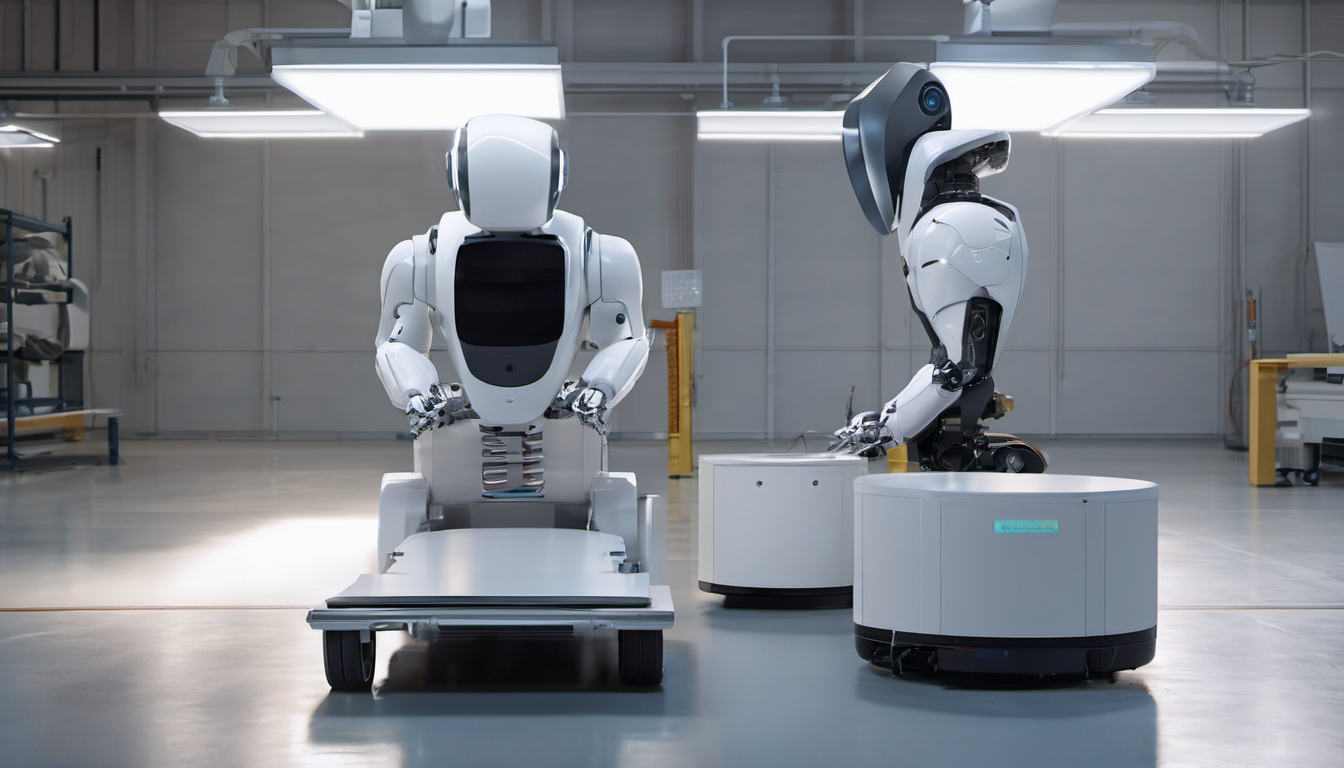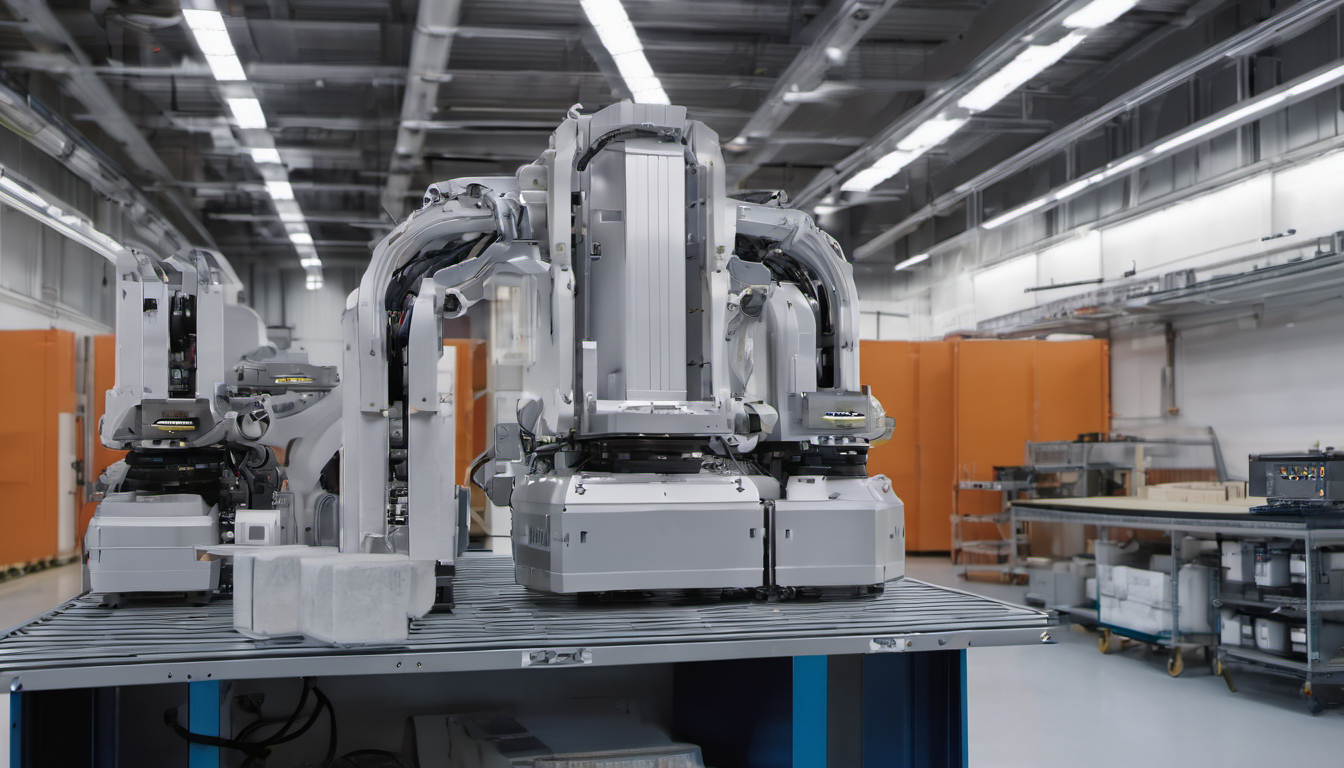
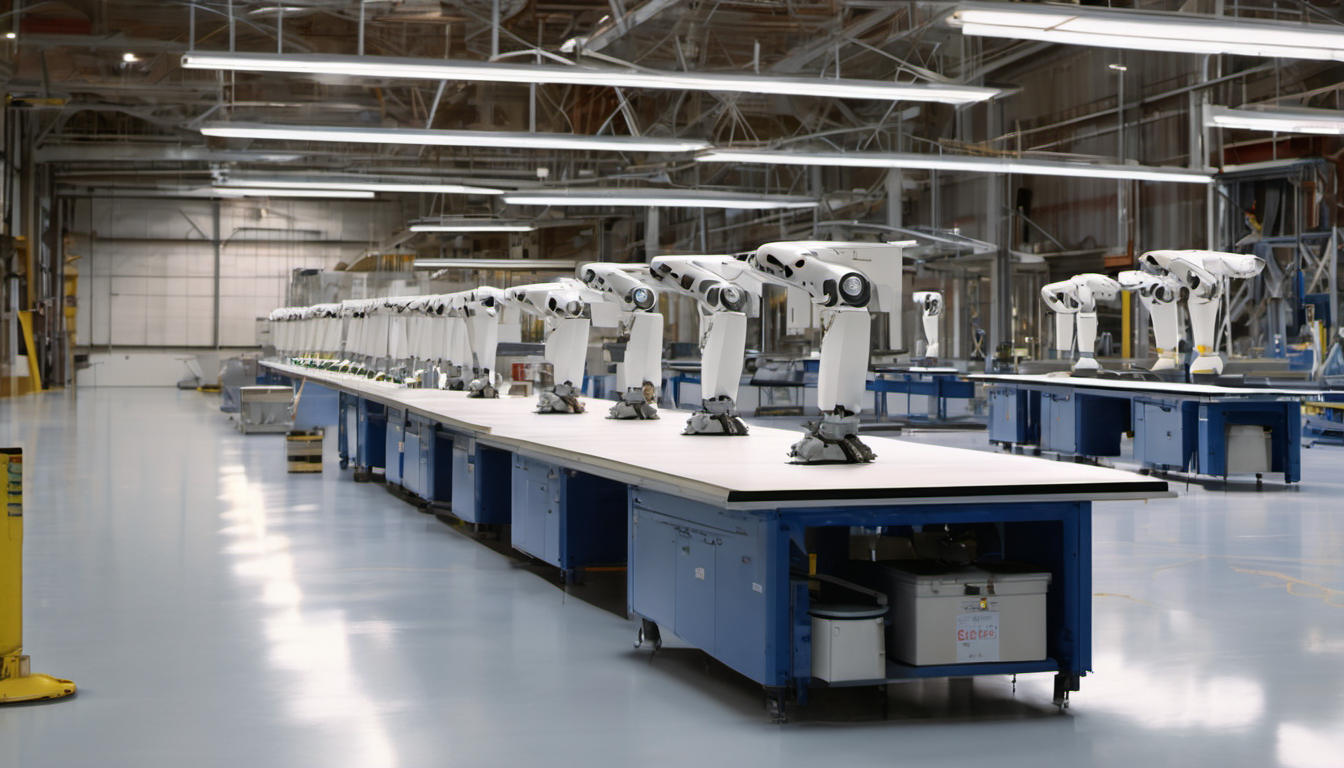
On September 8, XPeng switched on its humanoid robot production line. IRON finished assembly and walked off the line on its own.
We covered the money side last month, when XPeng carved the robotics business out and put an outside valuation on it. That piece landed on where the money sends IRON to work: the showroom, not the plant floor. This is the other half of the picture, the line that builds it.
The number to hold is 80. XPeng says more than 80% of the line’s core processes run automated (XPeng’s own announcement; CnEVPost’s account of the commissioning).
Commissioning is not mass production
XPeng drew the line itself in its announcement. Starting the line does not mean IRON has entered mass production. That date is still the end of 2026, with the first units going into XPeng’s own stores and campuses. The official launch, and deliveries in China and overseas, stay parked in 2027.
Two things went undisclosed: the line’s capacity, and the robot’s price.
Both omissions matter. For a line built expressly for scale, takt time and annual output are the parameters that settle the argument, and XPeng did not give either. Price is the same. Without those two numbers, an outsider can assess the process and nothing about the economics.
There is also a gap between commissioning a line and clearing one. A line that has been switched on has proven a sequence; it has not yet proven yield, cycle time, or what happens on the third shift. Automotive programs routinely spend two or three quarters between job one and stable rate production, and XPeng, which builds cars, knows that better than most. Reading the September 8 event as the start of that interval rather than the end of it is the correct posture.
The cohort shows how large that gap is. Agility’s RoboFab, the first factory built specifically for humanoids, has published a capacity of hundreds of Digits per year against a 10,000-unit roadmap, and its S-4 last week went further and put a monthly rate on the machine at about $8,500. EngineAI has named a takt time in Shenzhen: one T800 off the line every 15 minutes. XPeng named a process automation rate instead.
What the 80% covers
XPeng calls this the world’s first automated production line for advanced humanoid robots, built by porting automotive-grade quality systems onto robot manufacturing. “The robot production lines were created from scratch with no precedent to follow,” said chairman and CEO He Xiaopeng.
Strip the framing and the figure still says something specific. Humanoid assembly concentrates its difficulty in joint modules, wire harnessing, and whole-body calibration, and the last two have always been the most labor-dense steps in the build. Clearing 80% on core processes means at least part of that work now runs on equipment rather than on hands. For comparison, final assembly in a car plant typically sits around the same level or lower, because final assembly is the one stage of the four major automotive processes that still leans hardest on people.
So the real news is not that a robot builds robots. It is that the line was designed for volume from the first drawing, rather than as a manual pilot line to be automated later. Most Chinese humanoid makers are still on the manual line.
What is on the machine
This generation of IRON was unveiled in November 2025 with 76 degrees of freedom across the body and 21 in each hand. It carries three of XPeng’s in-house Turing AI chips, up to 2,250 TOPS of effective compute, and runs the company’s physical AI foundation model on the robot itself.
That last clause is the one to read twice. Because the model runs onboard, XPeng says IRON handles complex tasks autonomously without remote operation, with lower inference latency and data kept inside the machine.
Set that against late August, when we wrote about SoftBank moving for control of 1X and its home robot NEO, which still depends on a human taking over from a distance. Teleoperation is not a technical footnote. It is an entire invisible occupation: every robot doing work at a customer site may have an hourly operator sitting behind it. A robot that needs no remote takeover and a robot that does produce two different labor structures once they land.
Nobody outside XPeng has verified the claim yet. And in early September, IRON was reported to have shifted to solid-liquid hybrid batteries because all-solid-state commercialization is running behind. That is a spec walked back, and it belongs in the file.
Whose job this line touches
Start with the part that gets skipped: this production line itself needs almost no people across 80% of its core work.
Every prior manufacturing expansion ran on a default story. New product, new factory, new jobs. This wave designs the factory on the assumption that few assemblers are required. So when someone argues that the humanoid industry will create a wave of manufacturing employment, the claim has to be discounted starting at this line. It does create jobs, in equipment engineering, calibration, and line maintenance, an order of magnitude fewer than a conventional final assembly line.
Then there is the work IRON is going to do. Under XPeng’s plan, post-mass-production units go first into the company’s own stores and campuses to handle reception, walking customers through vehicles, guiding visitors, inspection rounds, and moving small items. Not one of those five is a production station. All five are retail service and security patrol work. That is consistent with what we read in August: this machine’s first job is on the showroom floor.
On timing, the year-end ramp is a captive deployment. Robots move from XPeng’s line to XPeng’s stores without passing through anyone else’s staffing schedule, so 2026 produces no labor event. 2027 is the year to watch. Once deliveries go outside, the exposure moves to someone else’s greeters and someone else’s patrol rounds.
One number is still pending. Until capacity and price are filled in, nobody can compute how many labor-hours one IRON stands in for. If a published rate in the shape of $8,500 a month appears on this side of the Pacific, showroom reception stops being a hiring question and becomes an arithmetic problem in a budget meeting, and the person standing on the showroom floor is not in that meeting.