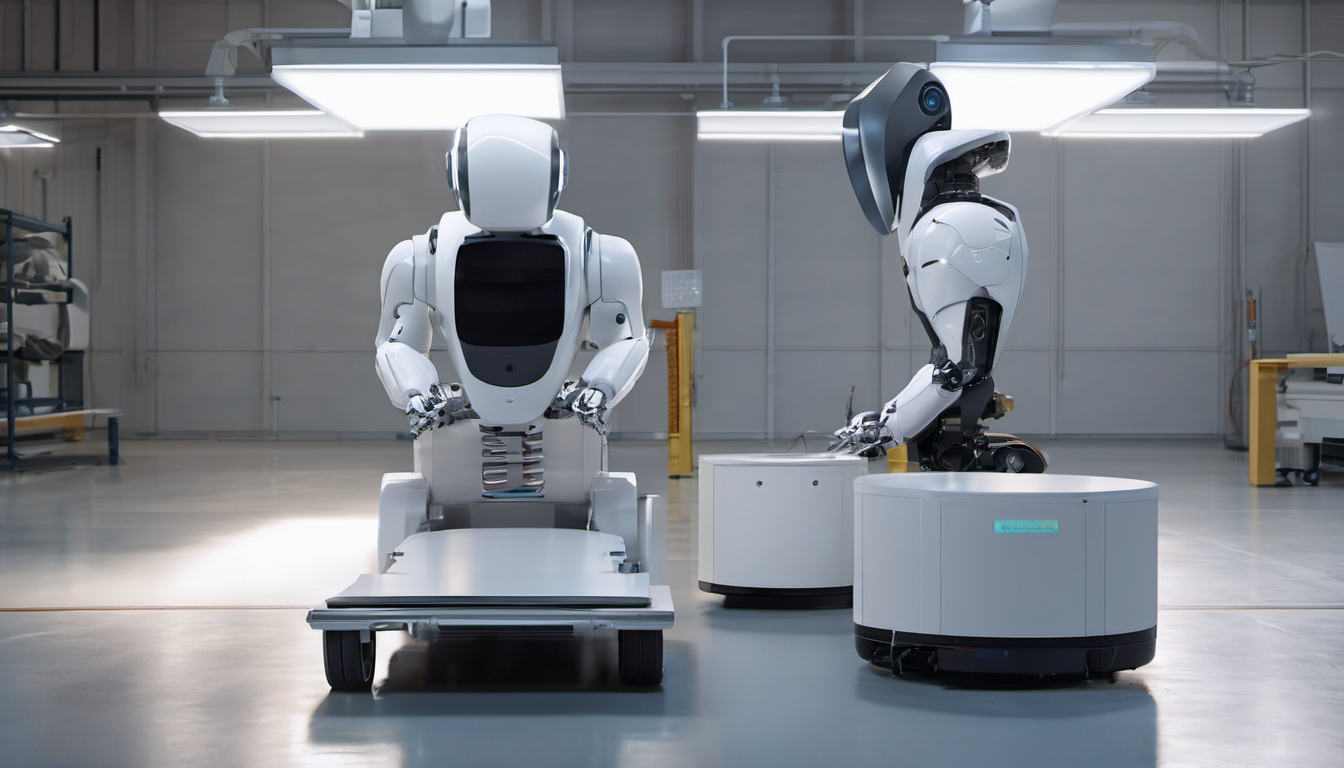
Tesla’s robotics team landed in Ningbo on September 16. The next day, a new round of production audits began.
This isn’t Tesla’s first factory audit in China. It’s the first one aimed explicitly at moving Optimus manufacturing out of Tesla’s own plants. Supply-chain sources reported that the audit checks exclusivity and consistency for mass production, helps suppliers debug equipment, and migrates manufacturing capability from Tesla’s U.S. factories to its Chinese supply chain. Tesla has already placed orders against the plan: roughly 50,000 Optimus units in 2026, shipped to Tesla’s gigafactories worldwide.
China’s A-share Tesla suppliers moved on the news. On September 17, Joyson Electronics hit its daily limit-up. Tuopu Group rose 4.36%. Sanhua Intelligent Controls gained 2.70%. All three built cars for Tesla before this; now they’re building robot components too. Shenzhen Inovance Technology, which already supplies servo motors to Unitree and UBTech, rose 1.4% on the same report. One motor maker, three customers, all scaling in China.
Five years, two departed leads, four downgrades
Optimus turns five as a public project this year.
Musk unveiled “Tesla Bot” at AI Day 2021. A year later, the BumbleBee prototype walked but needed a hand to get on stage. Gen1 screwed bolts in a March 2023 investor-day video; Gen2 arrived that December, 10 kilograms lighter and 30% faster on its feet. By October 2024, Optimus was bartending and dancing at Tesla’s We Robot event — attendees later said the interactions ran on teleoperation, not autonomy.
The production number kept sliding. At the June 2024 shareholder meeting, Musk promised “over 1,000, maybe a few thousand” units for 2025. By the January 2025 earnings call, internal guidance had moved up to roughly 10,000. The March 2025 all-hands cut that to 5,000 for 2025 and 50,000 for 2026. By the October 2025 earnings call, Musk conceded the 5,000-unit target was shelved, called Gen2 “almost impossible to produce,” pushed Gen3 to Q1 2026, and named a new number: a million-unit-a-year line by the end of 2026.
The team didn’t hold together through the swings. Optimus engineering lead Milan Kovac left in mid-2025. Robotics AI lead Ashish Kumar left for Meta that September.
We wrote in July that Tesla’s Q2 call confirmed Optimus production was still zero, and that Musk himself called it the hardest product Tesla has ever tried to scale. The Ningbo audit is the first move on this timeline that puts “migrate manufacturing capability” into a stated objective.
The last audit tested readiness. This one is placing orders.
Tesla ran a previous audit round in China from September 2025 through roughly this past February, supply-chain sources say, aimed at supporting the Gen3 redesign. The suppliers involved were Tesla’s existing automotive vendors: Tuopu Group, Sanhua Intelligent Controls, Zhejiang Rongtai, Xinquan, and Joyson Electronics.
That round tested manufacturing readiness, not orders — whether motors, gearboxes, controllers and encoders could integrate as modules, whether planetary roller screws and dexterous-hand sensors could be produced repeatably, all against automotive-grade cycle-time and yield standards, with per-unit cost converging toward a $20,000 sell price. Suppliers had to demonstrate overseas manufacturing capacity and their own tier-2 supplier management.
Seven months later, the September audit converts that readiness into orders. The gap between the two rounds is the gap between can and is.
What 50,000 looks like next to what China already ships
Set the number against the neighborhood it’s entering.
UBTech’s Liuzhou plant, which started production September 13, is designed for more than 10,000 units a year from a single site. One robot rolls off every 10 minutes. Unitree disclosed, ahead of its August IPO, a cumulative total of about 18,000 bipedal humanoids built since the company’s founding. That’s its entire lifetime output.
If Tesla hits 50,000 units in a single year, that’s close to triple Unitree’s entire cumulative run. But Tesla isn’t building that volume in its own plants. It’s routing it through the same supplier base already building for Unitree and UBTech.
Wall Street isn’t fully buying the number yet. Optimus production guidance has moved four times in two years, and Musk’s record on hard deadlines runs cold: at Autonomy Day in 2019 he said a million robotaxis would be on the road within a year, and that fleet still doesn’t exist. A securities analyst quoted in the BigGo report put the read plainly: enthusiasm in China’s robotics sector now tracks Tesla’s actual production, not its announcements, and whether 50,000 survives the next earnings call is still open.
What this means if you’re counting on the jobs
The sentence worth underlining sits inside the audit’s own stated objective: migrate manufacturing capability from Tesla’s U.S. plants to Chinese suppliers.
That rewrites the story Optimus was sold on. The robot was pitched, in part, as a reshoring product: American manufacturing, built by an American robot, in Texas. What the September audit describes is capability moving the other direction, at least for the volume Tesla needs this year.
The jobs on the supply side are real, and they’re concentrating in Ningbo’s supplier belt: servo-motor and gearbox integration, encoder and sensor manufacturing, precision-machining line engineering at Joyson, Tuopu, Sanhua and Inovance, all of them adding capacity against Tesla’s orders. The jobs on Tesla’s own engineering side have churned twice at the top in two years. And the Fremont and Texas assembly lines that were supposed to build the robot are still running on the same “soon” Tesla offered in July.
The roles this order actually creates sit mostly on the supply chain’s end of the wire, and most of that end is in China. The assembly jobs once promised for Fremont haven’t been cancelled. They’ve just been told, by the audit’s own agenda, that someone else can build faster.
Sources
- BigGo Finance: Tesla’s Optimus mass-production audit lands in Ningbo; China A-share supply chain stocks surge (2026-09-17)
- Investing.com (Reuters): Chinese robotics stocks rise as Tesla reportedly launches audit for Optimus (2026-09-18)
- KuCoin (via ChainCatcher): Tesla launches production audit for Optimus robots in China, aiming for 50,000 units by 2026