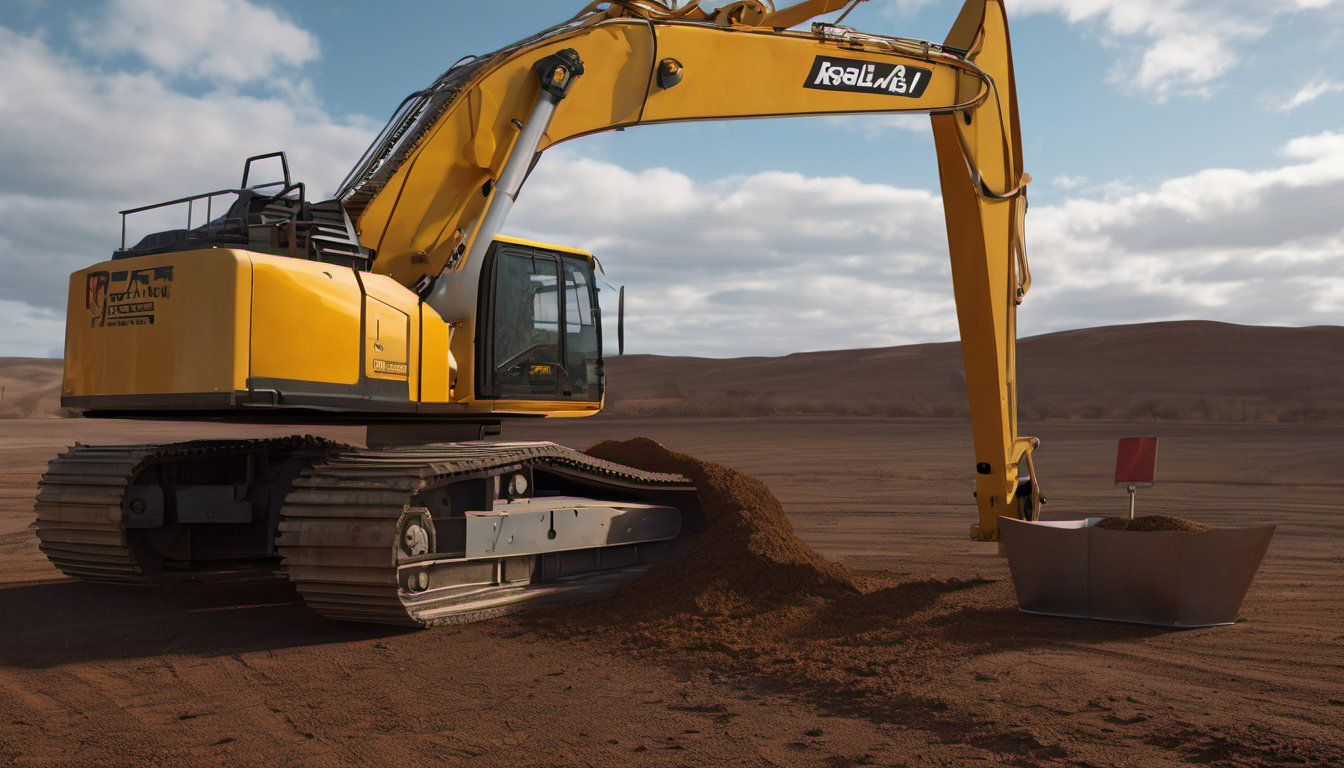
On August 26, Bedrock Robotics said its retrofitted heavy excavators are moving dirt on live infrastructure projects in Texas and Nevada with nobody in the seat.
Not a demo yard. Not a fenced test plot. Three jobs with contracts, schedules and a client waiting on the earthwork.
The three are a water treatment facility with Sundt Construction in Nevada, a multi-million-cubic-yard earthwork site with Champion Site Prep in Texas, and a 1.2 million cubic yard civil sitework project with Zachry Construction.
Same-day install, five-year apprenticeship
Bedrock is based in San Francisco, sits on $350M in venture funding, and was founded by autonomy veterans out of Waymo. The product is the Bedrock Operator: a sensor and compute suite that goes onto a machine in a same-day install, with no permanent modification and no new equipment purchase.
The model was trained on tens of thousands of hours of field work. A site manager sets the initial plan; from there the machine perceives, plans its motion and executes on its own. Before this month, the fleet ran for a year on active jobsites under human supervision.
Bedrock says it went after excavators first because the excavator is the most complex and most heavily utilized machine on a site, often 25% of a contractor’s fleet. It also names the number that makes the position hard to staff: mastering an excavator typically takes five years or more.
Same-day install against a five-year apprenticeship. Those two figures next to each other are the whole story.
”Nobody in the seat” is not “nobody in the system”
CTO Kevin Peterson was specific about scope. The current work is clearing earth, early earthwork, cut and fill, and the rough cuts that come before foundations and finer passes.
He did not skip the safety question. The machines operate around people, water trucks drive up, and the machine has to react, which is why Bedrock cares about every sensor signal and about machine health. The system monitors itself, checks whether it is making progress, and calls home when it gets stuck. There is a process behind that call.
Bedrock’s phrase for the arrangement is “person in the loop.”
Read it carefully. The seat is empty, but the workflow still has a person in it. That person is no longer one-per-machine. He is one back-office operator watching exceptions across some number of machines. We wrote the same shape when Locus bought Nexera: the human is not deleted, the human is moved from beside each machine to upstream of all of them. Headcount stops tracking the machine count and starts tracking the exception rate.
One more boundary worth logging. Peterson said Bedrock is currently deploying only new equipment outfitted and tested at its own headquarters, and expects to be running on partner equipment by the end of the year. Today “retrofit” is a roadmap word, not an inventory word.
Nine days earlier, the pitch was still a copilot
Wind back nine days.
On August 17, SoftBank put $200M into Gravis Robotics at a $1B valuation. Gravis, out of Zurich, sells a flat appliance that mounts on an excavator cab roof, retrofits onto existing Caterpillar, John Deere, JCB and Hitachi machines, and claims a 30% productivity gain over manual operation. It also runs a copilot mode, with the operator still in the seat and the machine working alongside him.
Nine days later Bedrock is not claiming 30% more output per operator. It is claiming no operator.
The hardware architectures are close to identical: a bolt-on perception and compute package, no new machine, both aimed at the installed base. The entire difference is the sentence each company is willing to say out loud. Gravis sells one operator doing more. Bedrock sells the machine not needing one. The industry crossed from copilot to empty seat in nine days.
A month before that, SoftBank sold its last stake in Boston Dynamics to Hyundai and turned toward driverless excavators. At the time that read as capital repositioning. It reads now as capital arriving first, with the product catching up nine days ago.
The ladder kept its top and lost its bottom
Construction has been telling one story about labor for years. 20% of construction workers are over 55, and analysts estimate more than 40% of the industry retires within five years. The safety numbers are worse: construction workers are 7.5% of the workforce and 20% of workplace deaths. Large projects run an average of 20% over schedule and 80% over budget.
That story frames autonomy as gap-filling. The people are leaving, the machines arrive.
Line it up against what Bedrock’s machines actually do and the shape changes.
The tasks it took over are clearing, cut and fill, rough cut. Those are the tasks a new operator spends his first years on. Fine grading, slope work, judgment calls in bad ground still sit with people. Automation is not eating this trade from the top down. It is eating it from the bottom up. The five-year ladder kept its top rungs and lost its bottom ones.
That distinction sets the timing. If the machine replaced the veteran first, the industry would feel it immediately and react immediately. Replacing the apprentice’s work hurts nobody this quarter. The veterans are still there, schedules still hold, and they hold better than before. The pain is deferred by roughly the length of the apprenticeship it removed.
Sundt CEO Cade Rowley gave the official version of the same path: the tools let the company take on more, perform at a higher level, and let skilled crews focus on the work where their experience matters most. Nothing in that is wrong. It describes exactly what is happening. What it does not address is where the next generation’s experience is supposed to come from.
Three things to watch
Whether partner equipment lands by year end. If Bedrock starts running on machines contractors already own, the cost structure changes: no new iron, just a box, and adoption moves a gear. Until then it is a company shipping whole machines, and it scales at the speed of its own build capacity.
When multi-machine orchestration ships. Peterson put fleets on the roadmap: an excavator, a bulldozer, a truck, maybe a grader, working as a team. Single-machine autonomy removes a seat. Fleet orchestration removes a crew’s coordination structure. Those are different orders of magnitude.
The exception rate. How many machines one back-office watcher can hold depends entirely on how often a machine calls home. Nobody has published that ratio, and it decides whether the supervision layer is dozens of jobs or hundreds. We made the same point on August 28 about Deere putting $10M into the crops its machines still cannot handle: where a vendor spends is where the vendor thinks the boundary is. Bedrock is spending on more deployments and “more finesse kind of work.” The boundary is moving up.
The cab door is still there. The seat is still there. As of this summer, on three sites in Texas and Nevada, it is empty and the dirt still moves.