On September 4, San Francisco-based Robot.com said it had signed a seven-year commercial agreement with Sodexo Group, the food service and facilities contractor. The two have worked together since 2021, and the robots already run on a set of Sodexo-operated college campuses in North America.
The company calls it its largest single enterprise deployment.
The load-bearing word in that sentence is not largest. It is seven.
The door it came through was staffing, not cost
Felipe Chavez Cortes, Robot.com’s co-founder and CEO, described the customer’s position without much cushioning: Sodexo employs roughly 400,000 people worldwide, 120,000 of them full-time in the U.S., and it is one of the companies suffering from labor shortages and unable to fill its open positions.
That is the entrance to the whole deal. The robots did not arrive on a cheaper-per-delivery argument. They arrived on a cannot-hire argument.
We covered the same pitch from the same company in July. When R-noid launched, the sales line was not faster and not cheaper. It was that the machine never resigns, aimed at 130% annual turnover in restaurants and 1.2-year average tenure among warehouse pickers. A second piece walked through the specific roles in the crosshairs: packing, picking, folding linen, quick-service kitchens.
Two months on, that pitch has a signature and a term attached.
Cortes was candid that a seven-year contract is not a first move. The earlier years were both companies learning what it takes to make robots land in a live operation.
Seven years outlasts the shortage
Labor shortages run in cycles. Campus dining shows it more plainly than most: student part-time supply moves with enrollment, visa policy and whatever the retailer down the road is paying this term. Tight one year, loose the next.
Seven years does not move.
What a seven-year service contract actually does is convert “we are short-staffed right now” into a fixed cost line, then keep that line alive longer than the condition that justified it. In the year campus hiring loosens again, the contract is still running and still amortizing, and rebuilding the runner roles reads on the budget as new spend rather than restored spend.
That is the mechanism worth watching in this class of deal. It does not cover a gap. It closes the role after the gap ends.
Two operators, same campuses, opposite readings
The useful comparison is Starship Technologies, which is winding down campus deliveries in favor of groceries in the same window that Robot.com is signing seven years further into campuses.
Same sites, same unit economics, opposite conclusions. Cortes named the difference himself: Remi, the implementation platform his company has been building for close to a decade. He gave it two benefits. Remi lowers the cost of deploying the robots, and it lets the company earn on advertising alongside delivery.
The second benefit deserves its own paragraph. If advertising is the half that closes the gap, the delivery leg on its own probably does not pay for itself yet. What is running on the footpath is not purely a delivery business. It is a moving ad panel that also carries lunch.
The utilization math points the same way. Robot.com has deployed more than 500 R-Kiwi units, which have completed 2.4 million tasks to date. In the first half of this year the fleet logged a quarter of a million revenue-generating hours, against a stated goal of 1 million hours per year. Back those last two figures into a per-unit number and each robot averaged roughly 500 revenue hours over six months, or under three hours a day.
Under three hours a day does not replace a shift. It absorbs the lunch and dinner peaks.
Campuses are the staging ground, not the destination
Cortes said so directly. Industrial deployments are actually easier, he argued, because the Wi-Fi is reliable and the environment is controlled. Campuses earn their place precisely by being harder: outdoors, populated, and still not as chaotic as a city street.
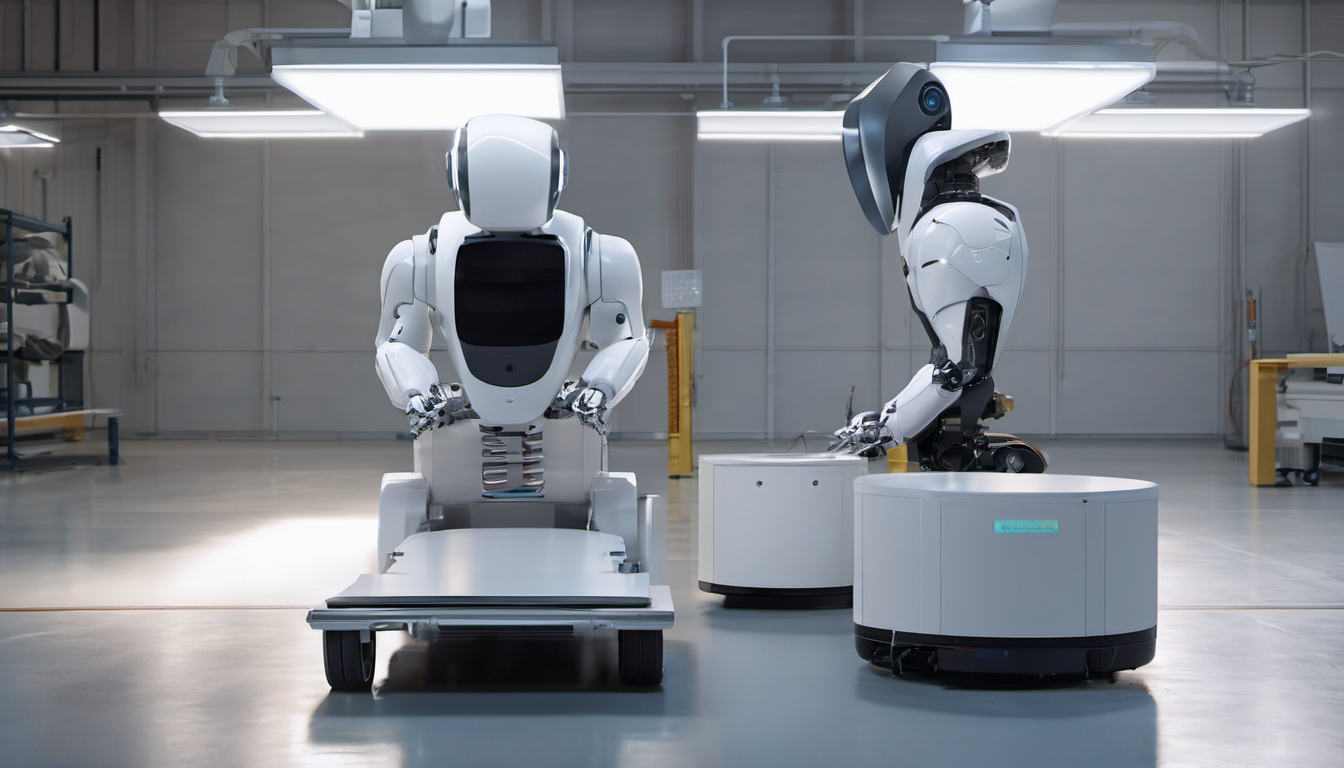
The route is to fund Remi with campus delivery, then stack on top of Remi. The R-Dog quadruped joins the fleet and can set a package down, climb stairs and board an autonomous vehicle without the vehicle being modified. R-noid, the wheeled-base humanoid with two arms, goes to the same customer list. Cortes said some accounts are not ready for humanoids yet, so they start with delivery robots or advertising and the relationship gets built from there. Field AI and Physical Intelligence are the partners on the safety layer.
So the seven-year agreement is not really selling 500 delivery carts. It is a commercial corridor running from the campus footpath into warehouses and production lines, and Sodexo procurement has signed at the entrance.
What this means for a worker
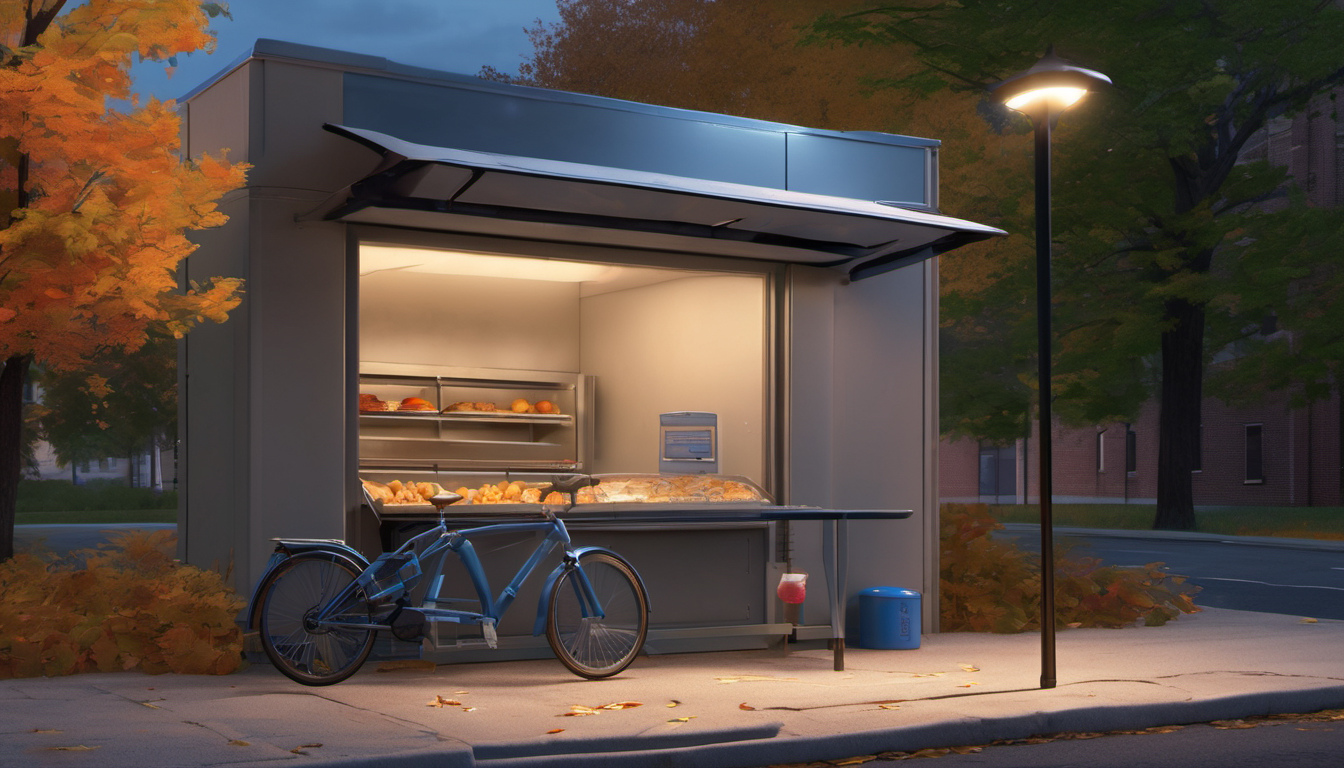
Campus dining is a first job for a lot of people. Running food, restocking, delivering: low wage, low barrier, flexible scheduling. For students, new arrivals and career switchers, it has long been the first door into the labor market.
Exposure here does not mean Sodexo cuts 120,000 people. This substitution does not run through layoffs. It runs through roles that stop getting posted, and a line missing from a job board is far harder to count than a name missing from a payroll.
Two questions tell you whether you are on this line.
First, how much of your shift is displacement — moving an object from A to B. That is the segment being contracted out first, because it is the segment that can be graded. Delivery time and error rate both produce numbers.
Second, is your site run by a third-party services contractor. A company like Sodexo holds dining at hundreds of campuses and corporate parks at once. One seven-year signature lands across hundreds of sites, not one. The room where the robots get negotiated is not on your campus.
Sources
- The Robot Report, Robot.com partners with Sodexo to roll out more sidewalk delivery robots, September 4, 2026
- Starship Technologies, Starship Technologies doubles down on grocery
- Robot.com, R-Kiwi product page